
At a Glance
- Compost tumblers turn scraps into compost without a pitchfork or a shovel.
- You can build one from a barrel, drum or trash can in a weekend.
- Mix wet greens with dry browns and turn it at least once a week.
If you want to know how to make compost at home, then using compost tumblers may be one option you should check out. A tumbler is a closed drum you spin to mix and air your scraps. There are several ways on how to make compost, and a tumbler is one of the easiest to keep tidy. So if you want to give this method a try, here are a few DIY compost tumbler ideas and designs you can check out.
As an Amazon Associate, we earn from qualifying purchases.
Also See: How To Compost
Build One or Buy One?
Most compost tumblers below cost little more than a barrel and some lumber. If you don’t have the tools or the time, a ready-made tumbler on a sturdy stand does the same job.
If you’d rather skip the build, look for a tumbler with a strong frame and a real crank handle. Cheap units with thin legs tend to wobble once they’re full.
As an Amazon Associate, we earn from qualifying purchases.
If you want a ready-made option, this 43-gallon tumbler has two chambers, so one batch can rest while you fill the other side. Check that size against how many scraps you make, since a drum that’s too big is slow to fill and heavy to turn.

- Twin chambers: Two separate chambers allow one side to finish composting while leaving the other side available to add fresh wastes...
- 360⁰ Tumbling Design: The rotating design prevents you from digging or mixing the pile by hand; And the deep fins on eight panels...
- Excellent Aeration: Air vents can make the air fully circulate and will not cause an explosion due to excessive internal pressure; Deep...
DIY Compost Tumblers On A Budget For Your Homestead
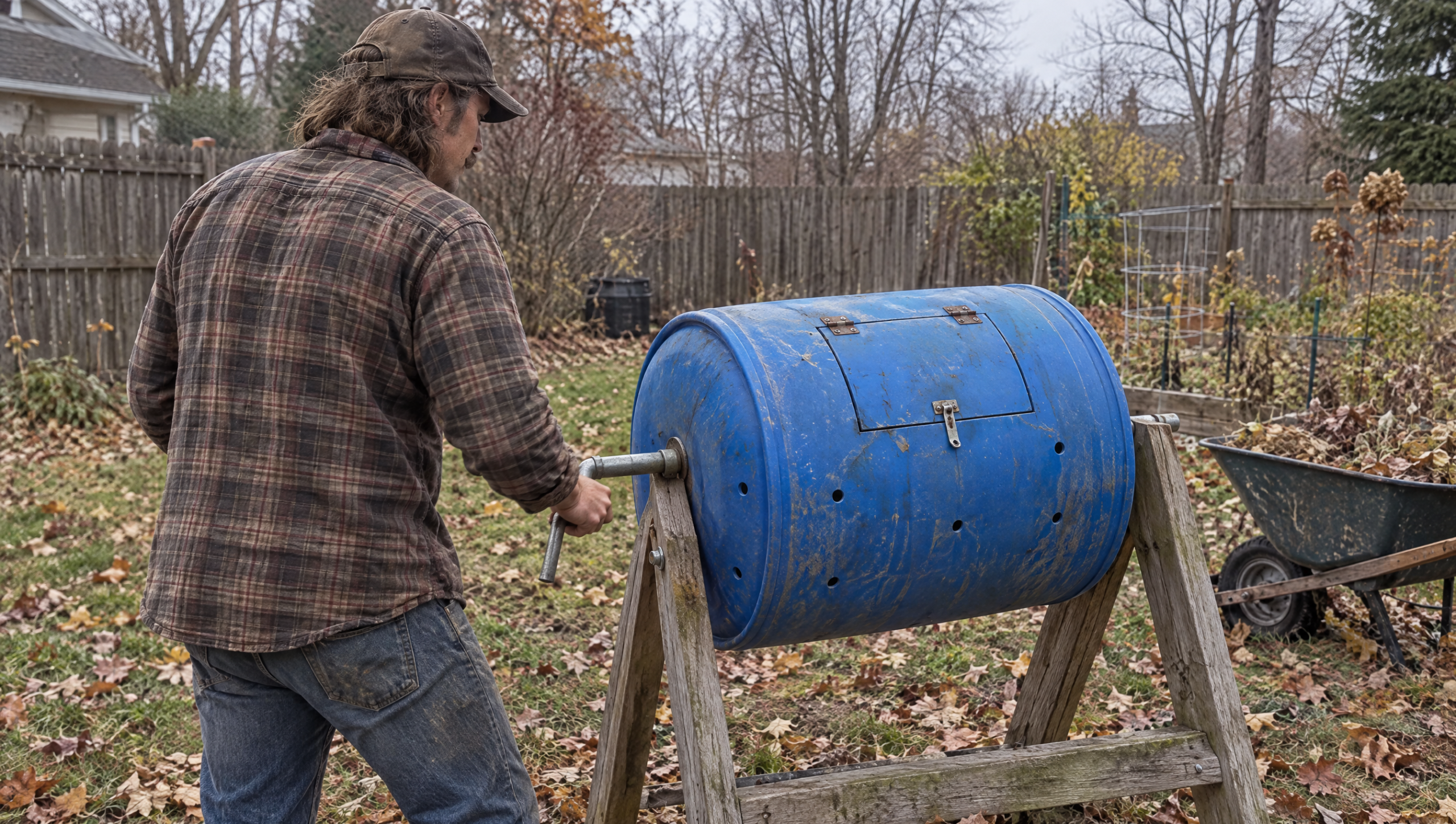
Every build here uses the same idea. A closed drum on a frame or on the ground lets you mix scraps by turning instead of forking.
1. Easy Rolling Ball Composter
A round composter that you roll across the yard is the simplest tumbler there is. It’s a good fit for everyday kitchen scraps. You only have to add scraps, dead garden plants and other compostable materials every 2 to 3 days. Roll it a few turns each time, and the scraps break down over the following weeks.
2. DIY Compost Tumbler
Need some plans on how to make your own compost tumbler? This DIY compost barrel from The Family Handyman is a great project for woodworking and composting beginners. With minimal woodworking skills and a desire to produce your own homemade compost, you can build this compost tumbler in only a day or two.
3. 5-Step Compost Tumbler
Want to make things simple? You only have to follow these 5 steps and you’ll be all good. If you have old rain barrels with a bit of wear and tear here and there, you have just the material you need. Along with 5 more items, you can make this compost tumbler from Instructables in no time and on a budget.
4. DIY Chicken Manure Tumbling Composter
Have chickens running around the homestead? A tumbling composter set up next to the coop takes their manure and bedding. Two drums side by side let one batch rest while you fill the other. Don’t you just love homesteading where nothing goes to waste, even chicken manure.
5. DIY Spinning Composter
You no longer have to toss to make compost. You only have to spin it and you get your black gold production going. A barrel on a center pivot lets you flip it end over end to tumble your compost. But you will need to make a stable frame so the barrel turns without falling all over the place.
6. Two-Bucket Tumbler Compost Bin
Running low on budget? This DIY tumbler compost bin from Weekndr is for you. All you need are two cheaper buckets joined to make a barrel-like bin for your tumbler. This is a great project you can do on a weekend at your homestead.
7. Cheap DIY Compost Tumbler
Want to make a compost tumbler without spending a lot? If you don’t have the time to build a frame and a rolling mechanism, this is the project for you. Nothing could be more simple than a trash can tumbler. Get a trash can with a lid that locks, drill air holes, and roll it on its side with your hands or feet to mix your compost.
8. Low Wheeled Drum Compost Tumbler
A drum that sits low on wheels skips the stand entirely. Set the drum on 4 non-pivoting wheels so it rolls in place when you turn it. It’s an easy build if you don’t want to make a frame.
9. DIY Steel Drum Compost Tumbler
Making compost is really easy. I wonder why not all gardeners do it. A steel drum on a frame built at just the right height makes it even easier. Use an old steel drum you have around your homestead for an even cheaper compost tumbler, as long as you know it held something safe.
10. How to Make a Compost Tumbler for a Super Low-Budget
Make an inexpensive rolling compost tumbler from A Cultivated Nest by repurposing a garbage can. It is another simple and inexpensive compost tumbler you can easily make. Since it can be both mobile and stationary, it can be a 2-in-1 composter. You can tumble and roll it when composting green and brown materials. Or, you can use it as a worm composter.
11. Very Simple Homemade Compost Tumbler
If you want to have some fun composting, try a super simple homemade compost tumbler. It follows the same idea as the garbage can tumbler above. A lidded can with air holes, rolled a few times a week, is all it takes.
12. Double-Decker Drum Composter
In case one barrel isn’t enough for you, try a double-decker, or a triple. You can never have enough compost if you’re serious about growing your own food. This double barrel compost tumbler from Instructables will allow you to make more compost and grow more food.
13. Wine Barrel Composter
Got some wine barrels lying around? Repurpose them into a compost tumbler. You can find inspiration to make an old wine barrel compost tumbler on From My Backyard.
Want to see how to make a compost tumbler that’s fast, cheap, and easy? Then watch this video from TheCrunchyHousewife.
How to Load a Compost Tumbler
A tumbler only works as well as what you put in it. Start dry, keep it balanced, and give it time to rest once it’s full.
- Line the empty drum with a few inches of dry leaves or straw. It soaks up the liquid that food scraps release, which Oregon State University Extension notes can leak from a tumbler.
- Add greens and browns in about equal amounts by volume. Greens are kitchen scraps and fresh grass. Browns are dry leaves, straw and shredded paper.
- Chop or shred big pieces first. Smaller pieces break down faster.
- Check moisture. It should feel like a wrung-out sponge. Add a little water if it’s dusty, or more browns if it’s dripping.
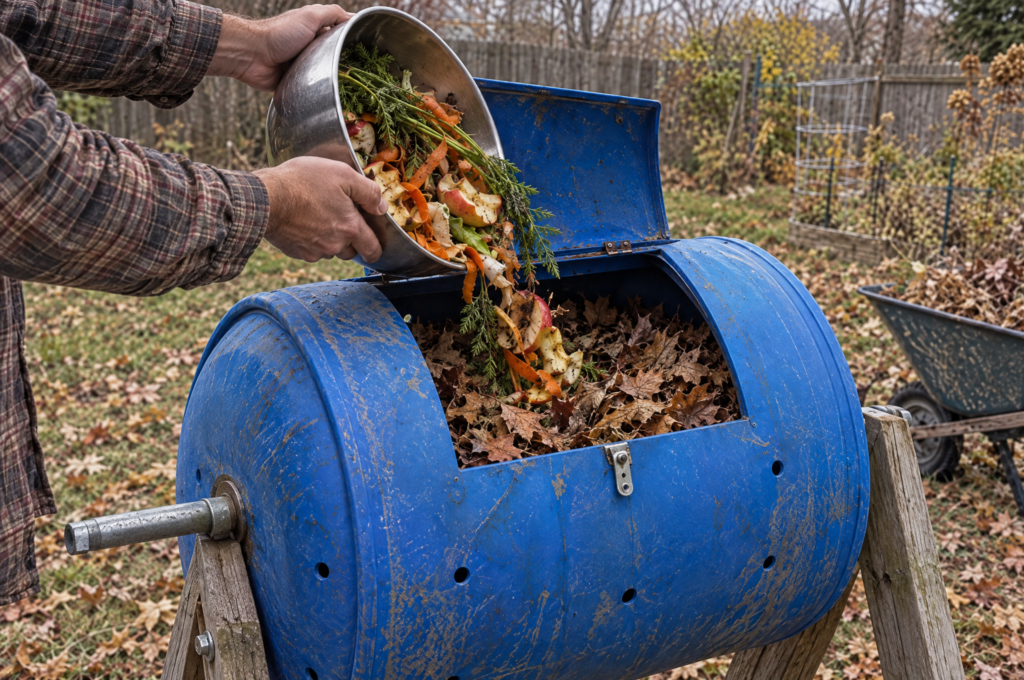
CHECKPOINT: After a few days the middle should feel warm and smell earthy. A sour or rotten smell means too many greens.
As an Amazon Associate, we earn from qualifying purchases.
If you’d rather check than guess, a long compost thermometer slides through the hatch into the middle of the drum. It’s optional, since your hand on the barrel tells you most of what you need.
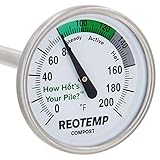
- Perfect for the Beginner Composter - Free PDF Digital Compost Guide Included - Expert instructions on how to get started composting and...
- Reotemp - Accurate and durable thermometers since 1965
- Quality Construction - 20 inch length, 1/4" diameter stem, stainless steel construction, hermetically sealed to prevent fogging
- Turn the drum a few times every time you add scraps, and at least once a week. Ask Extension suggests weekly turning and a sunny spot to speed things up.
- When the drum is full, stop adding. Let it rest and keep turning it now and then. Plan on roughly 6 to 8 weeks in warm weather and longer in the cold. That’s an estimate, since your climate and your mix set the pace.
STOP POINT: If a full drum is too heavy to turn, don’t force the handle. Take some out and run it about two thirds full.
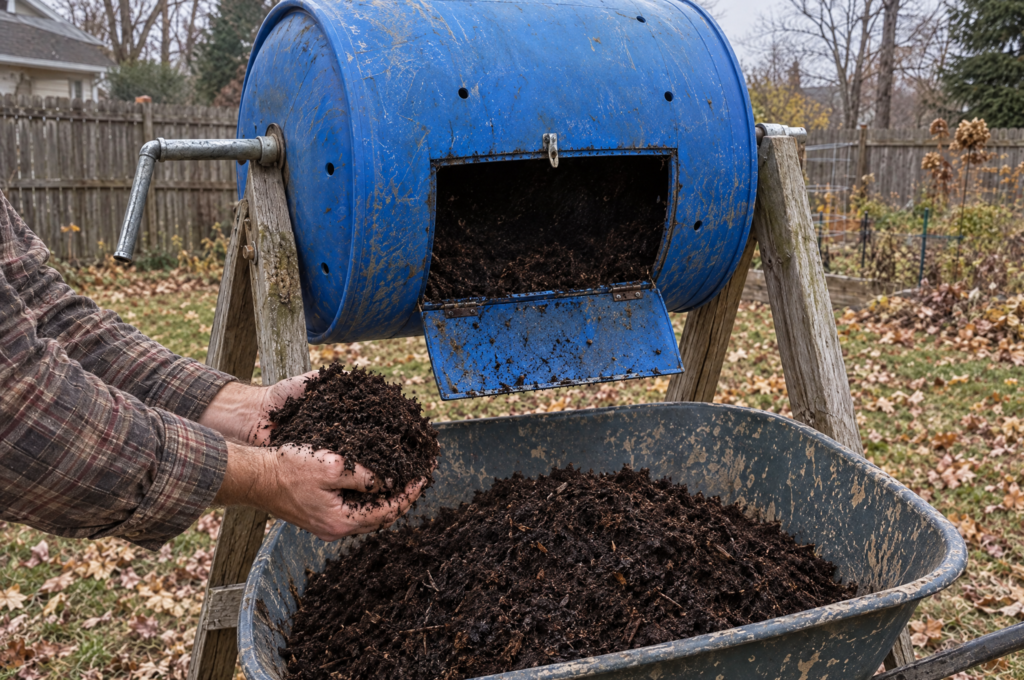
Tumbler or Open Pile?
Compost tumblers keep scraps tidy and off the ground, and turning one is easier than forking a pile. A pile holds far more and costs nothing. Many homesteads use both.
| Compost tumbler | Open pile or bin | |
|---|---|---|
| Turning | Spin the drum | Fork it by hand |
| Capacity | Small batches | Holds a season of leaves |
| Critters | Raised drums keep animals out | Needs a lid or wire |
| Winter | Small drums slow down in the cold | Big piles hold heat longer |
| Cost | A barrel and a frame, or a bought unit | Free |
Troubleshooting Your Compost Tumbler
Most tumbler problems come down to water and balance. Here’s how to read the signs.
Symptom, cause and fix
- Slimy and smelly: Too many wet greens. Add dry leaves or shredded paper and turn it.
- Dry and nothing happening: Too little water. Sprinkle it until it’s damp like a wrung-out sponge.
- Dark liquid dripping out: Normal with lots of food scraps. Add more browns and set a bucket under the drum.
- Stalled in winter: Small drums lose heat. Move it to the sunniest spot you have and expect a slow batch until spring.
- Fruit flies: Bury fresh scraps under a handful of browns each time you add them.
Shortcuts to Avoid
- Filling the drum with only kitchen scraps. Without browns it turns to sludge.
- Adding fresh scraps to a batch that’s resting. Keep a bucket or a second drum for new scraps.
- Skipping the air holes. Compost needs air, and a sealed drum goes sour.
- Using a barrel or drum when you don’t know what it held.
When to Get Help
Cutting a steel drum or welding a frame takes the right tools. If you don’t have them, ask a local welder or fabrication shop to cut the drum and the hatch for you. If you can’t confirm a drum held food-grade contents, skip it and buy a new food-grade barrel instead.
Buy Once
- Best: a two-chamber tumbler on a strong steel frame with a crank, so one side rests while you fill the other.
- Better: a single large drum on a sturdy stand with a wide door for unloading.
- Budget: a food-grade barrel or a lidded trash can you turn into your own tumbler.
Make Your Own Compost
Composting is one of the essential homesteading skills if you want to grow your own food. Without it, I’m not sure how I’d be able to grow all the crops and even my beautiful garden. It’s not really that hard to make. It just takes time and a little bit of work but it’s all worth it. With these tumbling composter ideas and designs, you have different options to suit your needs. Make your own compost and your own composter from any of these compost tumblers.
Up Next: 45 DIY Compost Bins To Make For Your Homestead
FAQs
Do compost tumblers really make compost faster?
They make turning easier, and turning mixes in air, which helps. A pile turned just as often keeps pace. As a rough estimate, plan on 6 to 8 weeks of rest after your last addition in warm weather, and longer in the cold.
How often should I turn a compost tumbler?
Give it a few turns every time you add scraps, and at least once a week. If it’s hard to turn, it’s probably too full or too wet.
Can I keep adding scraps to compost tumblers while they cook?
It works better in batches. Fill the drum, then stop and let it finish. Keep new scraps in a bucket or a second chamber so you don’t restart the clock on a batch that’s almost done.
Why does my tumbler get slimy and smell sour?
It has too many wet greens and not enough browns. Add dry leaves, straw or shredded paper until the mix is about half and half, then turn it. The smell should fade within a few days.
Is it safe to use any old barrel or drum?
Only if you know it held food-grade contents. Skip any drum that held fuel, oil or chemicals, since residue can end up in your garden soil. Wash it well, and wear gloves and eye protection if you cut it.
Tumbler or Open Pile: Which Would You Use for Kitchen Scraps?
A tumbler keeps scraps tidy and saves your back, but it holds less and costs more. An open pile takes a whole season of leaves for free, though you have to fork it by hand.
What would change your pick: yard space, your back, or how much you toss?
Editor’s Note: This post was originally published on January 17, 2016, and has been updated for quality and relevancy.