
At a Glance: Beekeeping in Winter
- Beekeeping in winter is about two things: keeping the hive dry and leaving enough honey.
- Start in late summer. Starting late? Check honey stores and the entrance today.
- Wrap a hive only if it sits in strong wind or deep cold.
Will your bees make it through the cold? Honey bees can handle winter, but they need shelter from wind and dry air inside the hive. They also need enough honey to last until spring. Most of the work happens in early fall. Utah State University Extension suggests finishing most winter jobs in September and October. Here are nine jobs that give your colony a better chance. Starting late? Check honey and the entrance now, then do the rest on calm, mild days.
RELATED: Backyard Beekeeping | How to Turn Your Backyard into a Bee Haven
As an Amazon Associate, we earn from qualifying purchases.
Beekeeping in winter: 9 ways to care for your bees
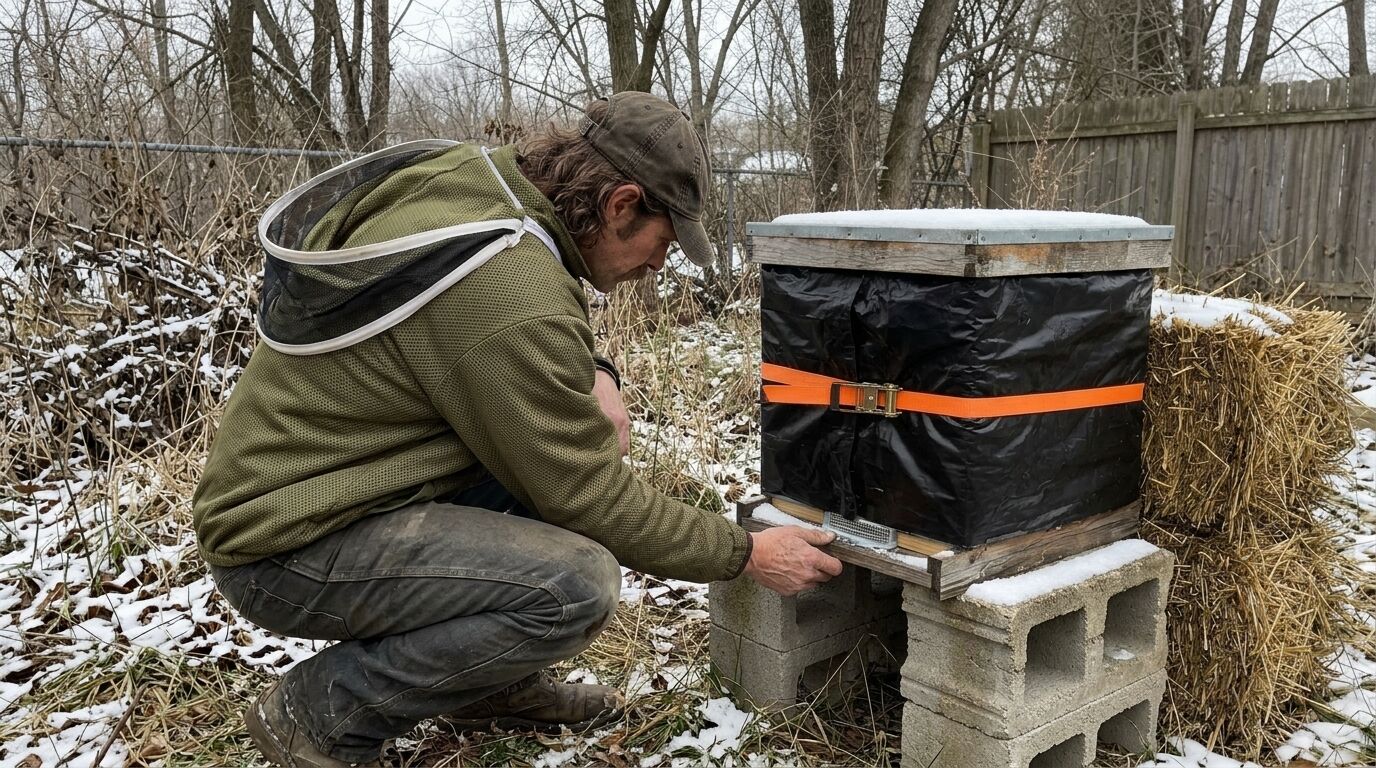
Not every job weighs the same. Cornell University calls mite control paramount, and bees can’t last the winter without enough honey, so do steps 1 and 7 first. Most jobs cost nothing. If your hives sit out in the open, a purpose-made wrap is the one piece of gear worth a look first. It blocks wind and adds a little insulation, and you can still leave the top vent open. The maker says this one covers two deep 10 frame hive bodies, so count your boxes before you buy. Skip it if your hives sit in a sheltered spot.
- Polypropylene wraps contain environmentally friendly R8 insulation.
- Insulated layer helps reduce the overall rate of heat loss, and provides a windbreak.
- Lightweight for easy on and easy off, and reusable.
1. Inspect your beehives
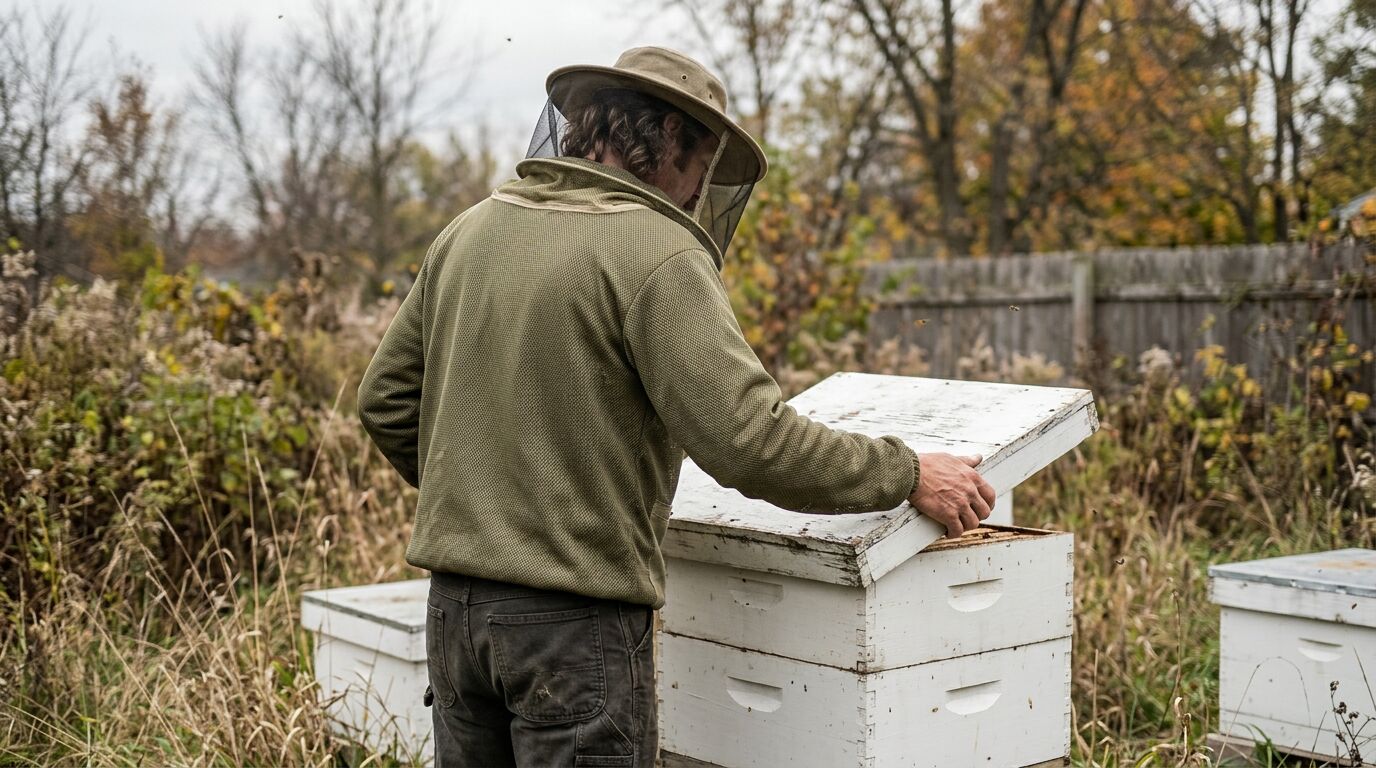
Look over your hives in early fall, while you can still fix problems. Check for disease and make sure your queen bee is healthy. Check for Varroa mites too. Cornell University says to measure mite levels in late July or early August and treat right away, because a first treatment in September or October is already too late. If you are past that window, check your count now. Always follow the product label. If you need to requeen or combine two weak colonies into one, do it before winter.
Once it turns cold, leave the hive closed. If you must lift the lid, pick a calm, sunny day. Many beekeepers use about 55°F as a rule of thumb, and work fast.
Not sure what to wear for a quick look? A veil hat (paid link) shields your face and neck. It won’t cover your arms, so add a jacket or long sleeves.
2. Place them near sunlight
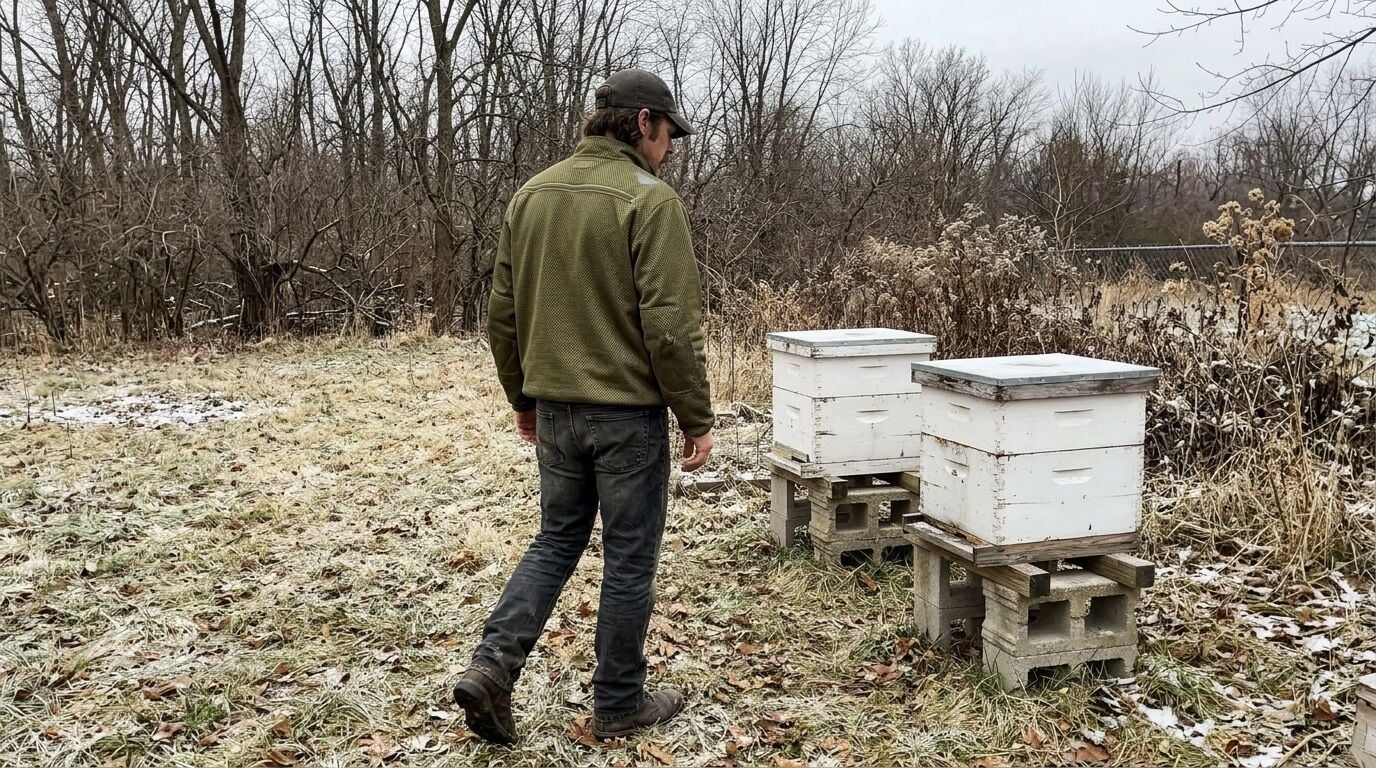
Winter means fewer hours of sun, so put your hives where they get the most light. Sun helps the bees keep the inside of the hive warm.
Want to see these jobs done on real hives? Beekeeping supplier Betterbee walks through its winter prep in this video:
Watch the winter setup, then follow the jobs in this guide. Video: Betterbee.
3. Block the wind
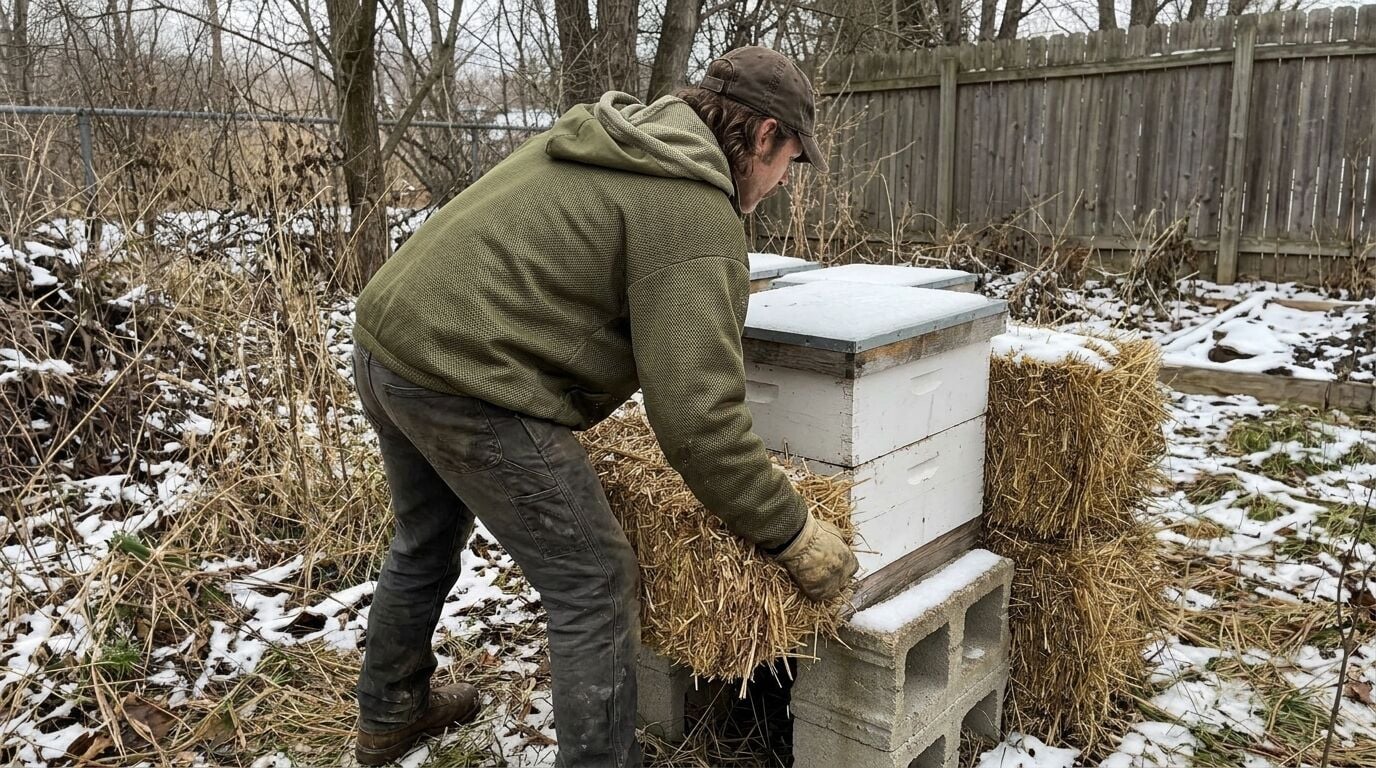
Wind pulls heat out of a hive and can knock it over in a storm. Build a fence on the windward side, or stack a few straw bales there.
You can also place the hives near a tree line. They still get sun, and the trees take the edge off the wind.
4. Leave ventilation
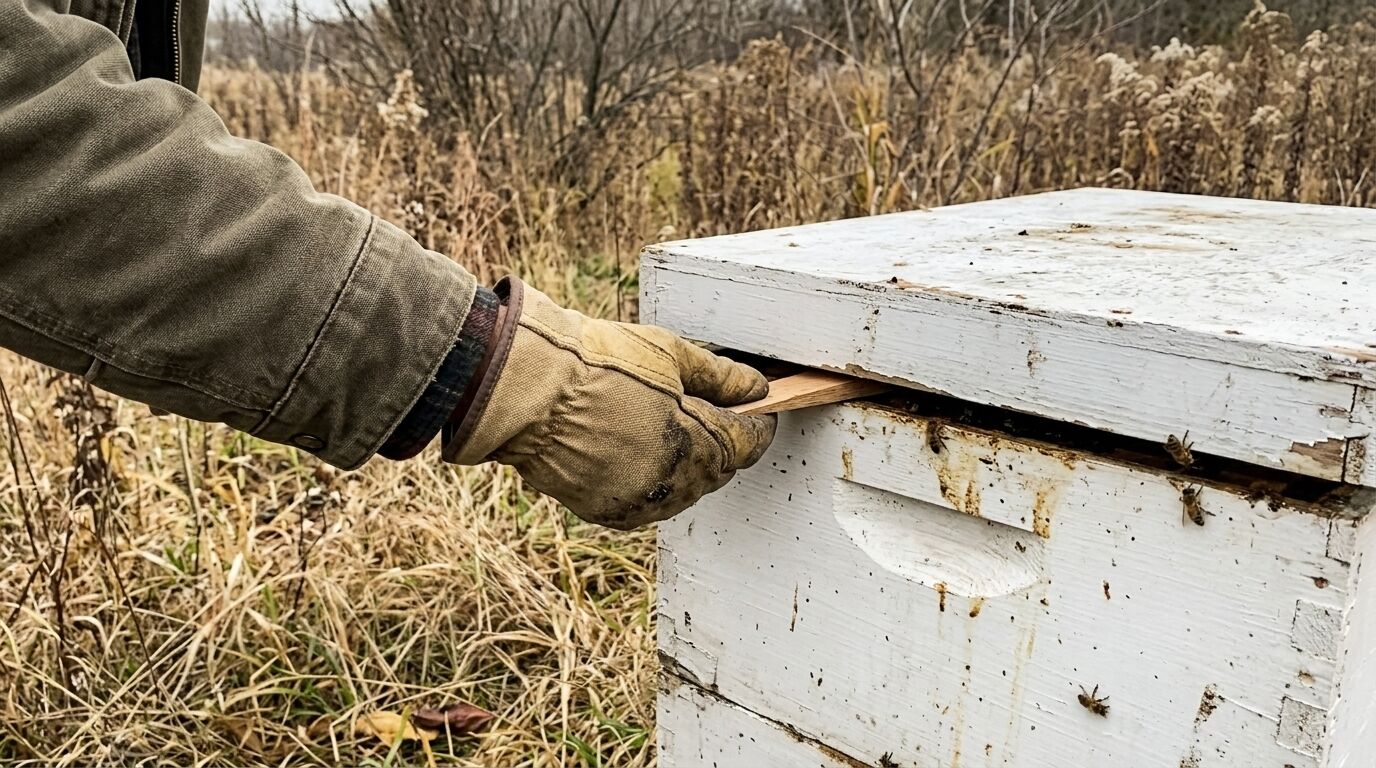
Honey bees shiver and cluster together to make heat. As they do, they give off moisture. If that damp air can’t leave, it turns into condensation and can drip onto the cluster. Wet, cold bees can die.
Cornell University says ventilation is critical for overwintering bees, and suggests a small upper entrance. Make one with a shim or notch under the inner cover, like the one in the photo. Utah State University Extension adds: “Do not seal the hive airtight.” Keep any gap small, so wind can’t blow straight through and freeze your bees. Some keepers go the other way, with a heavily insulated top and no upper vent. Bee Culture magazine describes that setup. It is a whole system, so don’t copy half of it.
RELATED: What’s The Buzz On Bees? | Beekeeping Info For Savvy Homesteaders
5. Reduce the size of your beehive
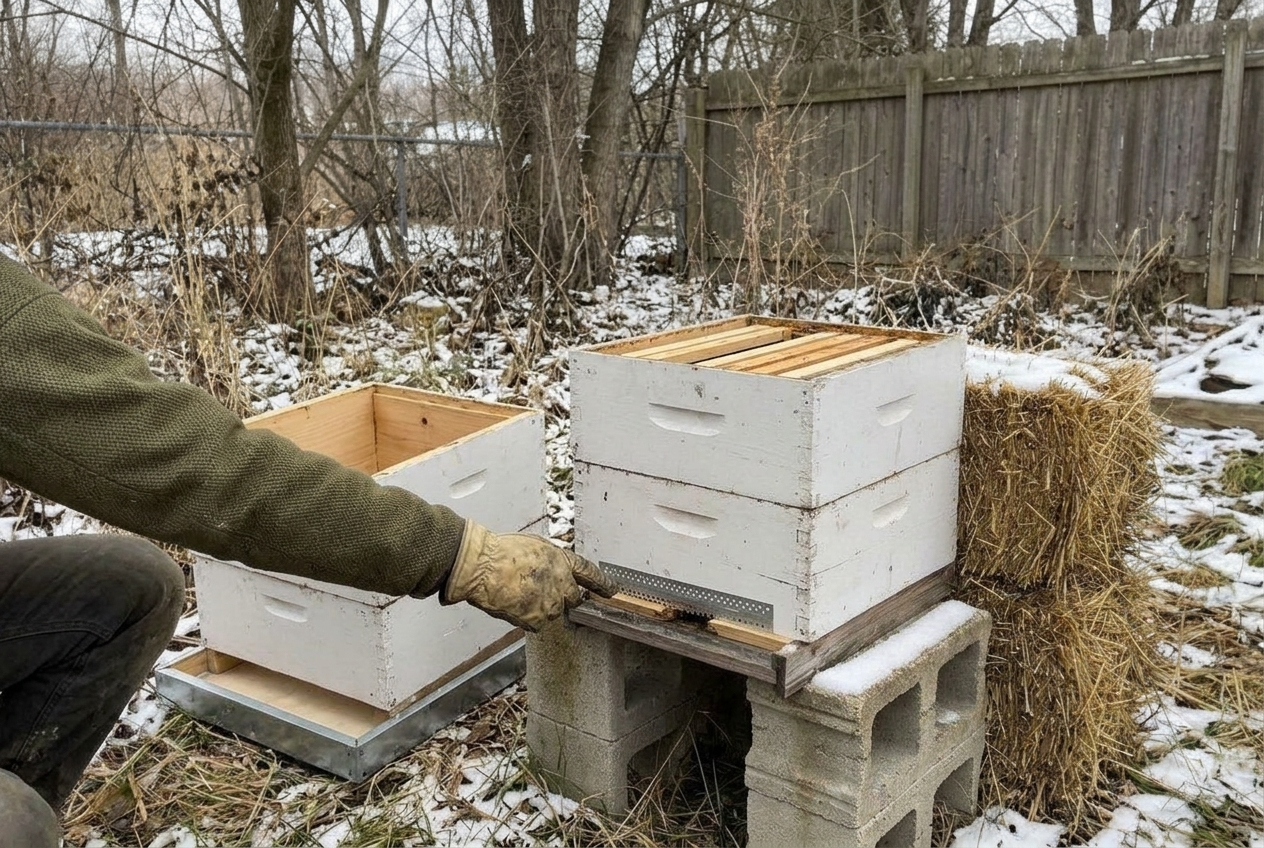
During summer, your hives grow taller with your bees’ work. In winter the population drops, and the bees cluster for warmth, so a tall hive has a lot of empty space. Bees waste energy trying to heat it. Take off the boxes they aren’t using, or move to a smaller hive, to avoid cold boxes and frozen bees.
Reduce the entrance too. A smaller opening helps the colony guard against robbing and cold wind. Add a mouse guard that doesn’t block the bees.
6. Use hive covers
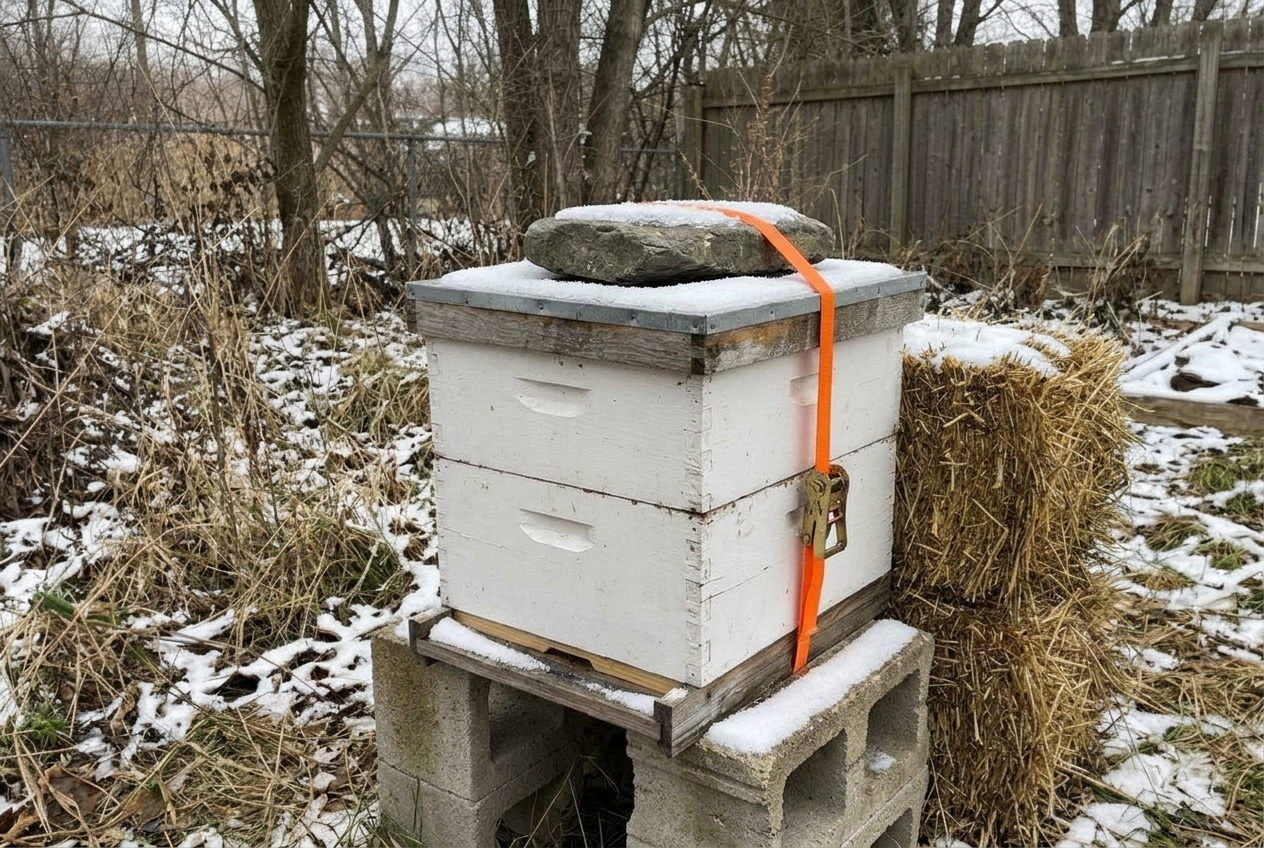
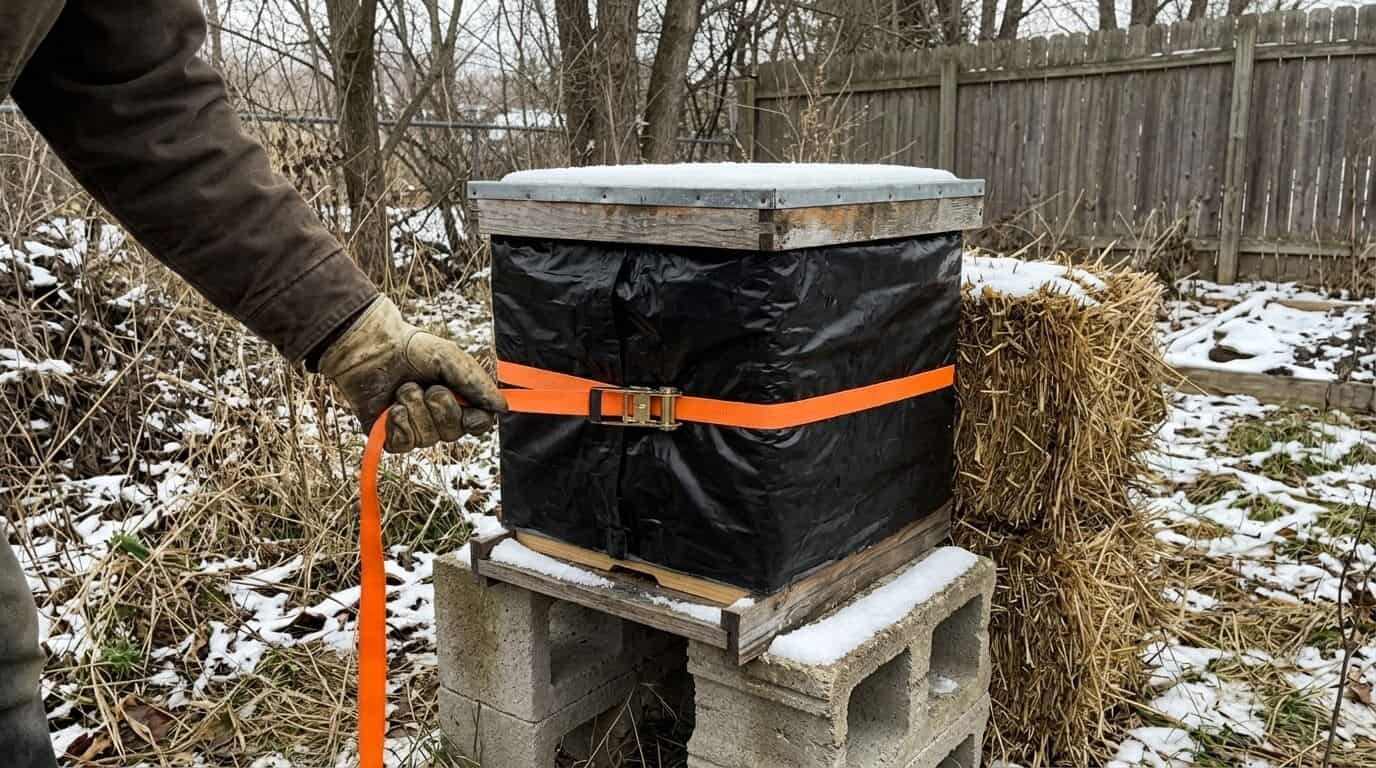
If your hives sit in a very cold place with lots of snow, use a winter cover or lid to keep them warmer. Secure it well, so wind can’t pull it off.
Timing depends on where you live. Minnesota Extension starts wrapping soon after the first of November. Cornell says to finish winter jobs while daytime temperatures are still above 50°F. Watch your hive and the weather to know when your window is.
7. Ensure food supply
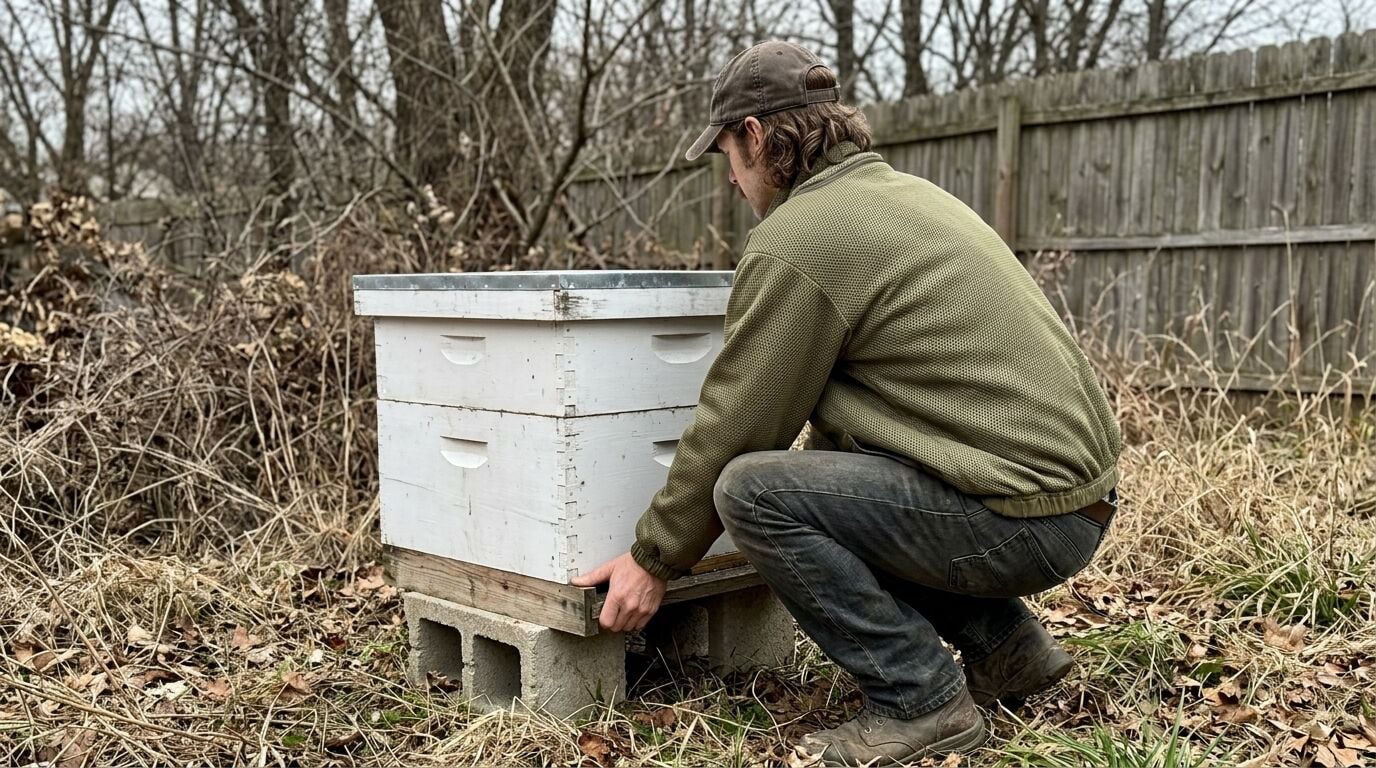
Your bees burn a lot of energy while they cluster. They get it back by eating stored honey. Utah State University Extension says an established Utah colony usually needs 80 to 100 pounds of capped honey. That is about 10 to 12 deep frames filled on both sides. Your climate may change that number, so ask a local beekeeping club.
Bees stay inside when it’s cold, so check their food before the cold arrives. Leave extra frames of honey as reserves, and don’t take so much that they run short. If a hive is light, feed sugar syrup (two parts sugar to one part water) while it’s still mild. Later in winter, fondant is the safer feed.
You don’t have to open the hive to check. On a cold day, gently lift the back of the hive to judge its weight. Utah State University Extension suggests this. If it feels light, slide fondant over the cluster on a calm, mild day and close the hive fast.
8. Wrap your beehives
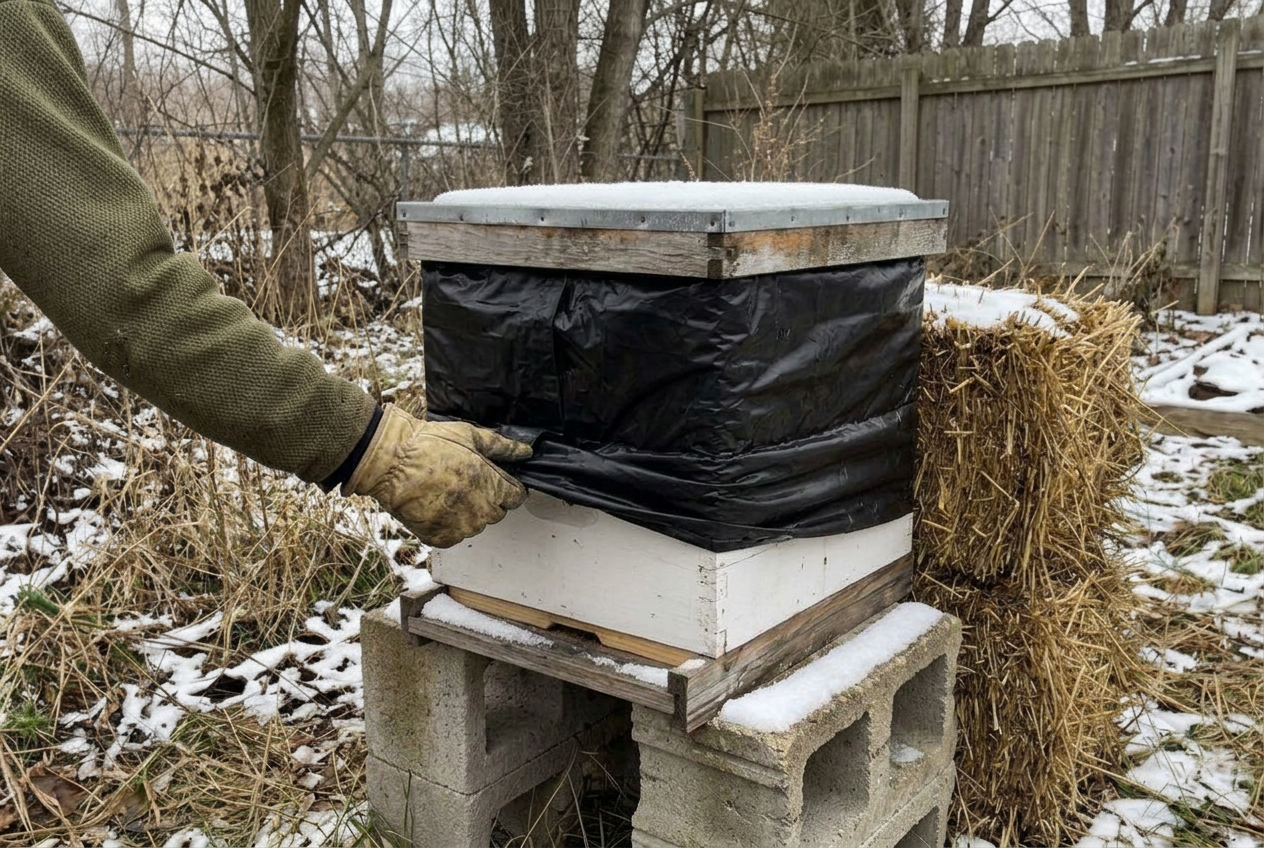
A wrap helps in the right spot. Utah State University Extension says to wrap a hive that is at high elevation or exposed to strong winter wind, and that many hives in protected places don’t need one. If yours is exposed, use a hive wrap (paid link) and strap it on outside. It also keeps rain and snow off the hive.
Tar paper can work if the bees can still breathe. Cornell University says to cut the paper open at the upper entrance and keep the lower entrance clear. Some beekeepers say tar paper traps moisture, so never cover the top vent or the entrance.
9. Clean your beekeeping tools
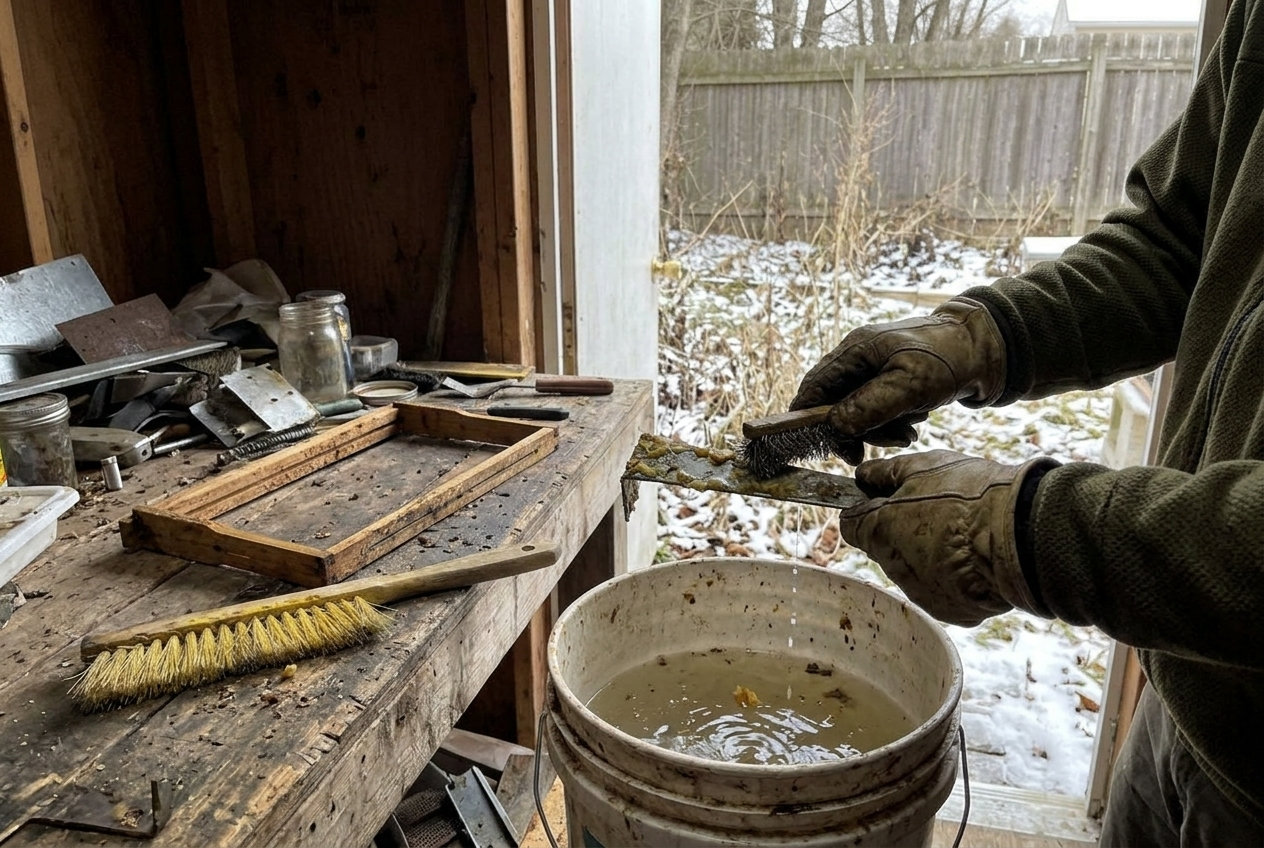
Set aside time to clean your beekeeping tools. Every piece should be clean and ready before the next season. Scrub wax and propolis off your wooden tools with washing soda and water. Store any spare frames in a cold, dry spot where mice can’t reach them.
CHECKPOINT: Before the first hard freeze, check two things. The hive needs a small entrance with a mouse guard and a way for damp air to leave. It also needs enough capped honey to last. If either answer is no, fix that first.
Winter is a tough time for bees. Instead of making honey, they are working to survive. Learn proper beekeeping in winter and your colony has its best shot at seeing spring.
Beekeeping in winter: common questions
When should I start getting my hives ready for winter?
Start checking in late summer and finish most jobs by October. Utah State University Extension lists August for checks, September for feeding a light hive and reducing the entrance, and October for final checks. Your own date depends on your climate, so watch the weather.
Do I need to wrap my hive for beekeeping in winter?
Not always. Utah State University Extension says to wrap a hive at high elevation or exposed to strong winter wind, and that many hives in protected places don’t need one. If you wrap, leave a way for damp air to leave.
How much honey do bees need for beekeeping in winter?
Utah State University Extension says an established Utah colony usually needs 80 to 100 pounds of capped honey. That is about 10 to 12 deep frames filled on both sides. Needs change with climate, so ask a local beekeeping club for your area’s number.
Can I open the hive in cold weather?
Avoid it. Every time you open the hive, you let out heat. If you must lift the lid, pick a calm, sunny day. Many beekeepers use about 55°F as a rule of thumb, and work fast.
Why can bees die in winter even when the hive is wrapped?
Damp is a big risk. Bees give off moisture as they cluster, and if it can’t leave, it can drip onto them. Utah State University Extension says to keep enough airflow so water doesn’t drip onto the cluster. Check their honey and mouse guard too.
How do you get your hives through winter?
A full wrap blocks wind but can hold in damp air if the top can’t breathe. Insulating only the lid keeps heat over the cluster and leaves less gear to store. A hive in a sheltered spot may not need either one.
Tell us where you keep bees and how your setup did last winter.
Up Next:
- Beekeeping Starter Kit: Essential Supplies You Need To Get Started
- 7 Best Types Of Honey Bees For Your Bee Farm
- How To Build a Rabbit Hutch For Your Homestead
Fellow homesteaders, do you want to help others learn from your journey by becoming one of our original contributors? Write for us!