At a Glance: Tanning Hides at Home
- Cost: Tanning hides at home takes salt, alum, washing soda and a big plastic tote, all easy to find.
- Time: About 2 to 3 weeks, mostly waiting while salt and the tan solution work.
- Space: A shady spot outside or a garage floor, plus room to hang one hide.
- Skill level: Beginner. The hard part is the elbow grease at the end.
Can you tan a deer hide at home without special tools? Yes. You flesh it, salt it, soak it in an alum tan, then oil it and work it soft as it dries. Most of the days are just waiting.
One step decides whether you end up with soft leather or a stiff board. That’s the softening at the end, and I’ll show you how to get it right.
This guide uses the salt and alum method from a New Mexico State University Extension guide. The guide calls salt and alum the least expensive home method and probably the most common, which makes it a good place to start.
As an Amazon Associate, we earn from qualifying purchases.
Why Try Tanning Hides Yourself
If you hunt or raise animals for meat, the hide is already yours. Tanning it turns a byproduct into a rug, a wall hide or soft leather for small projects. It’s an old trade, and one ordinary hide is a fine way to learn it.
Start with a regular deer hide, not a trophy. If the hide matters a lot to you, read the section on calling a pro first.
This method keeps the hair on. If you want hair-off buckskin, the extension guide adds a hydrated lime soak to remove the hair before tanning, and that step isn’t covered here.
The One Thing Worth Buying
As an Amazon Associate, we earn from qualifying purchases.
You need a container big enough to hold the hide fully under the tan solution. It has to be plastic or wood, because salt and tanning chemicals react with metal. A heavy plastic tote with a lid does the job and stacks out of the way between hides.
A 14 gallon heavy plastic tote with a lid holds a deer hide and enough solution to cover it, and the lid keeps pets out during the soak. A very big hide may need a larger tub.

- HEAVY-DUTY: Storage bin is a heavy-duty storage container used for storing and transporting items
- ERGONOMIC HANDLES: User-friendly grip handles decrease potential for back injury and finger strain
- HANDLE DRAINS: Holes in handle allow water to drain, reducing risk of bacteria build up
What You Need for Tanning Hides
Gather everything before you start. Most of it lives in a well-stocked barn already. Once the hide is wet, you don’t want to stop and go shopping.
Supplies:
- Fresh deer hide, cooled
- Non-iodized salt, about 1 pound for every pound of hide, plus 8 ounces for each tan batch
- Alum (ammonia alum or potash alum), 1 pound per batch
- Washing soda, 4 ounces per batch
- Borax or baking soda, about 1 ounce per gallon for the cleaning soak and the rinse
- Sulfated neatsfoot oil and household ammonia for oiling
- A plastic or wooden tub with a lid, never metal
- Rubber gloves
- A paintbrush and a sheet of plastic for oiling
- A dull scraper, such as an old hacksaw blade or the back of a knife
- A smooth board edge or post for working the hide
How to Tan a Hide, Step by Step
Here’s the whole process in order. Each step says why it matters, so you know what a good result looks like before you move on.
Step 1: Check the rules and cool the hide
Some states have rules about keeping hides and pelts. Check with your local game warden before you start, as the extension guide advises. Then get the hide cool and out of the sun as soon as it’s off the animal.
Step 2: Flesh the hide
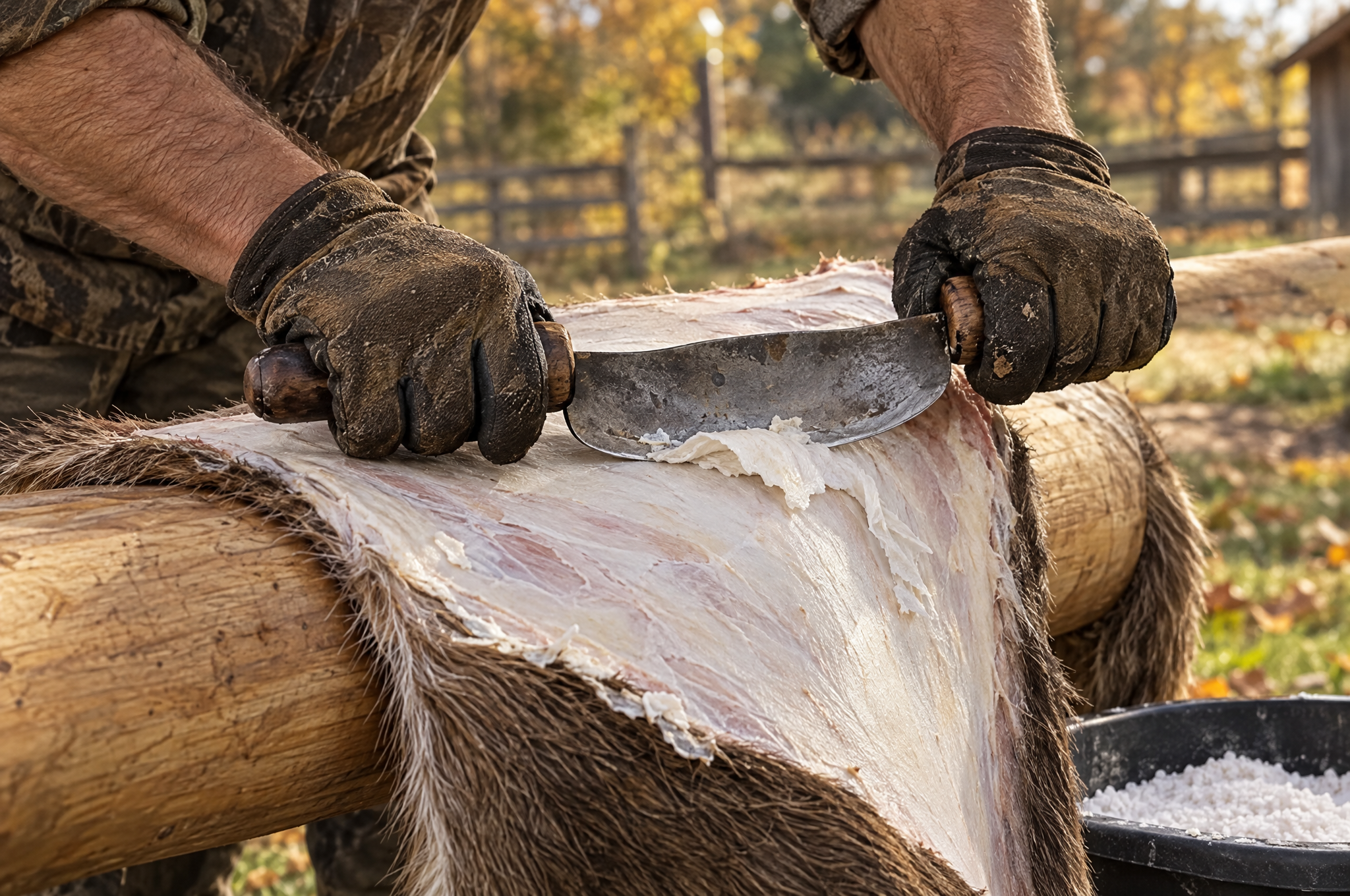
Lay the hide flesh side up over a smooth log or board. Cut away any meat and trim ragged edges. Then scrape off the fat and thin membrane with a dull edge. Anything left behind can rot and make the hair fall out later.
STOP POINT: Don’t salt yet if you can still see fat or red meat. Keep scraping until the flesh side looks clean and pale. Work with the dull edge pushed away from your body.
Step 3: Salt it
Sprinkle clean, non-iodized salt over the whole flesh side, about 1 pound of salt for each pound of hide. Rub it into the edges and legs. When the first salt is soaked through, usually in two to three days, shake it off and salt again.
The salt pulls water out of the hide so bacteria can’t take hold. Over 10 to 14 days it dries most of the moisture out.
CHECKPOINT: The hide should feel firm and dry, with no sour smell. A bad smell now means something rotted, and that hide won’t tan well.
Step 4: Soak it soft again
Shake off the salt and soak the hide in several changes of clear, cool water until it’s soft and floppy. Some skins soften in about two hours. Others take longer. When it’s almost soft, move it to lukewarm water with about 1 ounce of baking soda or borax per gallon. For a greasy hide, add about a tablespoon of dish soap per gallon. Then lay it flesh side up on a board and scrape off any last tissue with the back of a knife.
Don’t leave it in the water longer than it needs. A hide that stays wet too long can start to lose its hair.
Step 5: Mix the tan
Wear rubber gloves for this step and keep the powders out of your eyes. Read each product label and follow its safety and disposal directions. In your plastic tub, dissolve 1 pound of alum in 1 gallon of water. In a separate bucket, dissolve 4 ounces of washing soda and 8 ounces of salt in half a gallon of water.
Pour the soda and salt water into the alum water slowly, stirring hard as you go. It foams, so go slow. A full deer hide needs enough solution to cover it, so make a bigger batch in the same ratio.
STOP POINT: Use only a plastic or wooden tub and stir stick. The salt and tan react with metal.
Step 6: Tan the hide
Push the hide all the way under the solution and work out the air bubbles. Leave it in for 2 to 5 days, depending on how thick it is. Stir it now and then so the tan reaches every part. The extension guide says a hide is hard to over-tan this way, so a little longer is better than too short.
Step 7: Rinse and oil
Rinse the hide in a gallon of water with about 1 ounce of borax mixed in. Then rinse it again in clean water. Press out as much water as you can with a dull edge.
While it’s still damp, oil the flesh side. For a 10 pound deer hide, the extension guide mixes 3 1/2 ounces of sulfated neatsfoot oil with 3 1/2 ounces of warm water and 1 ounce of household ammonia. Brush on half, wait 30 minutes, then brush on the rest. Cover it with plastic overnight. Open a door or work outside while you use the ammonia.
Step 8: Work it soft while it dries
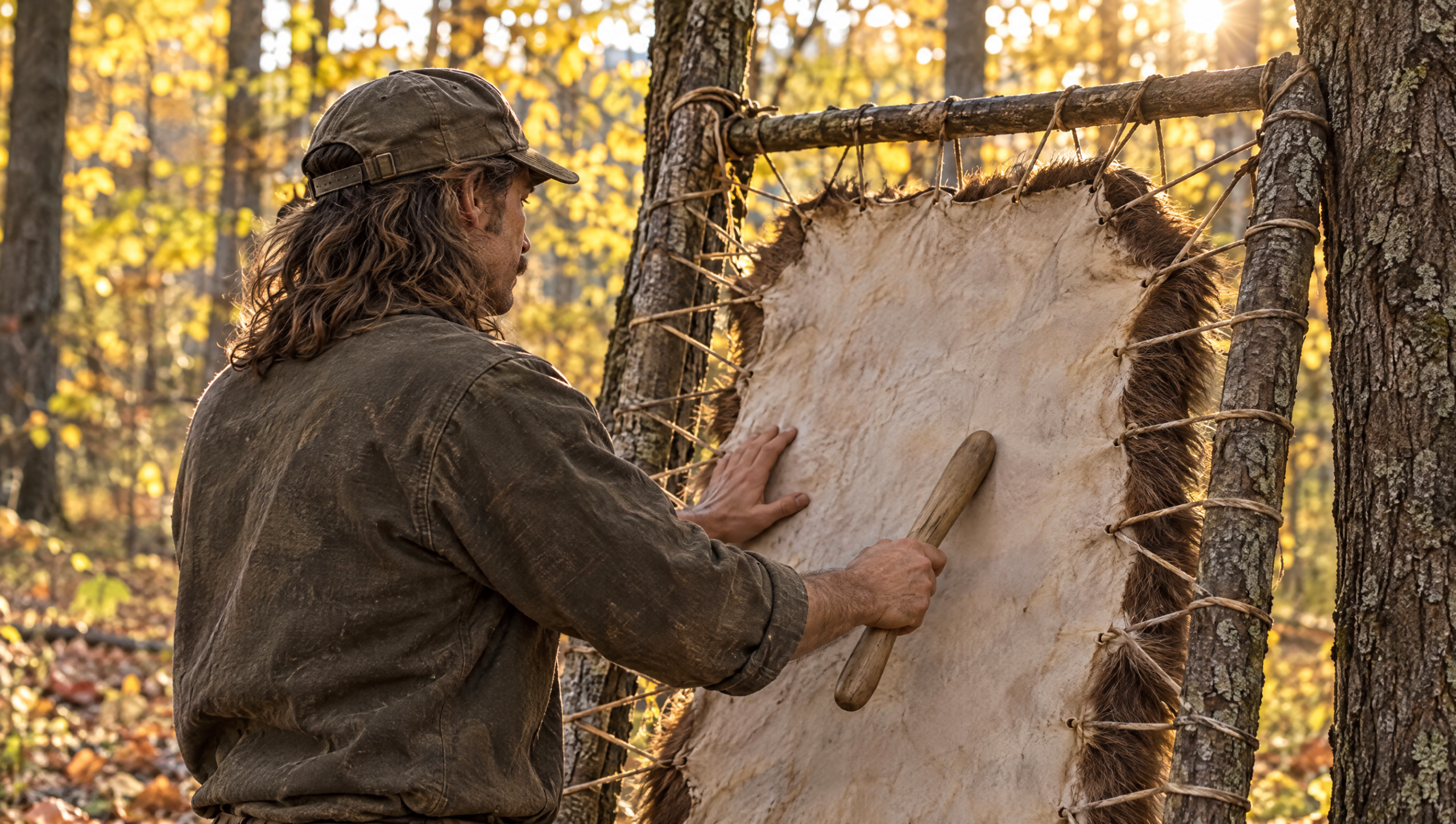
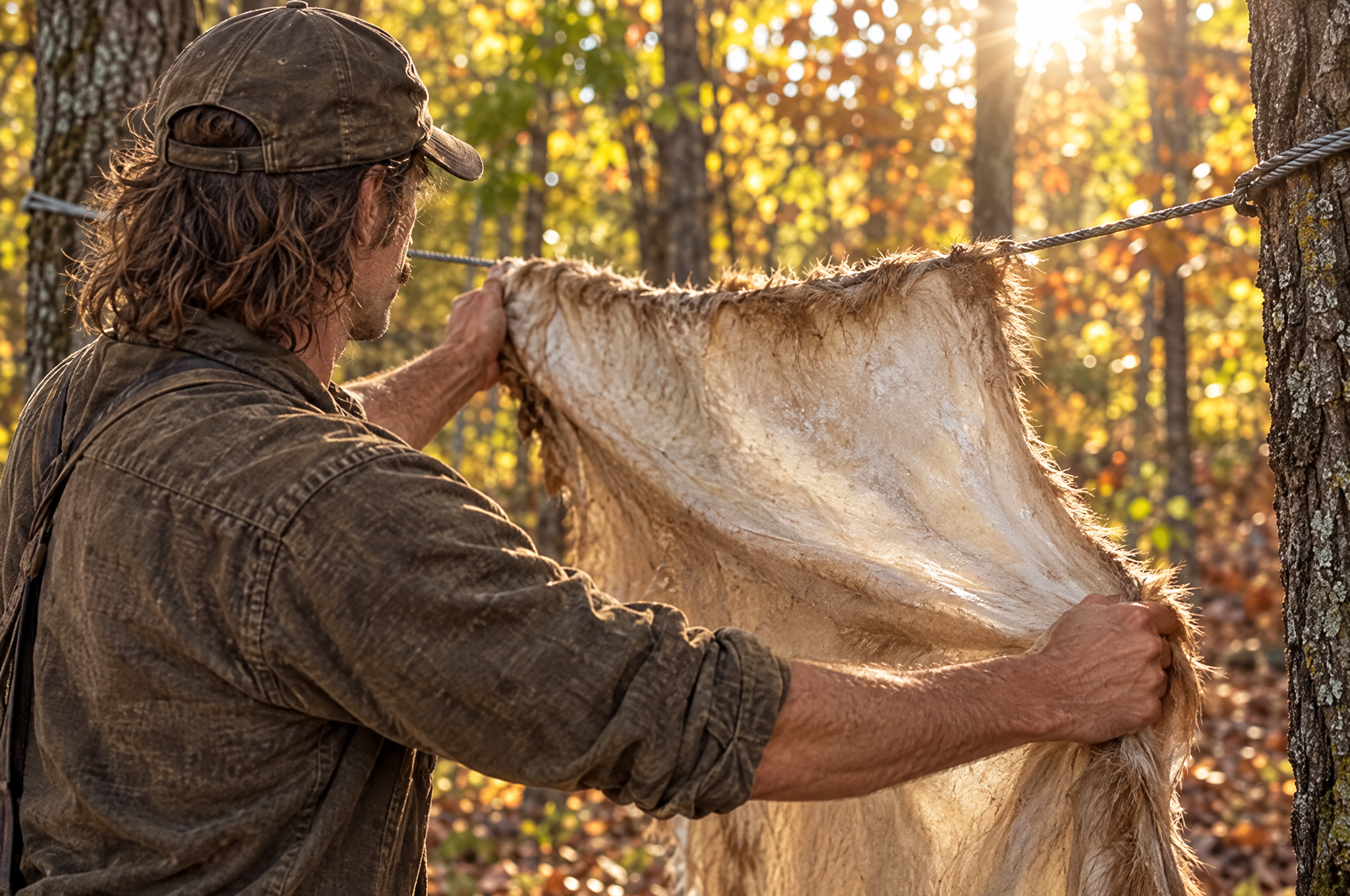
This is the step that makes soft leather. As the hide dries, keep working it. Stretch it from corner to corner. Pull the flesh side back and forth over a smooth board edge, a post or a tight cable.
Keep going on and off until it’s completely dry. When it starts to stiffen, work it again. A sanding block smooths the flesh side at the end.
CHECKPOINT: A finished hide bends and folds easily once it’s fully dry. If any part feels stiff, dampen that spot and work it again.
How Long Tanning Hides Takes
Pin this to your project board so you know what’s coming each week.
| Stage | Time |
|---|---|
| Fleshing | An afternoon |
| Salting and drying | 10 to 14 days, salt again at day 2 or 3 |
| Soaking soft | About 2 hours, sometimes much longer |
| Tan soak | 2 to 5 days |
| Rinse and oil | An evening, then overnight under plastic |
| Working it soft | A day or two, on and off |
Fleshing and softening times are our estimates. Salting, tanning and oiling times follow the NMSU Extension guide.
Troubleshooting Tanning Hides
The hair is slipping out. Cause: the hide stayed wet too long, or fat and flesh were left on. Fix: flesh more carefully next time and keep soaks short. A small bare patch can still make good leather.
It dried stiff. Cause: it dried without being worked. Fix: dampen it slightly and work it again until it bends.
It smells bad. Cause: the hide started to rot before the salt took hold. Fix: throw it out.
Shortcuts to Avoid When Tanning Hides
- Skipping the fleshing. Leftover fat and flesh can rot and make the hair slip.
- Using a metal tub or bucket. Salt and alum react with it.
- Hanging the hide to dry without working it. You’ll get rawhide, not leather.
- Leaving the hide soaking for days just to be safe. Long soaks can slip the hair.
When to Call a Pro
Take a trophy cape, a mount or a big hide like elk or cow to a taxidermist or a commercial tannery. Those hides are heavy to handle and hard to replace if something goes wrong. Tan an ordinary hide first, then decide if you want to do the big ones yourself.
Buy Once
- Best: a heavy plastic tote with a lid that fits the whole hide under solution.
- Better: a two-handled fleshing knife and a smooth beam once you’re tanning every season.
- Budget: an old hacksaw blade and the back edge of a kitchen knife for scraping.
Your First Hide
So can you tan a deer hide at home? You can, with salt, alum, a plastic tote and some patience. Keep the fleshing clean, keep the soaks short and keep working the hide while it dries. Pick one ordinary hide this season and start on a cool day. When you’re done, it’s one more of the homesteading skills you can cross off.
Frequently Asked Questions
How long does tanning hides at home take?
Plan on about 2 to 3 weeks. Salting and drying takes 10 to 14 days, and the hide sits in the alum tan for 2 to 5 days depending on thickness. The hands-on work is fleshing at the start and softening at the end.
What’s the easiest method for tanning hides as a beginner?
Salt and alum. It uses alum, washing soda and salt in a plastic tub, and the extension guide notes a hide is hard to over-tan in the solution, so a little extra time in the tub is fine. Brain tanning works too, but it takes more practice.
Why did my hide dry stiff?
It dried without being worked. Leather only stays soft if you stretch and pull it while it dries. Dampen it a little and work it over a board edge again until it bends.
Should I tan my first hide myself or send it out?
Tan an ordinary deer hide yourself first. Send a trophy cape, a mount or a big elk or cow hide to a tannery until you’ve finished one. A first hide is how you learn the feel of each step.
Is it safe to tan a hide at home?
Yes, with care. Wear rubber gloves when you mix and handle the tan, use plastic or wooden containers only, and read the labels on each product. Work outside or with a door open when you use ammonia, and keep kids and pets away from the tub.
Hair On or Hair Off for Your First Hide?
Hair on gives you a rug or wall hide with less scraping. Hair off gives you soft leather you can sew, but it takes more work.
Tell us what you’d make from your hide in the comments.