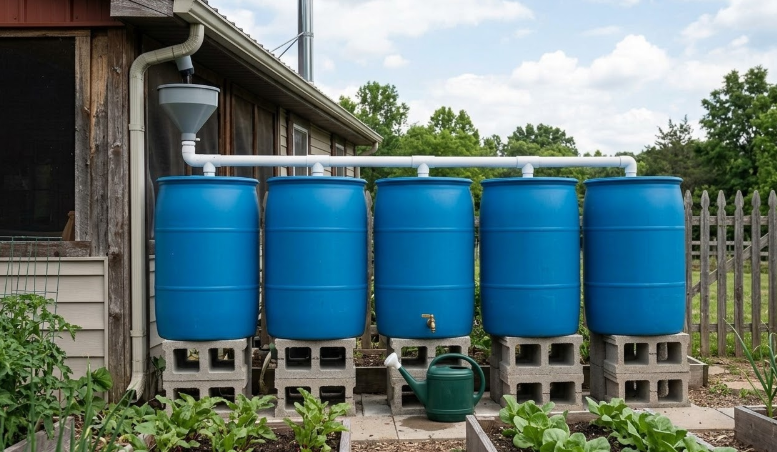

Many homesteads face water shortages due to drought, unreliable wells, and frequent power outages. These issues limit the amount of water available for crops, livestock, and household use.
Rainwater harvesting systems collect and store rainfall to improve self-reliance during dry periods. With the right setup, stored rain supports your garden, keeps animals hydrated, and reduces pressure on other water sources, all without relying on external utilities.
Rainwater Harvesting Benefits for Modern Homesteads
Harvesting rainwater extends your water supply and supports more consistent food production. It also helps conserve groundwater and reduces demand on public water systems.
Key benefits include:
- Collects clean water for livestock and garden beds
- Supports food production during drought or outages
- Reduces erosion near buildings and driveways
- Provides backup water during grid failure
Learn more about long-term benefits through Texas A&M AgriLife Extension‘s rainwater harvesting resources.
Core Components of Rainwater Harvesting Systems
Every rain collection system includes a few basic components. These allow rain to flow smoothly from the roof to the storage. Keep the catchment surface clean and check all filters monthly.
A functional system includes:
- Catchment surface, such as a clean metal or composite roof
- Gutter and downspout system to move water without leaks
- First-flush diverter that sends early runoff away from the tank
- A storage container such as a barrel, tote, or underground cistern
Rainwater Storage Tanks for Different Homestead Needs
Storage tanks vary in size, cost, and placement. Choose based on how much space you have and how the water will be used.
- Barrels (50–100 gallons): These are ideal for small gardens or container plants. Easy to install near downspouts.
- IBC totes (275 gallons): Provide midsize storage with easy access through spigots or hoses. Require support pads.
- Cisterns (500+ gallons): Support large gardens or livestock. Can be buried underground to protect from sun or heat.
Use a first-flush diverter with every tank to prevent debris from entering the system.
Filtration and Treatment Methods for Safe Storage
Collected rain often contains pollen, leaves, or dirt. Even clean roofs collect bird droppings and dust. Filtration protects your stored water.
- Mesh screens keep out insects and leaves at the downspout
- First-flush devices divert the dirtiest water at the start of each storm
- Sand filters and charcoal barrels remove smaller particles
- Optional bleach or UV treatment may be used for household or drinking applications
Remember: Test collected water before using it for drinking or indoor use.
Rainwater Collection Laws and Storage Restrictions by Region
Rainwater laws differ across states and counties. Some areas encourage harvesting; others restrict tank size or require permits.
- Colorado: Allows collection from up to two barrels, with a total of 110 gallons
- Texas: Encourages harvesting and provides tax breaks for systems
- California: Allows non-potable systems without a permit if they meet the plumbing code
- Utah: Allows up to 2,500 gallons without registration
- Oregon: Permits collection from rooftops but not from natural streams or landscapes
Designing for Drought: Adapting Harvesting Systems to Dry Seasons
A well-designed system accounts for periods when rainfall is scarce or irregular. Design choices can improve year-round access.
- Use overflow pipes to direct excess water into swales, mulch pits, or tree basins
- Size tanks based on expected rainfall and intended use, not just budget
- Add shade or insulation to tanks to prevent algae or temperature swings
- Group plants by water need to stretch available stored water
- Install multiple tanks if space allows, with valves to control flow between them
Rainwater Harvesting Systems for Long-Term Homestead Resilience
Rainwater harvesting systems help your homestead stretch limited water supplies without relying on pumps, wells, or power. With a basic setup, stored rain supports food growth, animal care, and long-term stability across unpredictable seasons.
If you’re already using a harvesting system, share your setup. What works well? What changes helped during dry spells? Your experience can help others build a more resilient water supply.
FAQs
How much water does a typical rain barrel hold?
Most hold between 50 and 100 gallons, depending on size and material.
Can collected rainwater be used for drinking?
Yes, but only with proper filtration and disinfection. Always test for contaminants first.
Do all states allow rainwater harvesting?
Most do, but some limit tank size or require permits. Always check state and county codes.