
- At a Glance: Homemade Fabric Softener Recipe
- The Best Natural Alternative: Plain 5% distilled white vinegar is the safest, most effective alternative to chemical softeners.
- The 2-Ingredient Recipe: Mix 1 gallon of white vinegar with 30-40 drops of your favorite essential oil in a glass jar.
- The Golden Rule: Always add it to the rinse cycle dispenser; never mix it directly with your laundry detergent.
Tired of spending a fortune on “green” laundry products just to avoid the harsh chemicals in standard brands? I feel you. Buying expensive eco-friendly jugs often feels like trading one corporate system for another.
Making your own homemade fabric softener recipe is one of the easiest ways to take back control of your laundry room. Even better, this simple, two-ingredient solution only costs just pennies per load and is suitable for sensitive skin.
RELATED: Homemade Laundry Detergent | Powder Detergent Recipe
Safety & Material Note
While this is a very safe recipe, never apply undiluted essential oils directly to your skin during prep. Always store your finished softener in glass, as the acidity of the vinegar can break down thin plastics over time.
What’s a Natural Alternative to Fabric Softener?
The best natural alternative to fabric softener is distilled white vinegar, which naturally softens clothes by stripping away hard water minerals and leftover detergent rather than coating fibers in wax.
Commercial softeners use artificial waxes and animal fats that ruin towel absorbency and trap odors over time. If your workout clothes always smell a bit funky, commercial softener buildup is usually why. Grandma knew better. She used an acid (vinegar) to balance out the base (laundry soap), leaving clothes naturally clean.
Common Internet Shortcut to Avoid: Do not use the popular Pinterest “Hair Conditioner + Vinegar” hack. Silicones in cheap hair conditioner will gunk up your washing machine’s drum and permanently ruin the absorbency of your clothes.
How Do I Make Fabric Softener at Home? (The Recipe)
You can make fabric softener at home by pouring standard 5% distilled white vinegar into a glass jar and optionally adding 15-20 drops of high-quality essential oils like lavender or lemon per quart.
Tools & Materials You Need
- 1 Gallon Distilled White Vinegar: Must be exactly 5% acidity. Avoid “cleaning vinegars” which can be 20% or higher and may degrade your washer’s rubber seals over time.
- Essential Oils (Optional): Use real, therapeutic-grade oils (like lavender, lemon, or tea tree). Avoid cheap synthetic fragrance oils—they defeat the purpose of making a natural product.
- Glass Storage Container: A large, wide-mouth half-gallon mason jar or a heavy-duty glass jug with a tight-fitting lid. Never store this in thin plastic, as the essential oils will degrade the plastic over time.
- A Funnel: Crucial for preventing spills when pouring from bulk jugs into your glass jars.
The 2-Ingredient Recipe: Step-by-Step
Step 1: Prep and Protect Your Space Before you begin, clear your kitchen counter. Raw, undiluted essential oils can strip the varnish off wooden tables or damage painted surfaces if spilled. Work over a stainless steel sink or a protected countertop.
Step 2: Pour the Vinegar Base Place your funnel into your glass storage jar. Slowly pour in the 5% distilled white vinegar. Stop pouring when you are 2 to 3 inches away from the top of the jar. You must leave “headspace” (empty air at the top). If you fill the jar to the brim, you will not be able to agitate the mixture later.
Step 3: Add the Essential Oils Carefully add 15 to 20 drops of your chosen essential oil per quart of vinegar (if you are making a full gallon, this equals roughly 60 to 80 drops).
- Safety Note: Do not let the undiluted essential oils touch your bare skin, as they can cause mild irritation before they are diluted in the vinegar.
Step 4: The “Vigorous Shake” Verification Remove the funnel and seal the jar tightly with a leak-proof lid. Oil and water (or vinegar) naturally separate. Give the jar a hard, vigorous shake for 10 to 15 seconds.
- Verification Test: Hold the jar up to the light. You should see the essential oils broken up into thousands of tiny, cloudy micro-droplets suspended throughout the vinegar. If you see a single, solid oil slick floating at the top, you need to shake harder.
Step 5: The Pre-Wash Habit Store the jar in a cool, dark cabinet near your washing machine. Because this is a natural mixture without synthetic emulsifiers, the oil will float back to the top between wash days. You must give the jar a quick, hard shake before every single use to disperse the oils before pouring it into your machine.
How to Use Homemade Fabric Softener in Your Washer
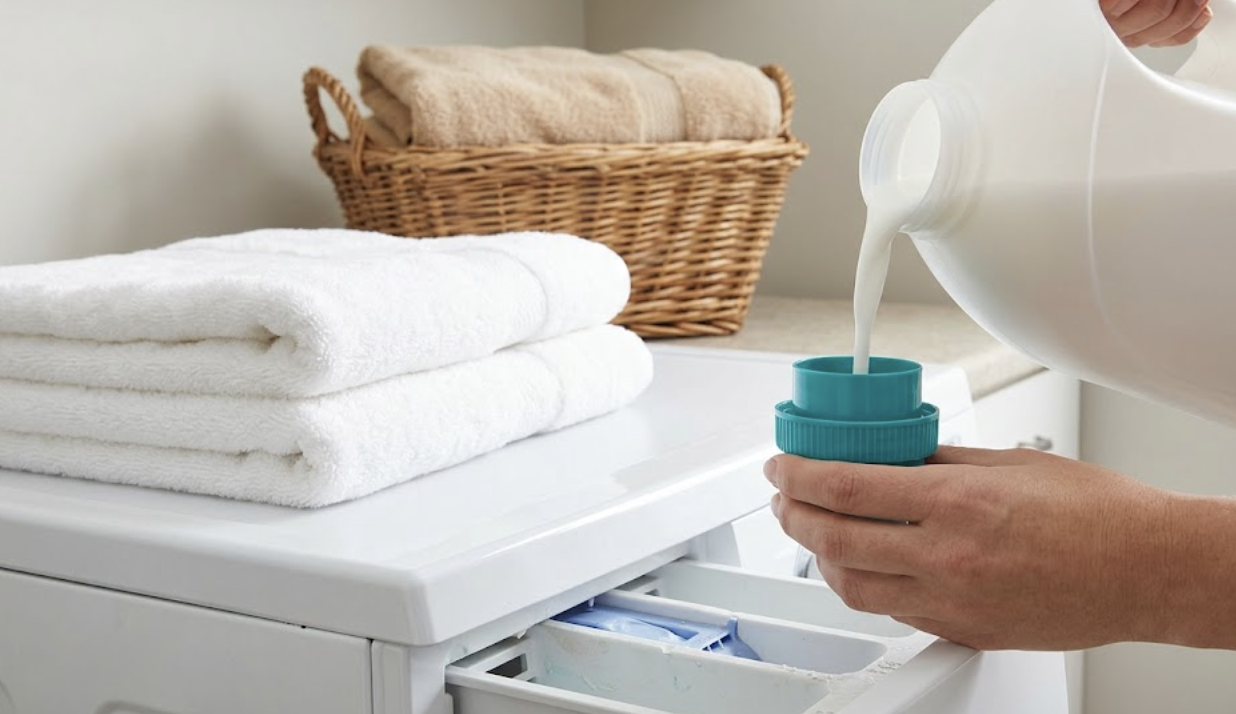
To use homemade fabric softener, pour 1/4 to 1/2 cup of your vinegar mixture directly into your washing machine’s designated fabric softener dispenser before starting the wash.
While the recipe itself is foolproof, exactly when the softener hits your laundry matters just as much as what’s in it.
STOP POINT / Sequencing Rule: Your softener must go in the rinse cycle dispenser. Never pour it directly into the drum with your laundry soap. If vinegar (an acid) mixes with detergent (a base) in the main wash, they neutralize each other, leaving your clothes dirty. Let the machine dispense it during the final rinse.
Is Homemade Fabric Softener Effective?
Yes, homemade fabric softener is highly effective because it removes the soapy residue that makes clothes stiff, restoring their natural softness and absorbency.
You will need to set realistic expectations for the first few washes. Clothes won’t feel artificially “slippery” or overly perfumed like they do with store-bought brands. However, they will be genuinely clean, fluffy, and completely free of skin-irritating chemicals.
Troubleshooting: If Your DIY Fabric Softener Isn’t Working
If your homemade fabric softener isn’t working, the most common culprit is using too much vinegar, skipping the rinse cycle, or dealing with years of commercial wax buildup.
If your first load comes out smelling a little strange or feeling stiff, don’t panic and run back to the commercial aisle. You are likely just dealing with one of these common, easily fixable issues.
- Symptom: Clothes smell like salad dressing. * Fix: You are using too much. Reduce the amount used to exactly 1/4 cup. Also, verify your machine is actually completing its final rinse cycle.
- Symptom: Towels are still incredibly stiff. * Fix: Strip your towels in hot water first. Years of commercial softener wax buildup take a few washes to completely dissolve. The vinegar is working, it just has to eat through the old wax first.
- Symptom: The essential oil scent completely disappears. * Fix: Essential oils are volatile and flash off in the heat of the dryer. If you want a lasting scent, drop the oils directly onto 100% wool dryer balls instead of putting them in the wash.
- Symptom: There are greasy spots on your clothes. * Fix: You likely mixed the vinegar directly into a homemade laundry soap (like one made with castile soap). The acid un-saponifies natural soap, turning it back into a greasy oil. Keep them in separate cycles.
- Symptom: Your machine’s dispenser is suddenly full of black gunk. * Fix: Vinegar actually cleans washing machines. It is likely dislodging years of old commercial softener mold hidden in your machine’s pipes. Run an empty, hot-water clean cycle with 2 cups of plain vinegar to flush it out.
FAQs
How long does this homemade fabric softener recipe last? Because vinegar is highly acidic and naturally preserves itself, this homemade fabric softener recipe will last indefinitely when stored in a cool, dark place in a sealed glass container.
Can I use apple cider vinegar instead of white vinegar? No. Apple cider vinegar contains tannins and natural colorants that can stain light-colored clothing over time. It also leaves a stronger, sweeter odor behind. Always stick to clear, distilled white vinegar.
Why did my towels get stiffer after switching to a natural softener? You are experiencing the “detox” phase. Commercial softeners coat fibers in wax. When you switch to vinegar, it takes 3 to 4 washes to fully strip away that old wax. Once the wax is gone, the towels will become soft and highly absorbent again.
Can I mix this homemade fabric softener recipe directly with laundry soap? Absolutely not. If you mix your homemade fabric softener recipe (acid) with laundry detergent (base) in the same compartment, they will chemically neutralize each other. Your clothes will not get clean. Always use the separate rinse dispenser.
Is buying bulk vinegar cheaper than buying commercial fabric softener? Yes. A gallon of 5% white vinegar costs around $3 to $4. Using 1/4 cup per load means you get 64 loads per gallon, making it cost roughly 5 to 6 cents per load—a fraction of the price of commercial brands.