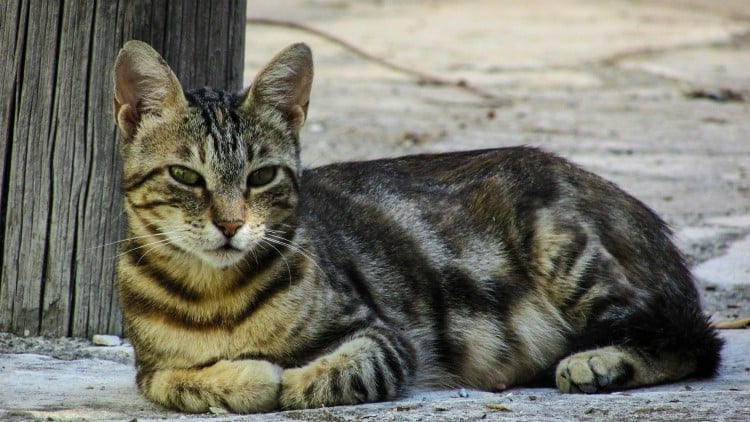

TL;DR: Barn Cats: 7 Myths Debunked
- Barn cats are valuable helpers: They’re effective at controlling mice and rats around barns and farms, and misconceptions about their usefulness are common.
- Friendly cats still work: Tame or semi-tame cats can be just as good at their job as feral ones, and easier to handle for care like shots or medical needs.
- Letting cats breed freely isn’t ideal: Uncontrolled breeding leads to inbreeding and sickly kittens; adopting spayed/neutered cats from shelters is usually better.
- Feeding and water are essential: Providing regular food and clean water doesn’t stop hunting; it keeps cats healthy and more likely to stick around.
- Feral cats can adapt: With patience, some feral barn cats can become indoor pets, though it varies by individual personality.
Related: Raise Your Animals Responsibly
Barn Cats Myths Debunked: What Really Works
Barn cats have long been part of farm and homestead life, but misinformation about how they should be cared for, and whether they’re even effective, still circulates widely. From feeding myths to assumptions about feral behavior, these misconceptions often lead to poor outcomes for both cats and property owners.
In this guide, we break down the most common barn cat myths using real-world homesteading experience and humane animal care principles, so you can make informed, practical decisions that benefit your land and the cats that live on it.
You Can’t Have Tame Barn Cats: They Won’t Do Their Job
This thought is far from factual. A feral cat will do no better or worse than a tamed cat in the barn. As a matter of fact, the friendlier that you can get your barn cats, the easier it will be for you. This is especially true if you want to get them rabies shots or need to take care of an injury. It will also be easier on the cats if you need to catch them, as live trapping can be traumatic for the cat. In addition, it can also make an already unfriendly feral cat even more unfriendly. Not to mention angry! This puts the person who needs to handle the cat at risk of being torn up by four paws full of sharp claws.
If I Want Good Barn Cats, I Need to Let Mine Have Their Own Litters
Again, false. If you have a cat who you feel has especially good genes that you really want to keep going, then you might want to let her have a litter. That way, you can try to keep those genetics on the farm. Keep in mind, however, that barn cats tend to inbreed. This means that after a few generations, kittens tend to become sickly. This is counterproductive to your desire to have good, healthy animals.
With that said, if you really feel that you have a good cat, male or female, whose genetics you want to keep going, allow them only a few litters. Select one or two from the litters who will keep the lines going that you want, then spay or neuter the rest. But, with this route, you’ll always have to be vigilant that inbreeding doesn’t occur. Even if all your other cats are fixed, this can still be an issue. You’ll have to be more hands-on than you will probably want to be. Plus, you’ll have to watch for heat cycles so there isn’t an “accident.” Not to mention the continual spaying/neutering of the litters will be expensive. But there is another, better alternative.

Many shelters now are offering barn cats for adoption. These are usually cats that are feral or may be a bit friendly, but they’re still not quite house cat material. Because of this, the shelters look for barn homes for these cats. These cats are usually spayed or neutered and may even have shots. Because some shelters have so many of these hard-to-place cats, I have seen them offered for adoption at a reduced cost. Sometimes they’re even free! You may have to prove that you have shelter for them, as well as any other requirements that the shelter might have, but then you have the satisfaction of giving a “home to the homeless.” With this method, there’s also no worry about inbreeding or litters, as they are coming to you already spayed/neutered.
As there is usually no shortage of availability of these cats, you can usually always find some when you need them. With adoption, you keep your barn filled with cats without contributing to overpopulation! The shelter (or rescue) doesn’t have any available? Let them know that you are looking for animals for your barn, and you’re open to ferals who need to be placed. Then ask if they can contact you if and when they have any available.
If I Feed My Barn Cats, They Won’t Do Their Job, So I Let Them Fend for Themselves
Once again, from my own (and others’) experiences with barn cats, this is a total myth. In fact, starving your barn cats may not only encourage them to run away, especially if they find someplace else that puts food out, it could get you into a bit of trouble as well.
Just because you feed your cats, that doesn’t mean that they won’t do their jobs as the rodent hit squad of your barn and grounds. In fact, quite the opposite. A well-fed cat means a happy, healthy cat that will get out there and hunt. And, from my experiences, it may encourage them to leave your wild birds alone.
If I Let My Barn Cats in the House, They Won’t Want to Go Back to the Barn
Most people will have their barn cats stay in the barn. However, once in a while, the kids may have a favorite (or maybe even one of the adults may have a favorite). But let’s say you don’t really want an indoor cat. Not to fear! Letting your barn cat come inside won’t ruin it for the barn. While once it gets a taste of indoor life, it may prefer it. If you get the cat into a routine of bringing it in for a few hours, then taking it back out, the cat will learn. Then, you may even have a cat who decides that an hour indoors is enough. After an hour, they may want to go back out voluntarily. When that happens, let the cat out even if you wanted it in longer. Don’t force it, or the cat won’t want to come back.
If, for some reason, you need to bring a barn cat in for medical reasons, especially during fall/winter transitions, watch the weather. If the cat has been in recovery for weeks or months during warm weather and has missed that natural temperature transition, don’t just put him out if the weather is freezing or sub-zero. The cat’s system will not have had time for the system to adapt to the drastic changes. Because of this, either keep your cat in till spring, or on the first nice day, let it out for a short time. Once the cat has been briefly exposed, bring it back in. Do this over and over, leaving the cat out a little longer each time. Within a month or so, the cat will probably be adapted to the cold enough. Then they can go out to the barn full-time once again.
I Don’t Need to Put Out Water…They Can Find Plenty Around the Property!
Although you may have (or think you may have) plenty of water sources around your property, always, always have a pot or two of fresh, clean water out for your barn cats. Even in the winter! While you may see one of your cats drinking from the nearest mud puddle, they still need clean water available to them at all times. I normally put one pot of water around their food. You can also put another in one of their other favorite hangout spot. Don’t forget to scrub the water pots out every so often, as they can get quite dirty and scummy on the inside. Also, be sure to change the water daily.
Feral Barn Cats Can Never Make Good House Cats
If you have a lot of patience, some feral cats actually will make excellent house cats. In fact, some of my best, most loving house cats began feral. If you get a barn cat as a little kitten, it’s quite easy to make it a household pet. However, if you get them as juveniles or adults, it will take more patience and work on your end.
It can take time to get barn cats to trust, as well as time for them to get used to the indoors. Lastly, it takes time for them to realize that you actually pose them no danger. Don’t make fast moves towards them or force them to be picked up or pet. Work on the cat’s time, but also continually talk to them, call them by name, and give them treats. Eventually, they’ll come around. Some take as little as weeks, but others can take a month or more.
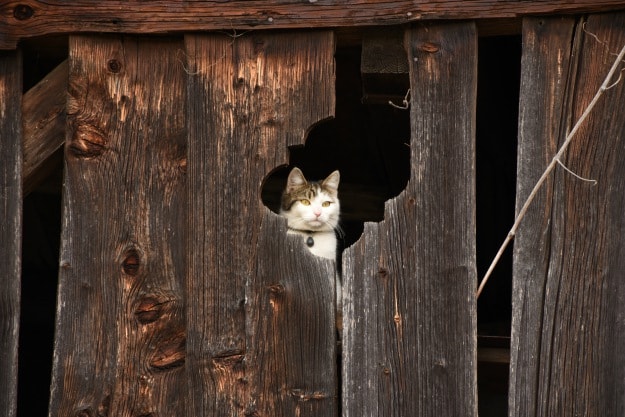
Now, all that said, there are some cats that, no matter what, do not want to be a house cat. Regardless of what you do, they’ll be unhappy if stuck inside. If this is the case, and it’s still a cat that you really want to make a pet out of, nothing is stopping you from making friends with the cat as he lives his life happily outdoors. And who knows? Maybe someday your favorite barn cat will want to be inside with its favorite human!
I Can’t Bring A Barn Cat Indoors…..He’ll Mess All Over My House!
Again, this couldn’t be further from the truth. I personally have never had a barn cat refuse a litter box when provided. Just make sure that the box is in a place where the cat can see it. (You can always move it later.) If you’re able to physically pick the cat up, you can also take it right up and into the litter box.
The Bottom Line: Healthy Cats Make Better Barn Cats
Barn cats are most effective when they’re healthy, stable, and properly cared for. Feeding them, fixing them, and providing shelter doesn’t make them lazy; it makes them reliable. When myths are replaced with practical knowledge, barn cats can thrive while doing exactly what they’ve done for generations: keeping rodent populations in check.
Ready to Build a Healthier Barn Cat Program?
If you’re considering barn cats, or already have them, start by focusing on care, not myths. Humane treatment leads to better pest control, fewer long-term problems, and happier animals.
For more practical homesteading advice, animal care guides, and myth-busting resources, explore more articles from Homesteading.com and take the guesswork out of sustainable living.
Frequently Asked Questions About Barn Cats
- Do barn cats still hunt if you feed them?
Yes. Feeding barn cats does not stop them from hunting.
Cats hunt by instinct, not hunger, and well-fed cats are healthier, more active, and more consistent pest controllers than underfed or starving cats. - Are friendly barn cats effective mousers?
Yes. Friendly or semi-tame cats can be just as effective as feral cats.
Hunting ability is based on instinct and environment, not temperament. Friendly cats are often easier to care for and monitor. - Should barn cats be spayed or neutered?
Absolutely. Spaying and neutering barn cats is essential.
Unfixed cats reproduce quickly, leading to inbreeding, illness, and unstable populations that are harder to manage long-term. - Do barn cats need shelter and water?
Yes. Barn cats require shelter, clean water, and basic care.
Providing shelter protects them from weather extremes and predators, improving survival and reducing roaming. - Can feral barn cats ever become pets?
Sometimes. Some feral cats can adapt over time.
While not all feral cats become indoor pets, many acclimate to human presence and limited handling with patience.
Did we miss any barn cat myths you’ve had to debunk? Let us know in a comment below!
Rats in your barn not your only homestead nuisance? Check out this article for 12 natural ways to get rid of flies!