

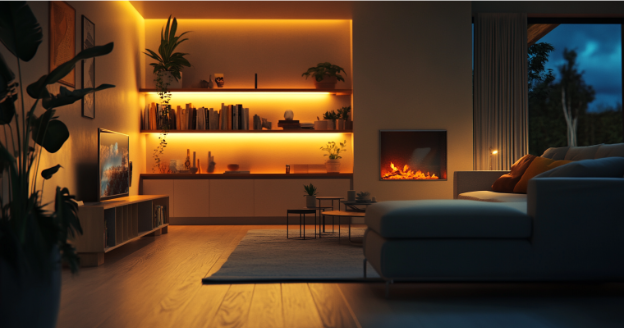
Home lighting does more than illuminate—it transforms how spaces feel and function. Dim lighting, for instance, can leave a room feeling dull and uninspiring. In contrast, layered lighting adds energy, depth, and life.
Proper lighting also impacts how you use each space. Bright kitchen lights make meal prep safer, while soft bedroom lights encourage relaxation. According to the Lighting Research Center, good lighting enhances mood and focus, making it essential for any home.
To create a well-lit and balanced home, you need to understand the three layers of lighting.
Mastering the Three Layers of Home Lighting
Every perfectly lit room uses ambient, task, and accent lighting. Together, these layers create harmony and functionality.
Ambient Lighting: The Base Layer
Ambient lighting provides a room with overall brightness. Ceiling-mounted fixtures, such as chandeliers or recessed lights, evenly illuminate spaces. Large pendants can also combine style with ample light.
Without ambient lighting, your room may feel dim and incomplete. Establish this layer first before adding other elements.
Task Lighting: Lighting for Precision
Task lighting focuses on specific activities such as cooking, reading, or grooming. Desk lamps improve visibility for studying while under-cabinet lights are perfect for food preparation.
Placing task lights close to activity areas prevents strain and ensures clarity. For optimal functionality, use them in kitchens, offices, and bathrooms.
Accent Lighting: The Finishing Touch
Accent lighting adds drama and style to your space. Use it to draw attention to artwork, shelves, or architectural details. For example, LED strips around mirrors or sconces over a fireplace bring sophistication.
Accent lights complete a polished, inviting look when layered with ambient and task lighting. For expert tips, visit the American Lighting Association.
Room-by-Room Lighting Guide
Each space serves a unique purpose, so its lighting must reflect its function and atmosphere. By thoughtfully layering ambient, task, and accent lights, you can ensure every room feels both practical and inviting.
Living Room: Adaptable and Inviting
The living room is your home’s centerpiece, so its lighting must meet various needs.
- Ambient: Use recessed lights or a ceiling fan with integrated lighting.
- Task: Add table lamps for focused light during reading or crafting.
- Accent: Use LED strips or sconces to highlight bookshelves, gallery walls, or fireplaces.
Pro Tip:
Dimmer switches allow you to adjust brightness, moving from lively gatherings to intimate evenings with ease.
Kitchen: Functional and Bright
The kitchen requires practical lighting for clarity and safety.
- Ambient: Install recessed lights or large pendants over the island.
- Task: Under-cabinet lighting prevents shadows during cooking.
- Accent: LED strips above cabinets or inside glass doors add subtle elegance.
Pro Tip:
Use daylight-toned bulbs for a clean, energizing atmosphere.
Bedroom: Calm and Relaxing
Your bedroom lighting should promote relaxation and support evening routines.
- Ambient: Choose soft flush-mount fixtures or chandeliers.
- Task: Bedside lamps provide focused light for reading.
- Accent: String lights or sconces add cozy, decorative touches.
Pro Tip:
Opt for warm white bulbs (2700K-3000K) to create a soothing vibe.
Bathroom: Clear and Stylish
Bathrooms need bright, even lighting for grooming tasks.
- Ambient: Use recessed or flush-mounted ceiling lights.
- Task: Vertical vanity lights eliminate shadows and improve visibility.
- Accent: Add toe-kick lighting or wall sconces for an upscale feel.
Pro Tip:
Choose moisture-resistant fixtures to ensure durability.
Dining Room: Warm and Elegant
The dining room’s lighting should enhance the meal and set the mood.
- Ambient: A statement chandelier provides even lighting and a focal point.
- Task: Use candles or pendants for intimate dinners.
- Accent: Spotlights or sconces draw attention to artwork or sideboards.
Pro Tip:
Install dimmers to transition between casual and formal settings seamlessly.
Quick Tips for Better Lighting
- Switch to LEDs: These bulbs last longer and cut energy costs.
- Match Color Temperature to Room Function: Warm tones for relaxation, cool tones for focus.
- Maximize Natural Light: Use mirrors and sheer curtains to reflect daylight.
- Choose Proper Fixture Sizes: Ensure lights complement room dimensions.
For additional advice, check out Energy Star’s guide on energy-efficient lighting.
Transform Your Home with Thoughtful Home Lighting
Thoughtful home lighting brings out the best in every space. Combining ambient, task, and accent layers help create a practical, stylish, and inviting home. Proper light lets each room shine with its own personality while your overall space feels cohesive and welcoming.
What’s your favorite lighting tip? Share your ideas or questions in the comments below and inspire others to brighten their homes!
FAQs
What is the best light temperature for home lighting?
Warm white (2700K-3000K) works best for living spaces, while cooler tones suit kitchens and bathrooms.
How can I save energy on lighting?
Switch to LED bulbs. They are energy-efficient, long-lasting, and versatile.
How do I choose the right chandelier size?
Add the room’s width and length (in feet) and convert the total to inches. That number is the chandelier diameter.
Can I mix warm and cool lighting in one room?
Yes, but use them strategically. Warm light can create cozy seating areas, while cool light works for functional zones.
Where can I find more lighting ideas?
Visit the American Lighting Association for expert tips or Energy Star for energy-saving solutions.
