TL;DR: Harvesting & Juicing Queen Palm Berries
- The article explains how to forage and harvest ripe Queen Palm berries, picking only those that are fully orange and detach easily from the tree.
- Queen Palm berries are mostly seeds with a thin fibrous layer that is slightly sweet and chewable, and many are edible once ripe.
- To extract juice, the berries are rinsed, simmered in water, cooled, and then the liquid is strained through a jelly bag.
- The strained juice can be used as a base for recipes like jelly or sauces, or frozen for later use.
- The article emphasizes learning what wild plants are safe to forage and incorporating sustainable edible foods from your environment.
Related: A New Twist On Your Traditional Jellies
“Juicing” Queen Palm Berries
Queen Palm trees produce clusters of bright orange berries that many people overlook as a potential food source. With proper identification and preparation, these berries can be harvested, juiced, and used for homemade jelly or other recipes. Learning how to safely harvest and process Queen Palm berries is a great way to explore foraging, reduce waste, and make use of edible plants already growing in your environment.
In our case, the palms were already being trimmed, so I asked the tree service to remove the fruit bunches and leave them for me. One bunch was half orange and half green, so I harvested only the ripe fruit. Even though ripe berries are orange, I only picked those that released easily with a gentle twist.
As the remaining fruit continued to ripen, I harvested it once or twice a day. After trying both methods, I found it’s best to let the berries fully ripen on the tree and collect them as they fall. They seem slightly larger and noticeably sweeter this way.

With my bucket slowly filling, I turned to figuring out how to use the fruit in the recipes I’d found. Queen palm berries are about 98% pit, covered by a fibrous layer and a thin skin. The fibers aren’t truly edible, but they are chewable, very sweet, and incredibly sticky, no wonder squirrels love them.
Flavor-wise, opinions vary, but I often notice a mild banana-like taste when chewing the fibers, along with hints of other flavors I can’t quite place. It’s subtle but surprisingly pleasant.
I decided to try making jelly from the berries, which raised the next challenge: extracting juice. Unlike berries such as raspberries, there’s nothing to really cook down, and with so much pit, a juicer wasn’t an option. After some research, I learned how to extract juice from the fruit, which became the base for several recipes.
“Juicing” the Palm Fruits
To begin with, I rinsed the berries well (I did this outdoors using the hose, but you can do this indoors too) and let them drain. This is basically to remove any dirt and debris from the berries, especially those that I had harvested before the trees were pruned, as the ripened berries fell to the ground.
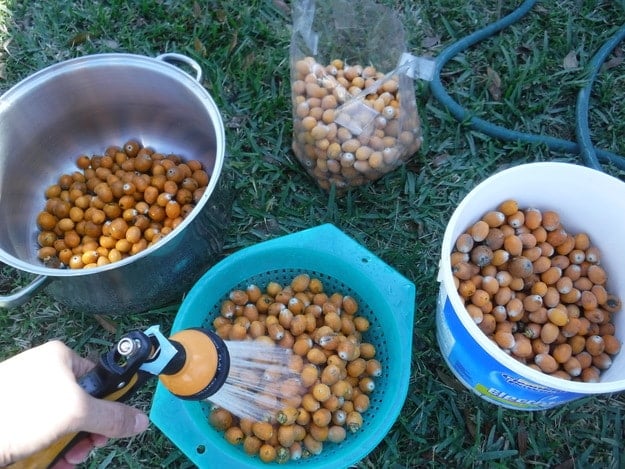
Next, I placed the fruits into a large pot, and covered with water, covering 1” over the top of the fruits. I actually split my harvest into 2 pots for this process. It was just easier than working with a pot filled to the brim.

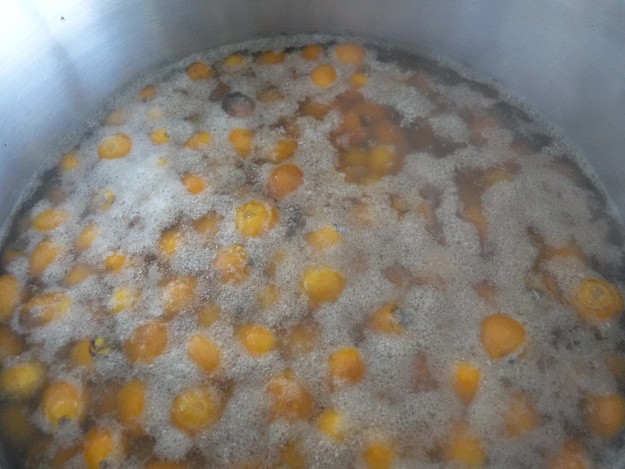
I then placed the pot of fruit, uncovered, on the stove until it came to a boil. (This can take a while.) When the pot finally began boiling, I lowered the heat to medium and, still leaving it uncovered, allowed it to simmer for about 1 hour. (Although I didn’t experience sticking, I did occasionally stir the fruit.) After simmering, remove from heat and let sit 1 hour to cool.
When the pot of fruit has cooled for an hour (you should be able to handle it by this time without burning your hands, although the fruit still may be warm or even on the hot side), begin to put a handful of fruit at a time into a jelly bag and squeeze.
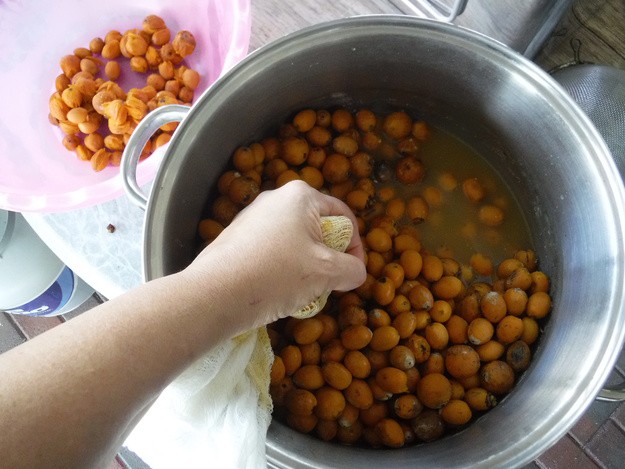
Depending on how large the seed of the fruit is, you may get very little of anything, or you may get varying amounts of additional liquid. You may squeeze the fruits into the pot that the fruits are already in, or you may squeeze them into a new bowl. Either way, you will be straining the liquid again when you are through, so it doesn’t really matter. The fruits may be discarded after they have been squeezed.
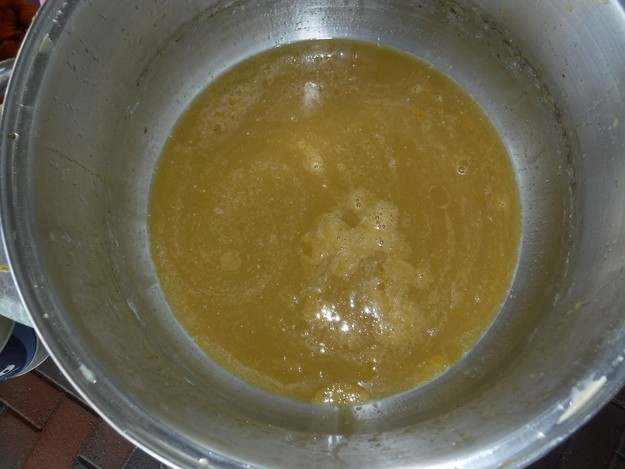
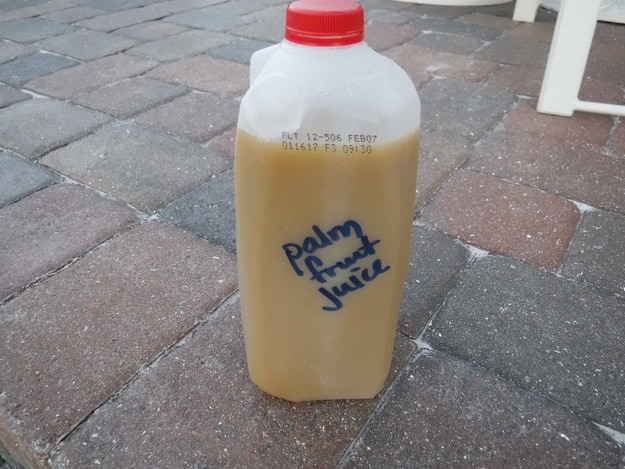
Once you have your thoroughly strained liquid, you may now use it for your recipes or freeze it. Freezing is simple and well-cleaned. Plastic, half-gallon milk jugs work well. Be sure to leave open space at the top of the container to allow for expansion. Thaw and use when you are ready!
Making Use of Queen Palm Berries
Harvesting and juicing Queen Palm berries is a simple way to explore local foraging while making use of a resource many people ignore. With careful harvesting and proper preparation, these berries can be transformed into a useful ingredient that supports a more self-reliant and sustainable lifestyle.
Try Foraging Queen Palm Berries Yourself
If you have Queen Palm trees nearby, consider harvesting ripe berries and trying this juicing method for yourself. Start small, follow safe foraging practices, and experiment with turning the juice into jelly or other homemade recipes. It’s a rewarding way to connect with your surroundings and expand your homesteading skills.
Up Next: 12 Food Storage Ideas for Small Homes
 Follow us on Instagram, Twitter, Pinterest, and Facebook!
Frequently Asked Questions About Queen Palm Berries
Are Queen Palm berries edible?
Yes, Queen Palm berries are edible when fully ripe. While most of the fruit is seed, the thin outer flesh can be processed into juice for use in jellies or other recipes.
How do you know when Queen Palm berries are ripe?
Queen Palm berries are ripe when they turn bright orange and detach easily from the stem. Unripe green berries should not be harvested.
Can Queen Palm berries be eaten raw?
Most people do not eat Queen Palm berries raw due to the large seed and fibrous texture. They are typically simmered in water and strained to extract juice.
What does Queen Palm berry juice taste like?
Queen Palm berry juice has a mild, slightly sweet flavor. It is often used as a base for jelly, syrup, or blended with other fruit flavors.
What can you make with Queen Palm berry juice?
The juice is commonly used to make jelly but can also be frozen for later use or added to sauces, drinks, or other preserves.
Are Queen Palm berries safe to forage?
Queen Palm berries are generally considered safe when properly identified and prepared. Always confirm plant identification and avoid berries that are moldy, damaged, or unripe.