DIY Blacksmithing Anvil
Blacksmithing is a useful trade on a homestead and can be a very stress-relieving hobby. Buying blacksmithing equipment, however, is expensive and the proper supplies can be hard to find. Especially a good anvil. Which is exactly why we’ve created a DIY anvil tutorial to fulfill your blacksmithing dreams without emptying your bank account.
Follow the instructions below to make your own homemade blacksmithing anvil
This post is an adaptation of Instructables’ Railroad Track Anvil
Materials Needed
- 18 inch section of a railroad track
- 18 inches truck leaf spring
- Torch
- Crowbar
- Tongs
- Clamps
- Gloves
- Water and water hose
- Drill
- Bolts and nuts
Step 1. Find a good piece of railroad track scrap
Step 2. Shape the railroad track roughly into an anvil shape.

Basically, an anvil shape amounts to a horn on one end and a square on the other end. Soften the metal with fire for easy cutting and shaping. A torch would be most ideal – it is easy to manipulate and saves a lot of time.
Step 3. Make a flat surface on the top of the anvil.
This is where the section of truck leaf spring comes in. Remove the temper from the steel to make it flat and stay that way – this process is called annealing. The simplest way to do it is to cook it in a forge until it gets red hot (literally), then take it from the heat and bury it in a big pile of ashes. This annealing process will remove the stress from the molecules of steel, allowing it to be easily bent and not spring back.
Once your spring section is cool enough to handle, weld the square, forward end to the base of the horn – the point where the triangular horn becomes the same width as the rest of the track. Weld it solidly. Because of the curve, the rest of the spring will be higher than the top of the track.
Flatten the spring section to the top of the track using clamps. Spot weld it in several places, then remove your clamps and weld the two pieces together. This will take a few rods and a lot of heat!
After welding, cut the end of the spring section off about 4″ from the rear (away from the horn) end of the track.
Step 4. Drill holes

A real anvil has two holes – a square one, called a hardy hole, and a round one, known as the pritchel hole. Drill a hole about 5/16″ in size – this will be your anvil’s pritchel hole,
Step 5. Create a hardy hole

It’s impossible to drill a square hole, so instead drill a ’round’ hardy hole measuring approximately 5/8″. Tighten a bolt and nut through the overhang with the bolt on top, and weld the nut in place on the underside. To use, weld your hardy tools to the head of different bolts.
Step 6. The finishing touches
Fill a large metal bin (or trash can) with water until almost to the top and keep a hose nearby. Build a big pile of leaves, twigs, sticks, and larger pieces of wood near the can full of water. Light it and put your new anvil in it. Let it sit and cook for 30 minutes.
Wearing gloves and using a crowbar or large tongs, lift the anvil off the fire and drop it in the water. Then run!
The water will immediately begin to boil once you drop the anvil inside the can. Using the nearby hose, keep adding water to the can especially if it boils over. You want to cool the anvil quickly to reintroduce the stresses inside of the steel. Only this time, the anvil face will be hardened (not tempered) flat, instead of curved, as it originally was.
Step 7. Begin your blacksmithing projects!
 That’s it! The end result will be a perfectly usable anvil that will suffice general blacksmithing around the house or farm.More posts about blacksmithing here.
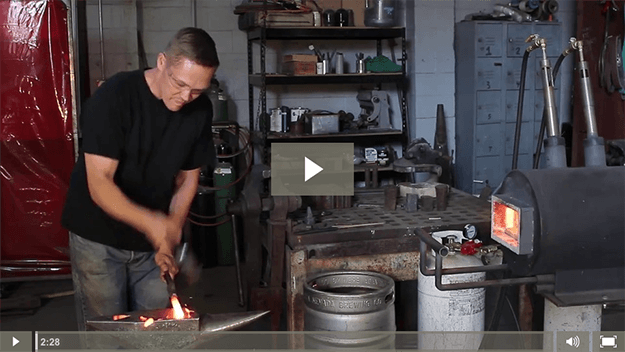 That’s all, fellow homesteaders! Did you enjoy our DIY blacksmithing anvil tutorial? Let us know in the comments section below what troubles you had or what you did differently when making your homemade anvil. Do you have a blacksmithing project that’s a staple on your homestead? Share it with us and we’ll give it a shot. Do you have Instagram? Don’t forget to join us @HomesteadingUSA.Click here to Like Us on Facebook.Click here to Follow Homesteading on Pinterest.
This post is an adaptation of the instructable’s’ Railroad Track Anvil.