


Make your own homemade laundry detergent with these homemade laundry soap recipes and ideas. Get borax free laundry detergent, natural recipes and more.
Where Can You Buy Ingredients for Homemade Laundry Detergent?
Ingredients for homemade laundry detergent can be purchased at grocery stores, health food stores, co-ops, and hardware stores, as well as online. Common ingredients like washing soda, baking soda, vinegar, and soap bars are widely available locally, while soap nuts and bulk supplies are often easier to find virtually.
Most people source ingredients from:
- Grocery or big-box stores: washing soda, baking soda, vinegar
- Health food stores or co-ops: natural soap bars, essential oils
- Hardware stores: washing soda and borax alternatives
- Online suppliers: soap nuts, bulk ingredients, refill supplies
Buying ingredients separately allows you to adjust recipes based on cost or sensitivity.
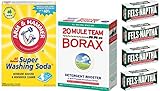
- Arm & Hammer 55 Oz. Super Washing Soda Laundry Booster. Pack of 1.
- Detergent booster and household cleaner.
- Improves liquid laundry detergent performance up to 40%. 100% fragrance and phosphate-free. 55 oz.
(As an Amazon Associate, we earn from qualifying purchases.)
9 Best Homemade Laundry Detergent Recipes and Ideas
Whether you’re trying to save money, protect the environment or prevent skin irritations, DIY Laundry Detergent creates an easy and natural way to clean your clothes. Some people prefer liquid laundry detergent, whereas others may opt for a homemade powder detergent – either way, we have you covered. There has also been some discussion of the safety of Borax in homemade laundry detergent, so we have also included recipes that do not include it. And just in case you want to go completely chemical-free, we have even included a one-ingredient, totally natural homemade detergent idea that may convert you from your current detergent.
1. Homemade Powder Laundry Detergent
Say goodbye to pricey commercial detergents with this homemade powder laundry detergent. It works as well as its branded counterpart and easy on the budget. Get full recipe here.
2. Homemade Liquid Laundry Soap
Prefer liquid laundry detergent? Here’s an awesome liquid laundry detergent recipe you can make in the comforts of you home.
3. Homemade Borax-Free Laundry Detergent
Borax-free laundry detergent is great for washing your undies and your baby’s clothes. Get full recipe here.
4. DIY Lavender Laundry Soap
Make homemade laundry soap more awesome by adding a twist of soothing lavender scent. Full recipe here.

- LAVENDER ESSENTIAL OIL – Features a soft, floral lavender aroma for use in diffusers, DIY projects, home fragrance, and personal care...
- VERSATILE FOR EVERYDAY USE – Suitable for aromatherapy, diffuser blends, candle making, soap making, and other DIY applications.
- AMBER GLASS BOTTLE WITH DROPPER – Comes in an amber glass bottle to help reduce light exposure and includes a dropper for easy...
5. Easy Homemade Laundry Detergent Using Zote Soap
Zote soap has this amazing clean, citrusy, sweet scent. Plus, it adds a happy pink hue to your old boring homemade laundry soap. Full recipe here.
6. No-Grate Homemade Laundry Soap
If you can’t bring yourself to grate all those soap bars, then this no-grate homemade laundry soap recipe is perfect for you.
7. Soap Nuts
Ever heard of soapberry before? It’s shell can be used as an all-natural laundry cleaner when dried. 4-5 nuts can wash 5-7 laundry loads. Can you believe that? You’ll go nuts for soap nuts! Read full instructions here.
8. Homemade Liquid Soap Nuts Laundry Detergent

If you love using soap nuts and find using liquid detergent more convenient, here’s the ultimate homemade liquid soap nuts laundry detergent recipe for you.
9. Borax and Vinegar Homemade Laundry Soap
Adding vinegar to your homemade laundry soap will go a long way. Vinegar has been a tried and tested stain remover, fabric softener, static reducer, and odor remover. Full recipe here.
How to Compare Homemade Laundry Detergent Recipes for Sensitive Skin
To compare homemade laundry detergent recipes for sensitive skin, check how mild each formula is. Recipes without added fragrance, harsh boosters, or unnecessary extras are better suited for babies and adults with allergy-prone or eczema-prone skin.
When comparing laundry detergent recipes, look for:
- No added fragrance or scent
- Simple ingredients with no harsh boosters
- Mild cleaning strength
- Good skin tolerance after a small test wash
Have we converted you from your old laundry ways? Is there a recipe you love that we left out? Tell us in the comments section below!
Is homemade laundry detergent really effective?
Yes, homemade laundry detergent can effectively clean everyday laundry, especially lightly to moderately soiled clothes. It works best when used correctly and in appropriate amounts based on your washer type and water hardness.
Is homemade laundry detergent safe for washing machines?
Homemade laundry detergent is generally safe for washing machines when used sparingly. Using too much detergent or formulas that do not dissolve fully can cause residue buildup, so it’s important to follow recommended amounts.
Can homemade laundry detergent be used in high-efficiency (HE) washers?
Yes, homemade laundry detergent can be used in high-efficiency washers when used in small amounts. Low-sudsing recipes, such as liquid detergents or soap nut–based options, are typically better suited for HE machines.
Do you need borax to make homemade laundry detergent?
No, borax is not required to make homemade laundry detergent. Many effective recipes use washing soda, soap, or soap nuts instead, and borax-free options are commonly chosen for sensitive skin or baby laundry.
Can homemade laundry detergent damage clothes?
Homemade laundry detergent is unlikely to damage clothes when used properly. Problems are more likely to occur if too much detergent is used or if ingredients do not dissolve completely during the wash cycle.
Is homemade laundry detergent safe for sensitive skin?
Homemade laundry detergent can be safe for sensitive skin when gentle, fragrance-free recipes are used. Testing a new detergent on a small load first can help identify potential skin reactions before regular use.
Leave a Comment