The biggest mistake beginners make is trying to do everything at once, getting overwhelmed, and then doing nothing. If you’ve been searching for farmers markets near me and coming up short, or finding results that don’t tell you what you actually need to know, you’re not missing something obvious. Just missing a better tool.
You don’t need a homestead to buy food like a homesteader. No garden plot, no chest freezer, no five-year plan. What you need is one farmers market, one visit, and a directory that filters by what matters to you.
The homesteading.com directory has over 7,000 farms, farmers markets, CSAs, farm stands, and food co-ops across all 50 states. It’s searchable by zip code, with filters most people don’t know to look for: EBT/SNAP acceptance, WIC, certified organic, and year-round operation. If you want a local food source that fits your life right now, start there.
Quick answer: To find farmers markets near me, the fastest tool is the homesteading.com directory where 7,000+ farms, markets, CSAs, and co-ops are searchable by zip code, with filters for EBT/SNAP, certified organic, WIC, and year-round listings. Free, no signup, takes 2 minutes.
How to Find Farmers Markets Near Me
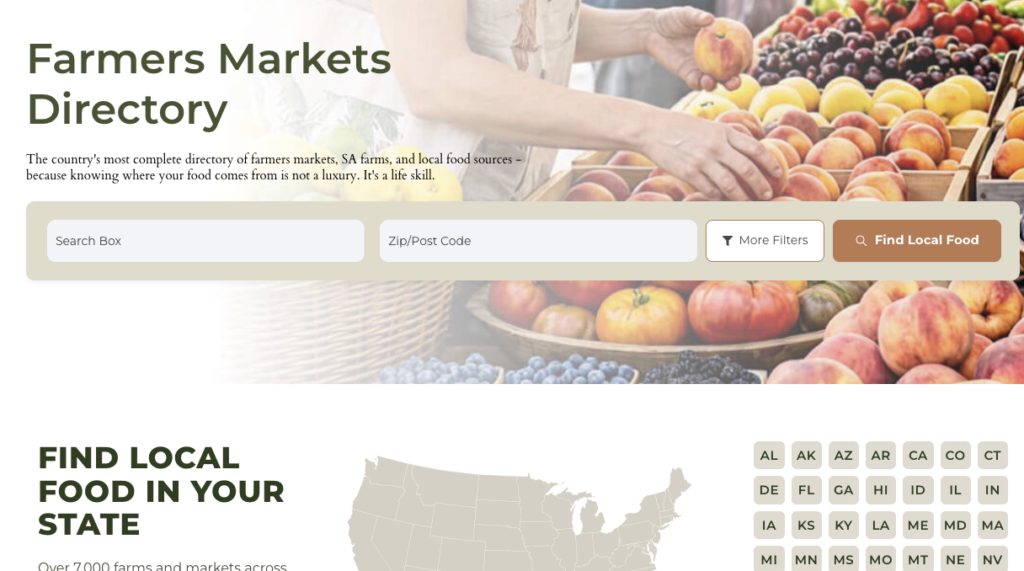
The fastest way to search for farmers markets near me is a zip code search in a directory built for this purpose. Generic searches pull up whatever has the words “farmers market” in a listing. That includes parking lots, pop-up events that ended three years ago, and corporate grocery displays with nothing to do with a local farmer.
The homesteading.com directory gives you 7,000+ verified listings, all filterable. Just enter your zip, scroll the results, and every listing tells you what type of source it is (market, CSA, farm stand, or co-op), what it accepts, and whether it runs year-round. You don’t need four different websites to find four different types of local food sources. One search covers all of them.
Why Google Maps Alone Won’t Cut It
Google Maps can only help you find locations. It doesn’t tell you if a market takes EBT and doesn’t filter for certified organic vendors. It won’t separate a Tuesday pop-up inside a mall food court from a real Saturday market with 40 farm vendors. And it won’t show you which CSAs or food co-ops are operating nearby.
Most apps built for farmers market searches have the same gap: partial data, no filters for food access programs, no CSA listings. This is fine for finding the nearest pin on a map, but these platforms won’t help you find the right info for how you actually shop.
Filters That Actually Matter (EBT, Organic, Year-Round)
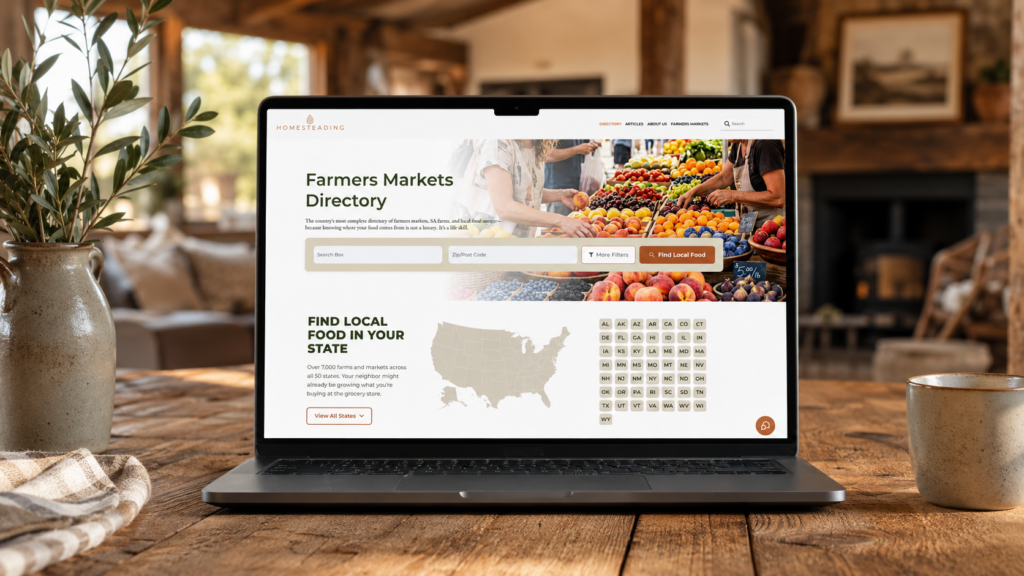
Once you’re in the directory, the filters are where the real work happens. Here are the 4 that matter most.
Do Farmers Markets Take Electronic Benefit Transfer (EBT)?
Yes. A growing number of farmers markets, CSAs, and farm stands accept EBT and SNAP benefits. The homesteading.com directory has an EBT/SNAP filter built in. Check that box and your results show only listings that accept it. No calling ahead, no guessing at the table. The filter does the work.
Some states and markets also run SNAP-matching programs, where your EBT dollar buys two dollars’ worth of produce. If that’s available at a market near you, the listing notes it. Using EBT at a farmers market is exactly what the program is designed for.
The WIC Filter
The WIC Farmers Market Nutrition Program provides benefits for buying fresh produce at participating markets. The directory’s WIC filter shows which ones accept them. If you’re using WIC, run this filter first. Not every market participates, and you want to know before you drive there.
Certified Organic vs. “We Don’t Spray”
At a farmers market table, you’ll hear vendors say they don’t spray or they farm “naturally” but aren’t certified. That can be true and worth your money. Organic certification costs money and requires paperwork that small farms don’t always pursue, even when their practices are clean. But it’s a claim you can’t verify without the certification. If you want the guarantee, use the certified organic filter and stick to certified listings. If you’re open to talking to the farmer directly, the non-certified stands are worth browsing too.
The Year-Round Filter
If you want local food sourcing to be a year-round habit (not just a seasonal thing), turn on the year-round filter before you browse. It shows which markets, CSAs, and co-ops operate across all four seasons. Check it once and you’ll know whether local sourcing is a 12-month option where you live or whether you’ll need to plan around a seasonal gap.
CSAs, Farm Stands, and Food Co-ops: What’s the Difference?
What Is a CSA Farm Share?
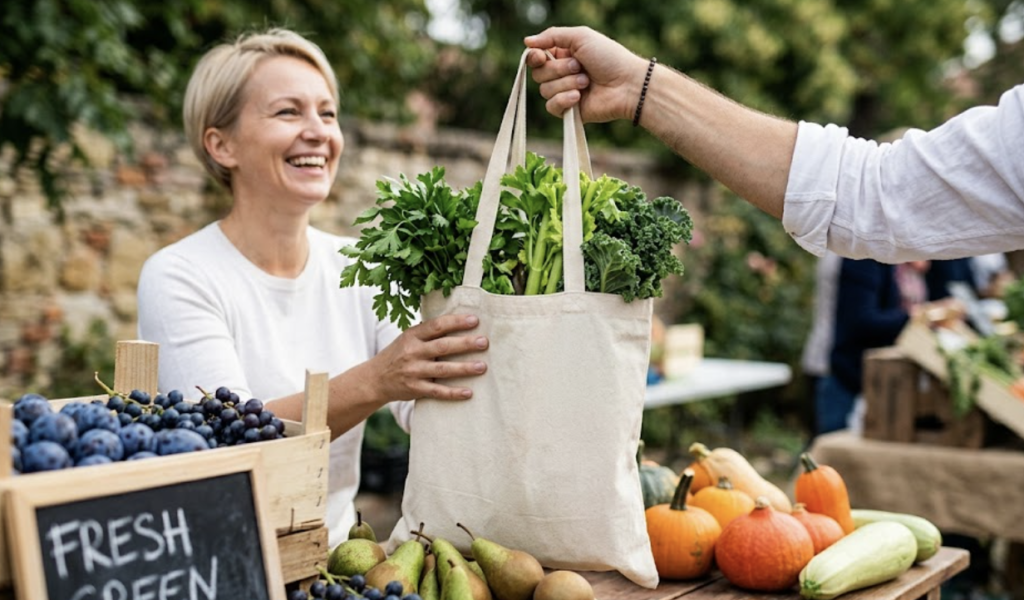
CSA stands for Community Supported Agriculture. You pay a farm upfront (weekly, monthly, or seasonally) and pick up a share of whatever they harvest that week. However, the contents may vary. Some weeks you get a lot of greens while some weeks you get an unfamiliar squash you have to look up. A CSA is a commitment, because you’re investing in the farm, and not just buying produce. But you don’t have to sign up today. Visit the market first, meet the farmer, decide later. The homesteading.com CSA guide walks through what a first season looks like.
What Is a Farm Stand?
A farm stand is exactly what it sounds like. A table, a truck, or a roadside setup where a farm sells directly to you. No middleman, cash-friendly, no membership required. You show up, buy what looks good, leave. Farm stands are the lowest-friction entry point into local food. Many are on-property, and some rotate locations seasonally. The directory lists them alongside markets and CSAs.
What Is a Food Co-op?
A food co-op is a member-owned grocery store or buying club. Members pay a fee to join and get access to bulk staples, local produce, and prices that beat a standard grocery store. Co-ops are strong for pantry staples (grains, oils, dried goods) that farmers markets don’t always carry. Most run year-round. If you want to build a local food system without a large budget, a food co-op for bulk staples paired with a market for fresh produce is a practical combination.
Are Farmers Markets Open Year Round?
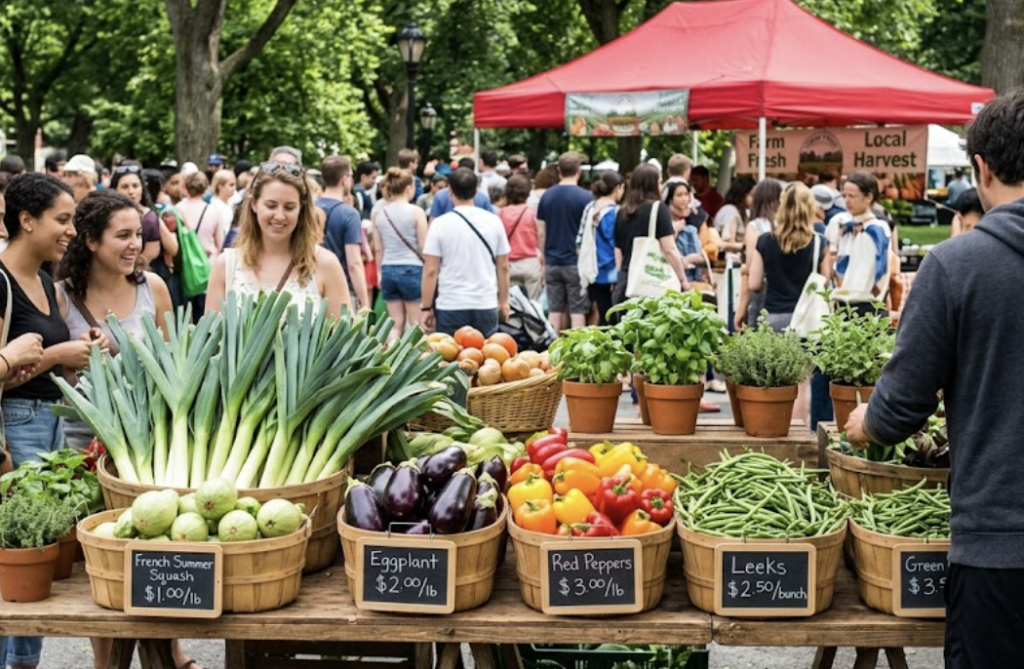
Some are. But it depends almost entirely on where you live.
In Southern and Southwestern states (Florida, Texas, California, Arizona, parts of the Southeast) year-round outdoor markets are common. In the Northern states and Midwest, most farmers markets near me and near you run from May through October, with a few indoor winter markets filling the gap. The gap is real but smaller than most people assume. A lot of readers stop looking in October without checking whether there’s a winter market, a year-round co-op, or a CSA with fall and winter shares still running.
The homesteading.com directory’s year-round filter answers this for your exact zip code. If year-round options exist near you, the filter shows them. If they don’t, you’ll know and can plan for the seasonal gap instead of being caught off guard.
Your First Step This Weekend
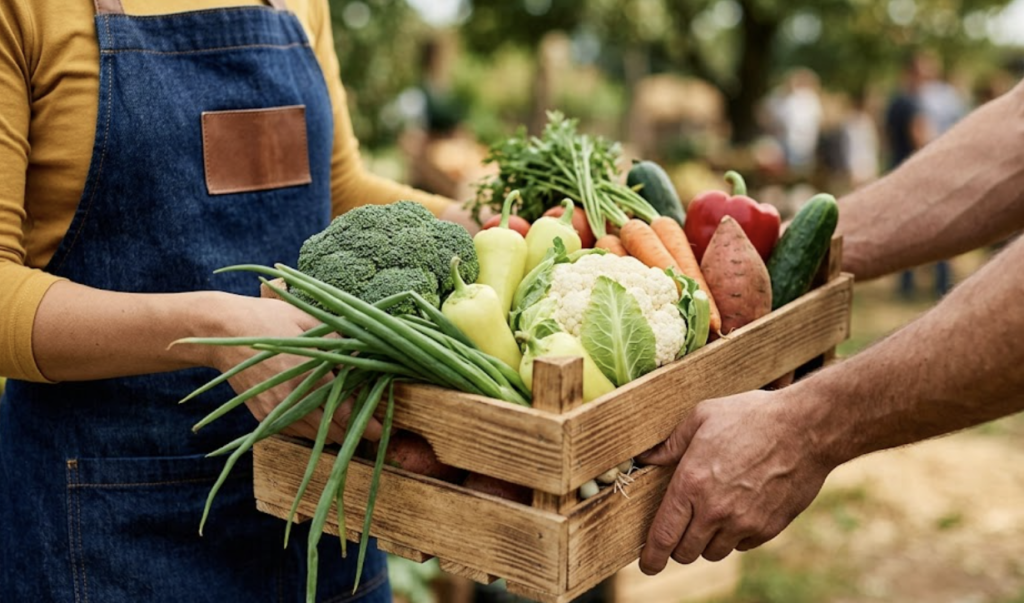
Go to the homesteading.com directory, enter your zip code, and look at what comes up. This is the easiest way to find farmers markets near me and actually land on one that fits your situation. Apply one filter: EBT if you use it, certified organic if that matters, year-round if you want a regular habit. Pick the first result that looks reachable. Write down the hours. Go this weekend.
That’s the whole plan. Buy one thing and talk to a vendor. See how it feels. You don’t have to join a CSA, overhaul your budget, or build a meal plan right away. Just show up once and see what’s in store for you. The rest will follow.
Frequently Asked Questions About Farmers Markets Near Me
How do I find a farmers market near me today?
Most communities host markets on Saturday mornings. The homesteading.com directory lets you search by zip code across 7,000+ farmers markets, CSAs, farm stands, and food co-ops in all 50 states. Filters for EBT/SNAP, certified organic, and year-round listings mean you find the right match, not just the nearest pin. For year-round options, look for winter markets as many move indoors to grange halls or community centers after October.
What is the best time to go to a farmers market?
Arrive 15 minutes before opening if you want the best selection and bulk boxes for canning. Arrive 30 minutes before closing if you’re on a tight budget as most farmers would rather sell at a discount than haul heavy produce back to the farm. Both strategies work. The right one depends on what you’re there to do.
Can I use EBT or SNAP at a farmers market?
Yes. A growing number of farmers markets, CSAs, and farm stands accept EBT and SNAP. The homesteading.com directory has an EBT/SNAP filter built in. Just check that box and your results show only listings that accept it. Some states and markets run SNAP-matching programs where your EBT dollar buys two dollars of produce. If that’s available near you, the listing notes it.
Common Mistakes When Looking for Local Food Sources
- Using Google Maps as your only tool. Google Maps finds locations. It doesn’t filter for EBT acceptance, certified organic vendors, or year-round operation. You can find a market and still not know whether it fits your situation until you drive there. The directory gives you that information before you leave the house.
- Assuming every farmers market is seasonal. A lot of people stop looking in October because they assume the season is over. Many markets and food co-ops run year-round. Use the year-round filter before you decide there’s nothing near you in winter.
- Treating a CSA like a one-time purchase. A CSA is a subscription, not a single buy. If you’re not ready for a weekly commitment, a farm stand or market is the right starting point. Know which type of source you’re looking at before you show up.
- Skipping the EBT filter because you assume local markets don’t take it. SNAP/EBT acceptance at farmers markets has expanded in the last decade. The filter exists because the listings are there. Run it and find out.
- Waiting until you have a full plan before visiting. The plan is the visit. You don’t need a meal plan or a grocery budget overhaul to walk through a farmers market once. Going is the plan. Everything else comes after.
- Treating “certified organic” and “no spray” as the same thing. They’re not. Certified organic has a legal definition and third-party verification. “We don’t spray” is a conversation. Both can be worth your money. But they’re different, and knowing that helps you ask better questions at the table.
The Bottom Line
Buying food from a local farmer is part of homesteading. It counts. You don’t have to grow it to be connected to where your food comes from. Farmers markets near me and near you are part of the same infrastructure: markets, CSAs, farm stands, and food co-ops that are available to you right now, whether you have a garden or not.
The homesteading.com directory has 7,000+ listings across all 50 states, searchable by zip, with real filters for EBT, WIC, certified organic, and year-round operation. It’s free. It takes 2 minutes. Use it today, find something near you, and go once. You can build from there.