
At a Glance: Best Firewood
- Best firewood: dense hardwood like oak, locust or maple, split and dried.
- Dryness test: under 20% moisture on a freshly split face.
- Plan ahead: split wood needs 6 to 12 months to dry.
The best firewood is a dense hardwood that’s been split and dried until it reads under 20% moisture. Oak, black locust, beech, maple and ash all qualify.
Dryness matters even more than the tree. A wet log of great wood burns weak and smoky, while a dry log of so-so wood burns clean.
Sure, all wood burns but it doesn’t all burn the same way or produce the same amount of heat. My first time living off of the grid was full of learning experiences many of them involving wood. Here’s what to stack and how to check your pile.
As an Amazon Associate, we earn from qualifying purchases.
What Makes the Best Firewood?
Two things decide how well a log heats your home. One is how dense the wood is. The other is how much water is still inside it.
Dense hardwoods pack more fuel into every stacked cord. Utah State Extension lists white oak at about 29 million BTU per cord and white pine at about 16. That means you’d burn close to two cords of pine to get the heat of one cord of oak.
Water works against you. Green wood can hold 50% or more water by weight, and the fire spends its heat boiling that water off. The University of Kentucky notes that wood over 20% moisture makes a lot of smoke and more creosote, the tar that can cause chimney fires.
Tools That Make Firewood Easier
As an Amazon Associate, we earn from qualifying purchases.
Once you know you want dry hardwood, a few simple tools help you get it and burn it safely. Start with a moisture meter. It takes the guessing out of every load.
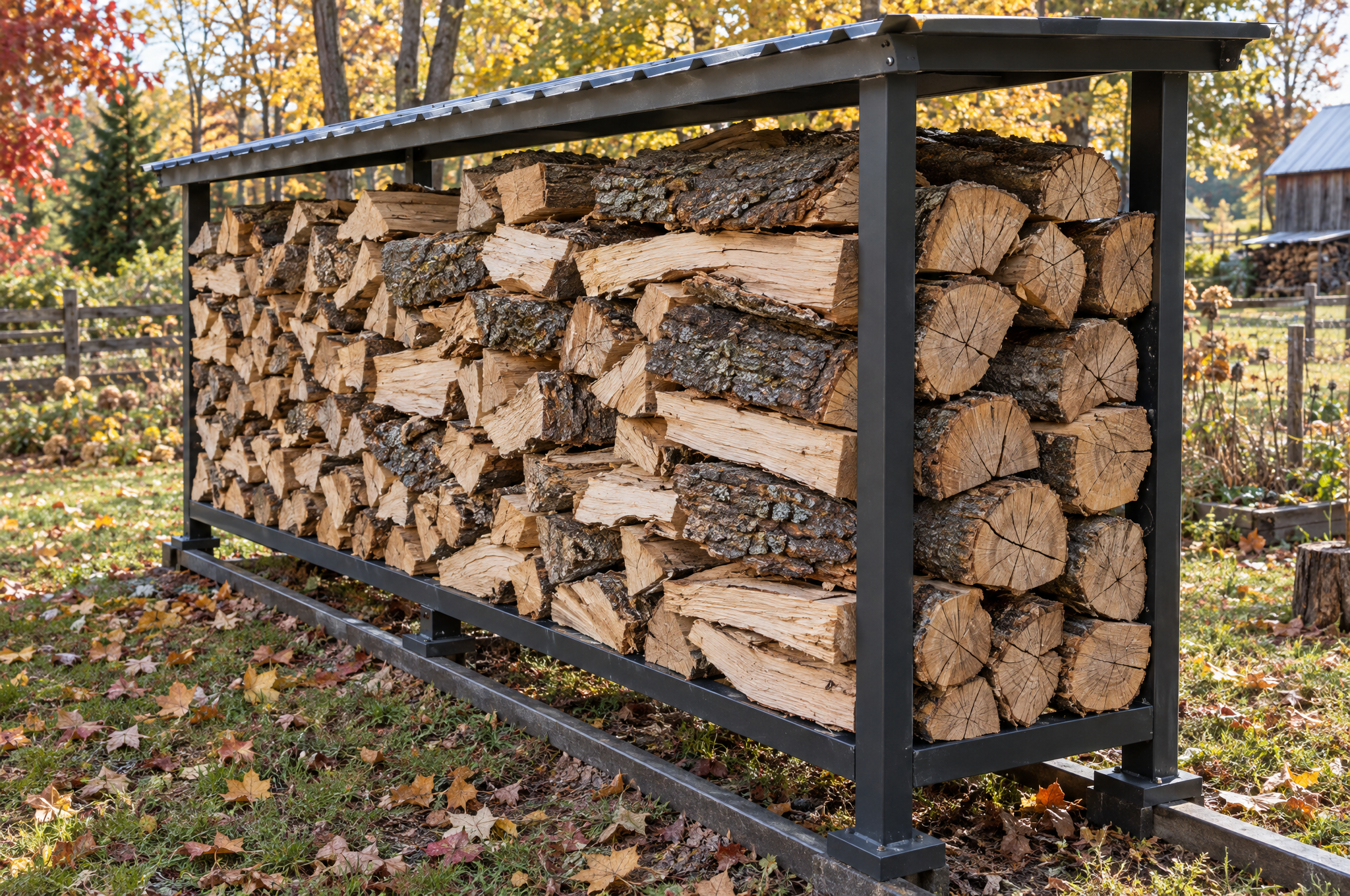
A covered rack keeps split wood off the ground so air can move through it. A lidded metal ash bucket gives hot ashes a safe place to cool. A stove thermometer on the stovepipe shows you when the fire is running too cool.
Gear that helps:
- A pin moisture meter that reads wood moisture as a percent
- A firewood rack that holds the stack off the ground, with a top cover
- A metal ash bucket with a tight lid
- A magnetic stovepipe thermometer
- A fireplace screen if you burn in an open fireplace
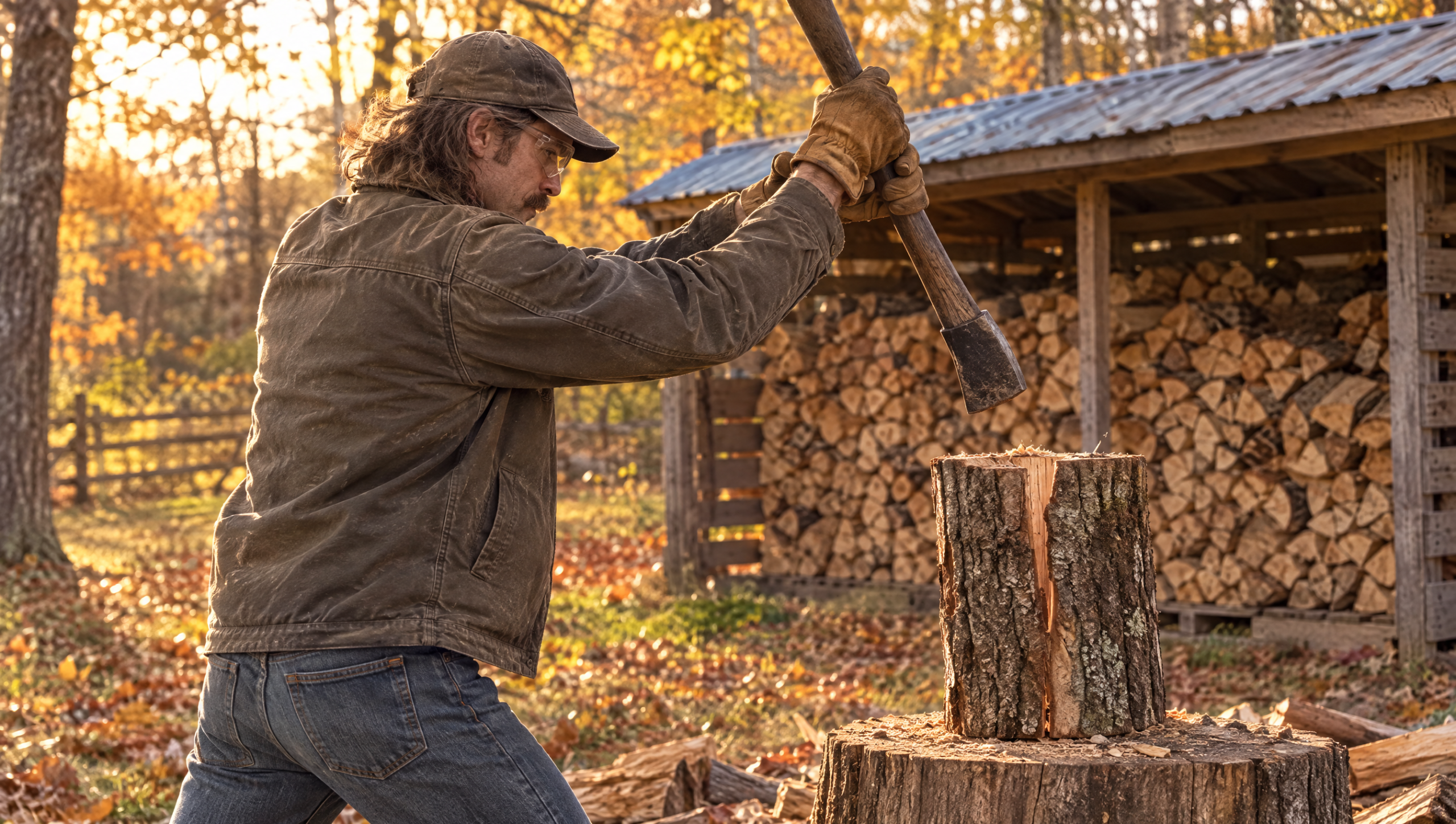
If you’re cutting your own wood, a heavy splitting maul does the work with the weight of the head instead of your arms. This 8 pound maul suits big oak rounds. It’s a lot to swing for small pieces, so a lighter splitting axe or buying split wood can be the better fit.

- MULTI-USE AXE: Sharp blade axe with inseparable riveted head is an ideal wood chopper designed for firewood, yard work, and lawn...
- EFFICIENT AND COMFORTABLE USE: IsoCore shock-absorbing handle with textured non-slip grip reduces hand strain, improves control, and...
- LONG-LASTING AND RELIABLE: Steel blade stays sharper longer than traditional axes while advanced blade geometry splits tough logs...
READ MORE: How to Split Firewood by Hand
Best Firewood For Warmth
Here’s how common North American trees stack up once they’re dry. The numbers come from Utah State Extension’s heat table and are rounded. Use them to compare, not as a promise for any one pile.
For more information about learning to identify dry firewood from our friends over at Survival Life, check out this post!
The Best Burns
These are the woods to fill your stack with for long, cold nights.
Osage orange: about 33 million BTU per cord, the top of the chart.
White oak: about 29. Small flames and a long, slow burn. It needs a full year or more to dry because it’s so dense.
Black locust: about 28. A very hot, slow burner.
Beech: about 27.5. Steady flame and good heat once it’s fully dry.
Apple: about 27. Old orchard trimmings are worth saving.
Maple (other than silver maple): about 25.5. I’d rather have the syrup but if it must be burned it produces good flame, steady heat, and burns well.
Red oak: about 24.5. A little lighter than white oak and still a great everyday wood.
White ash: about 24. Low smoke and few sparks.
CHECKPOINT: Pick up two splits of the same size. The heavier one, once both are dry, is the denser wood and will give you more heat.
The Next Best
These give solid heat but burn a bit faster. They’re great for mixing with the top woods.
Black walnut: about 22. Low smoke and no sparks.
Birch: about 21. Good heat but it’s a quick burner.
Douglas fir and lodgepole pine: about 21. These softwoods surprise people. Dry, they heat nearly as well as birch.
Cherry: about 20. It smells lovely when it burns and gives a slow, steady heat.
American elm and green ash: about 20. Both are solid middle of the pack woods.
Lilac and hazel don’t appear in the extension heat tables, but both are handy small woods.
Lilac: Another one I’d rather see living. The small dead branches and twigs make great kindling and tinder and the seasoned wood burns fairly well.
Hazel: This tree produces awesome heat output but burns really fast, I like to use it to get the stove ready for the long cold nights.
Woods to Use If It’s All You Have
The following trees are all poor heaters. They’ll burn, but you’ll feed the stove more often.
White pine and ponderosa pine: about 16. Fine when dry, but they burn fast and pop more.
Spruce: about 15.5. Lots of sparks, so use a screen in a fireplace.
Cottonwood and aspen: about 15 to 18. Light woods with moderate smoke.
Alder and willow: about 17.5. Weak heat, but don’t cross it off your list, it’s perfect for warm summer night campfires.
Horse chestnut and buckeye: about 14, near the bottom. They also tend to snap and throw embers, so keep them in a closed stove if you burn them at all.
Basswood and eastern red cedar: about 13 to 14. Better as kindling than as heat.
Take my word for it, making S’mores over a hot smoky bed of poplar wood is terrible.
Woods to Keep Out of the Stove
Some wood should never come inside, no matter how dry it is.
Yew: Penn State Extension calls it one of the most poisonous woody plants in the world. Leave it out of your woodpile completely.
Treated wood: old fence posts and boards treated with preservatives carry chemicals you don’t want in your home’s air. The University of Kentucky says to skip them. Leave painted scraps out too.
STOP POINT: If you can’t name the tree a log came from, set it aside until you can. A free load from a neighbor is only a bargain if you know what’s in it.
Heat Value by Tree
This table pulls the common trees into one place. The heat values are rounded from Utah State Extension’s table of million BTU per cord.
| Tree | Heat (million BTU per cord) | Best use |
|---|---|---|
| Osage orange | 33 | Overnight burns |
| White oak | 29 | Overnight burns |
| Black locust | 28 | Overnight burns |
| Beech | 27.5 | Everyday heat |
| Maple (not silver) | 25.5 | Everyday heat |
| Red oak | 24.5 | Everyday heat |
| White ash | 24 | Everyday heat |
| Birch | 21 | Mixed loads, starting fires |
| Douglas fir | 21 | Mixed loads |
| Cherry | 20 | Mild days |
| White pine | 16 | Kindling, mild days |
| Horse chestnut | 14 | Closed stove only |
Heat values are rounded from Utah State Extension and assume air dried wood.
Here’s a quick check you can do yourself. Divide the oak number by the pine number: 29 divided by 16 is about 1.8. So a cord of dry white oak gives you about the heat of 1.8 cords of white pine.
How to Tell If Your Firewood Is Dry
Dry wood is the biggest single upgrade you can make. You can check it in under a minute with a meter, and a few clues help even without one.
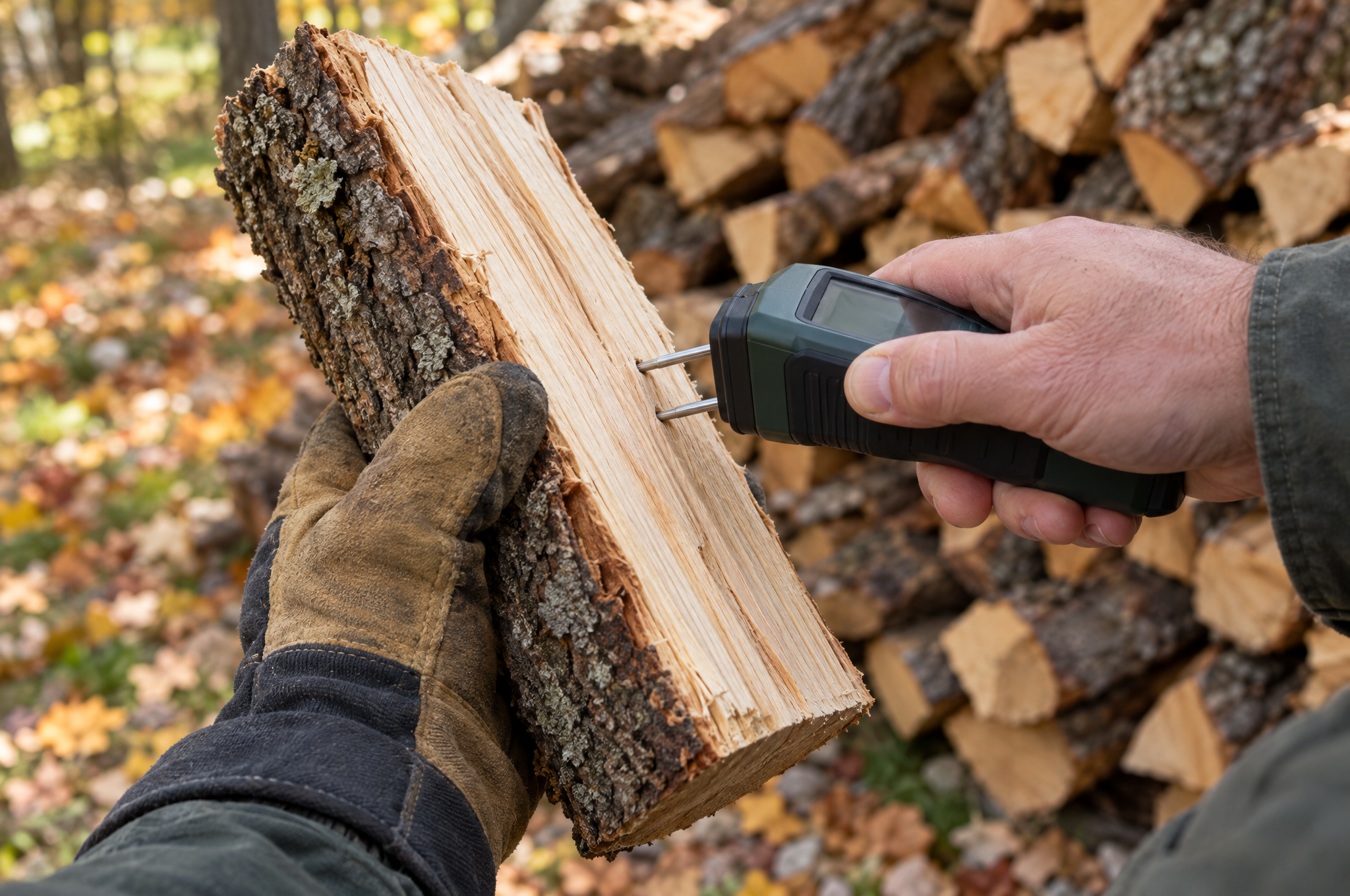
Split a piece from the middle of the stack. Push the meter pins into the fresh face, along the grain. The EPA moisture flyer says wood is ready when it reads below 20%.
CHECKPOINT: Good, dry wood has cracks across the ends, feels lighter than a fresh split, and sounds hollow when two pieces knock together.
To get there, split your wood and stack it off the ground. Cover the top. Leave the sides open to the wind. The EPA flyer gives 6 to 12 months for split wood, and dense oak often needs the longer end.
STOP POINT: If the meter reads 20% or higher, don’t burn that wood yet. Put it back on the rack and test again in a month.
Buying Firewood Without Getting Shorted
Buying seasoned wood is a fine choice, especially your first winter. Just check two things before you pay.
First, measure the stack. A full cord is 4 feet high, 4 feet deep and 8 feet long, which comes to 128 cubic feet. Anything sold as a “load” or a “rick” can be much less, so ask how many cubic feet you’re getting.
Second, test a few splits from the middle of the pile. If they read over 20%, the wood was cut recently. You can still buy it, but plan to burn it next year, not this one.
Troubleshooting a Smoky or Weak Fire
Most fire problems trace back to wet wood or a fire that’s running too cool. Here’s how to sort it out.
Symptom: The logs hiss or bubble at the ends. Cause: Water boiling out of wet wood. Fix: Pull that batch and let it dry longer.
Symptom: The stove glass turns black fast. Cause: A cool, smoky fire, often from damp wood or a closed air control. Fix: Burn drier wood and open the air until the fire is lively.
Symptom: The fire dies down after an hour. Cause: Light, fast wood like pine or poplar. Fix: Mix in oak, locust or maple for the long burn.
Symptom: Sparks jump out of an open fireplace. Cause: Resin or trapped pockets in pine, spruce or horse chestnut. Fix: Use a screen, or save those woods for a closed stove.
Symptom: Black, crusty buildup inside the stovepipe. Cause: Creosote from smoky, cool fires. Fix: The University of Kentucky advises keeping the flue above 250 degrees F with a brisk fire. Have the chimney cleaned before you light another fire.
READ MORE: Wood Burning Stove Tips
Shortcuts to Avoid
These save a little time now and cost you later.
- Burning wood the same season you cut it. It’s still wet inside and builds creosote fast.
- Testing the bark or the end grain. Those dry first and fool the meter. Always test a fresh split face.
- Stacking right on the dirt. Ground moisture wicks up and the bottom rows rot.
- Burning treated, painted or fence post wood. It puts chemicals into your home’s air.
- Choking the stove down all night with damp wood. A slow, smoky fire is how creosote builds up.
When to Call a Pro
As an Amazon Associate, we earn from qualifying purchases.
Wood heat is safe when the chimney is sound, and a pro can tell you that it is. Call a certified chimney sweep if any of these come up.
- It’s the start of the heating season. The University of Kentucky advises an inspection every fall for cracked liners, loose bricks and nests.
- You see thick, shiny or crusty creosote in the pipe.
- You hear a roar from the chimney, or see sparks or flame from the top. Get everyone out and call 911.
- You’ve moved into a home with a stove or fireplace you haven’t had checked.
Keep a working smoke alarm and a carbon monoxide alarm on every level of your home.
A plug-in carbon monoxide alarm with a battery backup keeps watch near bedrooms even if the power drops. It doesn’t replace a smoke alarm, so keep both. (paid link)
READ MORE: Chimney Cleaning 101: How To Clean A Chimney
Buy Once
If you’re setting up for wood heat, these are the pieces that last for years.
- Best: a covered steel firewood rack that holds about a half cord, plus a pin moisture meter.
- Better: a simple steel rack with a tarp for the top, plus the meter.
- Budget: a moisture meter and two pallets laid flat under your stack, with a tarp over just the top.
Conclusion
So, what’s the best firewood for keeping your family warm? A dense hardwood like oak, locust, beech or maple, split and dried until the meter reads under 20%. If you only have pine or birch, dry it well and mix it in. That mix keeps the house warm and the chimney clean.
Next: The Benefits of Using A Wood Burning Stove On Your Homestead
FAQs
What is the best firewood for a wood stove?
Dense hardwoods give the most heat. White oak, black locust, beech and hard maple sit near the top of Utah State Extension’s heat table. They must be split and dried below 20% moisture first, or they’ll smoke and build creosote.
How long does firewood need to dry?
Split wood usually needs 6 to 12 months stacked off the ground with the top covered. Dense oak often needs the full year or more. Test a fresh split face with a moisture meter. Under 20% means it’s ready.
Is pine really bad to burn in a stove?
Dry pine is usable in a closed stove. It burns faster and gives less heat than oak, so you’ll load more often. The real creosote risk is wet wood of any kind burned in a cool, smoky fire. Use a screen if you burn pine in an open fireplace.
Should I cut my own wood or buy the best firewood seasoned?
If you have a free source and 6 to 12 months before you need heat, cut, split and stack it now for next winter. If you need heat this winter, buy seasoned hardwood. Measure the cord and test the moisture before you pay.
Is any wood unsafe to burn indoors?
Yes. Skip yew, which Penn State Extension calls one of the most poisonous woody plants. Skip treated, painted or fence post wood too. Keep a lidded metal ash bucket on a non-combustible floor, and have your chimney inspected every fall.
Would You Burn Dry Pine in Your Stove?
Dry pine lights fast and seasons quickly, so it’s often free and easy to get. Oak gives far more heat per cord but takes a year or more to dry.
Tell us what’s in your woodpile this year and why.