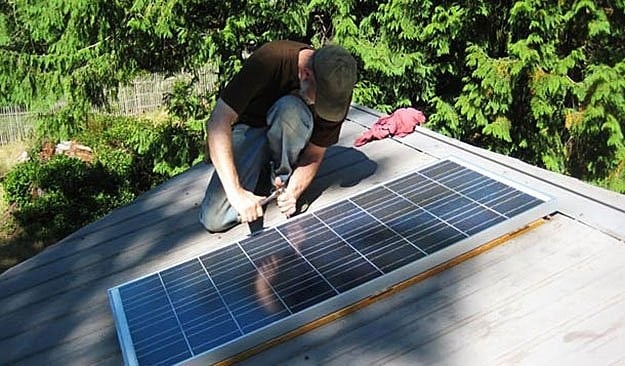

At a Glance: Affordable Solar Panels for Your Homestead
- Calculate First: Never buy panels until you map out your exact daily power draw.
- Protect the Harvest: Start by backing up your freezers and kitchen essentials.
- Safety is Non-Negotiable: Solar involves deadly voltage; hire pros for final connections.
RELATED: DIY Solar Panel Installation
What Solar System Size Do I Need For My Homestead?
The biggest mistake you can make is trying to take your entire house off the grid in one weekend. If you try to replace your public utility connection on day one, you will end up exhausted and out of money.
Instead, start in the kitchen. Your top priority is food security. You don’t need a massive system today; you just need to keep your deep freezer running, your pantry secure, and your lights on. Affordable solar panels can easily cover these targeted loads.
How Do I Calculate the Right Size When Choosing Solar Panel?
You cannot buy a single piece of equipment until you do the math on paper. Guessing your power usage leads to dead batteries and spoiled food.
- List Your Appliances: Write down the wattage of the specific items you want to run (for example, a chest freezer might draw 300 watts).
- Calculate Watt-Hours: Multiply those watts by the hours the appliance runs per day. (300 watts × 8 hours = 2,400 watt-hours).
- Add a Buffer: Multiply your total by 1.2 to account for system inefficiencies and cloudy days.
- Size the Panels: Divide your total watt-hours by the average sun hours in your area to see how many panels you need.
The 3 Most Affordable Solar Panels 2026
If you are ready to start building your array, you can find incredibly reliable equipment online with free shipping. Here are the top three affordable solar panels that homesteaders are trusting this year:
1. Renogy 100W Monocrystalline Panel

- Description: Renogy is the absolute workhorse of the DIY solar community. It’s highly efficient, incredibly durable, and consistently available.
- Pros: Excellent customer support, heavy-duty aluminum frame, highly reliable.
- Cons: Slightly heavier than some of the newer flexible panels on the market.
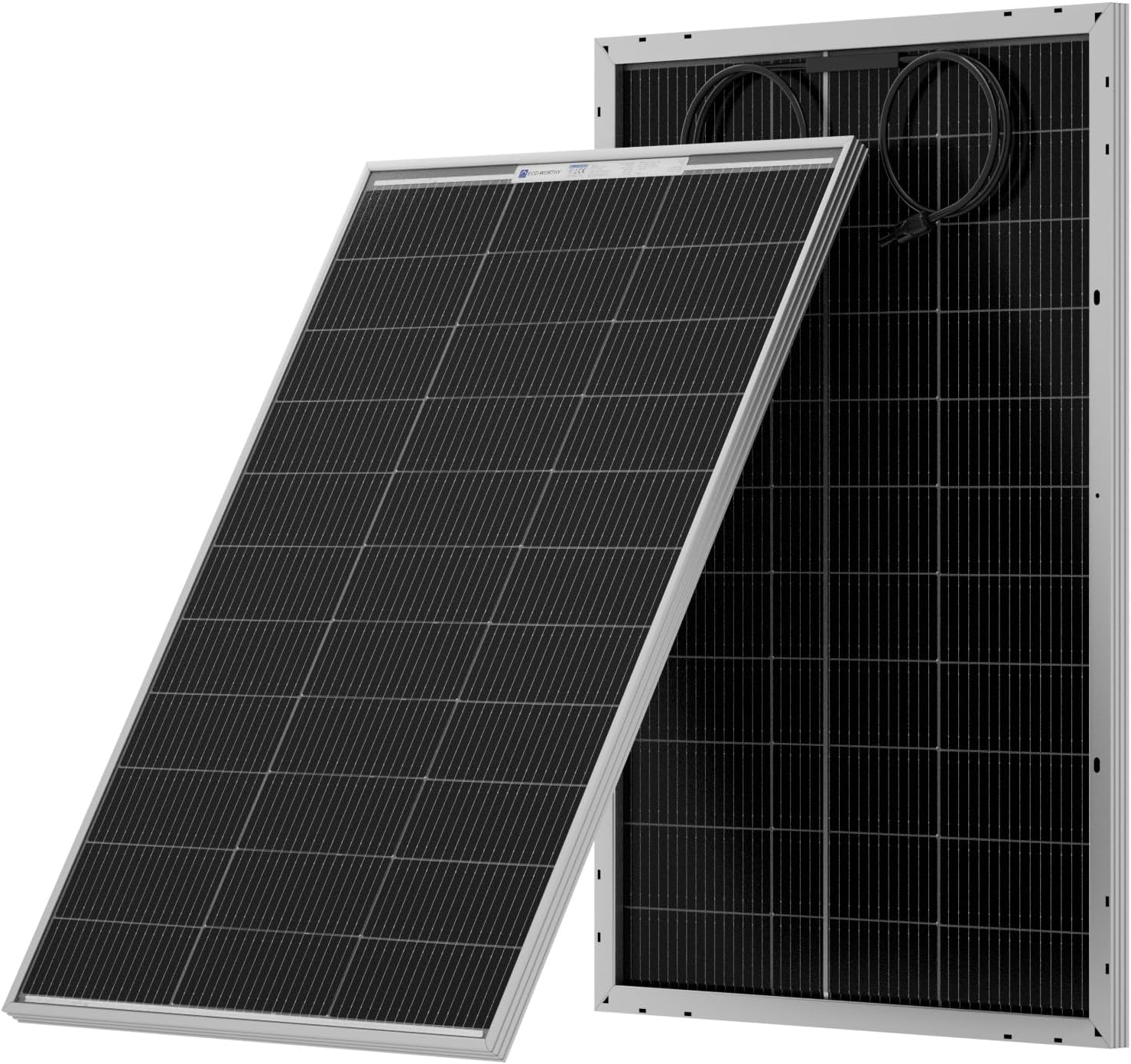
2. ECO-WORTHY 100W Solar Panel
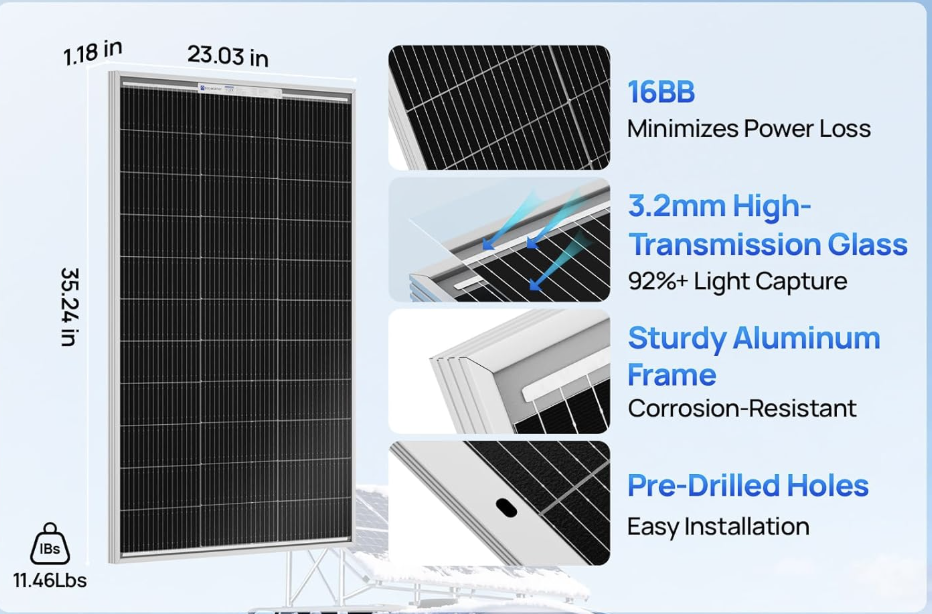
- Description: The top budget pick for beginners looking to string together a small array without breaking the bank.
- Pros: Unbeatable price point, easy plug-and-play connectors, and performs decently in low light.
- Cons: Quality control on the frame finish can occasionally be spotty.
3. HQST 100W Monocrystalline Panel
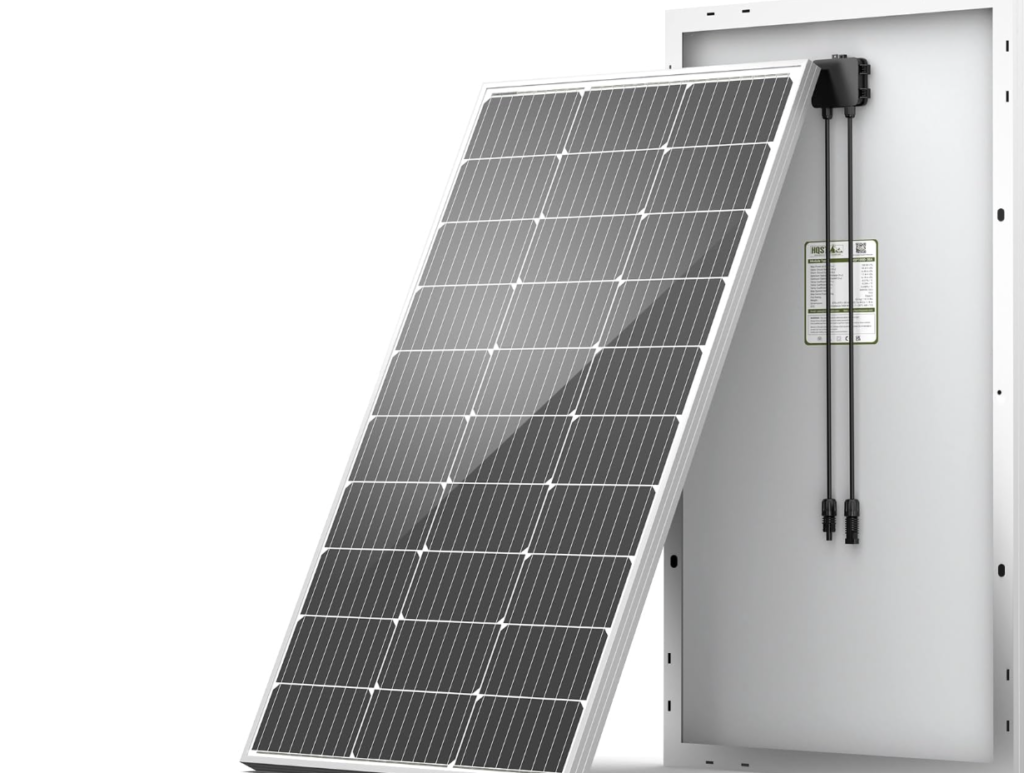
- Description: A highly competitive alternative to the bigger brands, offering excellent specs and tempered glass, often for a few dollars less.
- Pros: Great efficiency, compact footprint, stands up very well to high winds and snow loads.
- Cons: Customer service response times can be slower compared to premium brands.
To weigh the pros and cons of each panel, check out this table:
| Feature | Renogy 100W Monocrystalline | ECO-WORTHY 100W | HQST 100W Monocrystalline |
|---|---|---|---|
| Product Image |  |
 |
 |
| Best For | DIYers needing a proven, highly reliable workhorse. | Beginners building a budget-friendly starter array. | Buyers seeking durable, compact panels at a competitive price. |
| Top Advantages | Heavy-duty aluminum frame; excellent customer support. | Unbeatable price point; easy plug-and-play connectors; decent low-light performance. | Tempered glass; excellent resistance to high winds and snow loads; compact footprint. |
| Main Drawback | Heavier than newer, flexible panel alternatives. | Occasional quality control issues on the frame finish. | Customer service response times can be slower than premium brands. |
| Check Price | Check Price on Amazon | Check Price on Amazon | Check Price on Amazon |
Can You Run a Well Pump on Affordable Solar Panels?
Yes, but there is a massive catch you need to watch out for. A deep-well pump has what is called a “startup surge.” While it might only take 1,000 watts to keep the water flowing, it can require 4,000 watts just to turn the pump on.
If your inverter is only rated for 2,000 watts, the well pump will trip your system instantly. Undersizing the inverter to save money is the number one reason beginner solar setups fail. You must buy an inverter with a surge rating that exceeds your pump’s startup requirement.
What Batteries Are Best for Off-Grid Homesteading in 2026?
When it comes to storing your power, buy once and cry once. Lead-acid batteries seem like the cheaper route initially, but they are a false economy. They require constant maintenance, need ventilation, and can only be drained halfway before they take permanent damage.
For 2026, Lithium Iron Phosphate (LiFePO4) is the only standard you should consider. They are incredibly safe, require zero maintenance, and let you use almost 100% of their stored power.
How Much Does It Cost to Go Off-Grid With Solar in 2026?
Because component costs have stabilized, setting up affordable solar panels is a realistic goal for most household budgets.
- The Beginner Setup (Freezers & Lights): $1,500 – $2,500.
- The Medium Setup (Well Pump & Kitchen): $4,000 – $8,000.
- The Full House: $15,000+.
How Long Does It Take to Get ROI From an Off-Grid Solar Setup?
If you only look at your monthly electric bill, the payback period is usually 6 to 9 years. But that is the wrong math for a self-reliant home.
If a three-day power outage causes you to lose a freezer containing $1,200 worth of homegrown meat, broth, and garden produce, your solar setup just paid for itself in a single weekend. You are buying resilience and peace of mind and not just cheap electricity.
Taking Your Power Back One Step at a Time
You do not have to become an off-grid electrical engineer overnight. Start small. Learn how to run a single appliance on solar power, and then expand next season when you feel confident. Buying a few affordable solar panels to keep your chest freezer cold is a massive victory for your family’s security this year. You’ve got this.
FAQs
Are affordable solar panels worth it for a small suburban lot?
Absolutely. You do not need sweeping acres of land. You can mount affordable solar panels on a backyard shed, a garden pergola, or even a heavy-duty chicken tractor to power your essential home preservation equipment safely.
Where is the best place to buy affordable solar panels?
Look for reputable solar wholesalers who offer complete kits, or stick to highly reviewed panels from major online retailers. Buying pre-matched kits is much safer for beginners than mixing unbranded marketplace parts.
Do I need a permit to install a solar setup?
Yes, in almost all suburban and peri-urban areas. Even if you are totally off-grid, your local municipality will usually require structural permits for roof mounts and electrical inspections to ensure safety and fire compliance.
Can I mix different brands of solar panels together?
It is highly discouraged. Mixing panels with different electrical voltages and characteristics can severely drag down the performance of your entire array and complicate your charge controller’s job. Keep your systems uniform.
Will a small solar setup safely run my kitchen appliances?
It depends entirely on the appliance. A solar battery bank can easily run a slow cooker or a dehydrator, but high-heat appliances like electric ovens or stovetop burners pull massive wattage and will drain a small system instantly.
Hot-Take Poll
Should new homesteaders disconnect from the public power grid entirely?
- Absolutely. True independence means cutting the cord completely.
- No way. Keep the grid as a backup for heavy winter loads.
- Just build a hybrid system. Run the freezers on solar, keep the house on the grid.
Drop your reasoning below. Wildest take gets featured next week.