We want to teach you how to build a fence from something unexpected. Rather than some industrial-strength, bullet-proof material, we suggest something a little bit more natural – plants. An agricultural or living fence can be a prepper/homesteader’s best friend. A living fence is essentially a hedge fencing around your property, bunker or bug out location that creates a natural barrier between you and the outside world. It serves as the perfect disguise for keeping things hidden and away from view.
Of course, there are other advantages to having a living fence. It provides a niche for more species to inhabit, as well as a barrier to keep species out. Kinda balancing out the flow of nature. Depending on the type of plant you choose, it may also provide food or medicine for your family or livestock.
Homesteaders typically create living fences by planting appropriate shrub or tree species — via nursery plants, stem, or root cuttings or seeds — at a close spacing. As they mature, the close spacing creates a thick, bushy growth and forms a hedge.
1. Choosing your Plants
Living fences typically start with a shrub or tree – either as potted plants, roots, or by seed – and are planted at much closer spacing than the norm. As they mature, the closeness of the plants will force thick, bushy growth, forming a hedge.
It is wise to use a native plant that can withstand regional weather, insects, and disease. Don’t be afraid to mix it up!
Check out this video on choosing the right hedge plant:
2. Planting
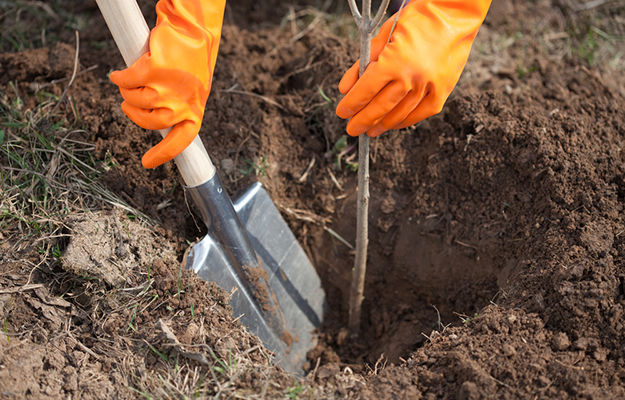
Make the holes slightly wider and deeper than the pot, root or seed you are planting. Create a raised mulch ring around the plant for water. Small trees should be staked in three directions to hold it upright.
3. Mulch
When planting is complete, spread mulch or straw hay to help control the weeds. Mulching also improves root growth, protects the soil from erosion, and conserves moisture in the soil. Cedar mulch is our favorite, because it also smells very nice.
Learn how to make your own mulch with this video tutorial:
4. Upkeep
Water about every other day in a dry climate, or at least once a week for six months to a year, until the shrub or tree seems pretty grounded. Weed and water often just after planting.
After the first six months, you should be able to remove any tree stakes. Just be confident that the tree is able to stand alone. Trees can be re-staked, if need-be.