
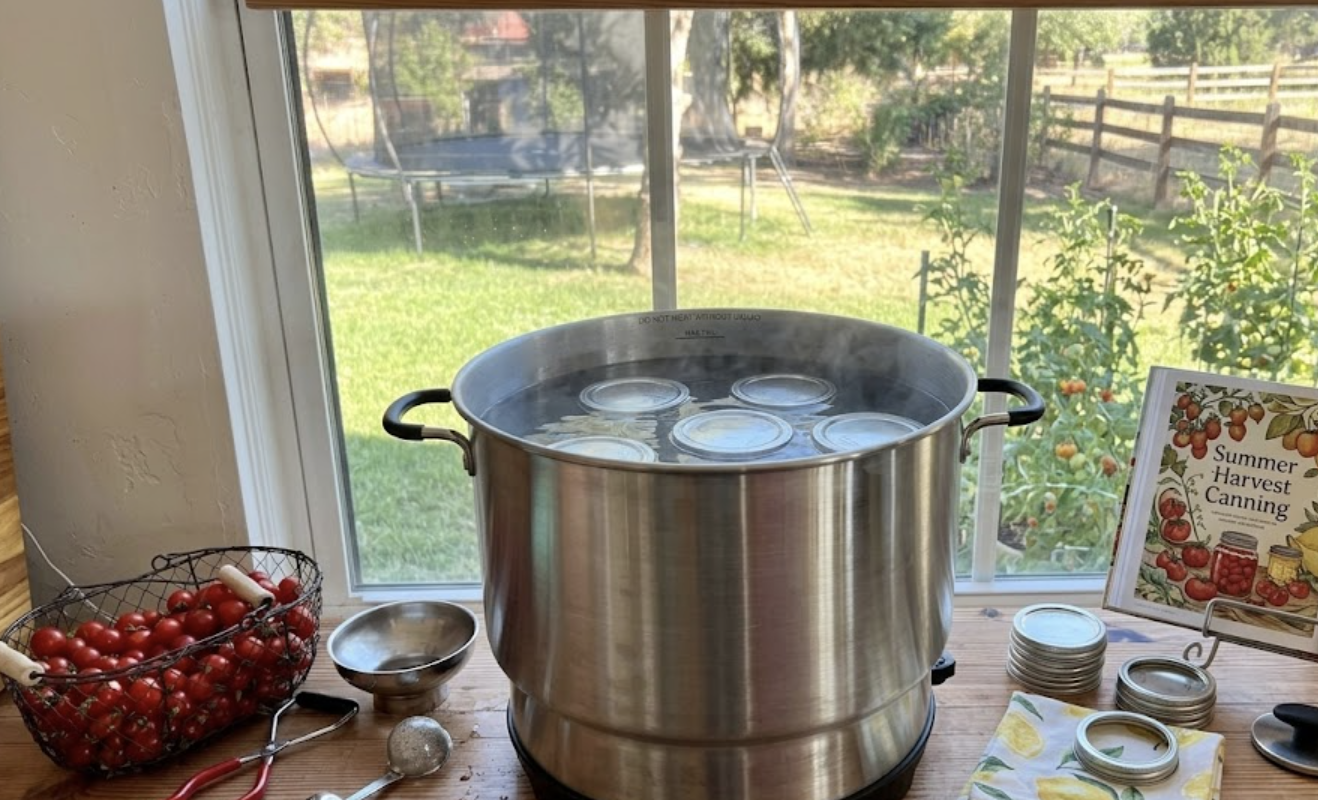

At a Glance: Canning Essentials for Summer Vegetables
- The right tools stop rushed mistakes when your harvest comes in all at once.
- High-acid veggies need a water bath canner. Low-acid veggies need a pressure canner.
- Clean rims, correct headspace, and a timer are what actually keep jars sealed and safe.
You picked a full basket of tomatoes, beans, and cucumbers this morning, and now they’re sitting on your counter looking back at you. That’s the August Harvest Tsunami: months of garden work landing on your kitchen all at once. It doesn’t have to end in wilted produce and guilt.
Having the right canning essentials for summer vegetables turns that panic into a routine you can repeat every week. Once your gear is set up, you’re not scrambling. You’re just working through the basket, jar by jar.
Safety & PPE
Canning is a kitchen skill, not a kitchen risk, as long as you respect two things: heat and acidity.
- Wear closed-toe shoes in the kitchen. Hot jar liquid on bare feet is a real injury.
- Use oven mitts rated for wet heat, not just dry-oven mitts. Steam burns are common with canning.
- Keep a clear counter next to your canner for jars coming out. A cluttered landing zone causes drops.
- Never guess on processing method. Low-acid vegetables processed in a water bath canner can grow botulism toxin, which you cannot see, smell, or taste.
What’s the Difference Between a Summer Canning Setup vs. Other Seasons?
Summer canning setups differ from other seasons mainly in heat management and volume. You’re processing more food, faster, and often in a hotter kitchen than you would in fall or winter.
Here’s what that means for your setup, and why the next few sections cover heat control, crop selection, and your full tool list in that order.
Heat & Energy Management Summer canning can turn your kitchen into a sauna if you’re not careful. Many homesteaders can early in the morning before the day heats up, or move the whole operation to an outdoor propane burner on the porch or driveway. This isn’t optional comfort. An overheated kitchen slows you down and makes you more likely to rush a step.
High-Volume Harvests Fall canning tends to be slower crops like root vegetables that store well on their own. Summer is different. Tomatoes, beans, and cucumbers all come in fast and don’t wait. You need a setup that can run back-to-back batches without a full teardown between each one.
Mixed-Acidity Management Summer is the one season where you’re juggling both high-acid crops (tomatoes, pickles) and low-acid crops (green beans, squash) at the same time. That means you need both a water bath canner and a pressure canner ready to go, not just one or the other.
STOP POINT: Before you can anything low-acid this summer, confirm you have a pressure canner, not just a water bath canner. These are not interchangeable. Using the wrong one for the wrong food is the single most common safety mistake in home canning.
Best Summer Vegetables for Canning
What Are Summer Vegetables? Summer vegetables are high-yield, warm-weather crops picked at their peak between June and September, when they’re at their best moisture and sweetness for preserving.
Top Common Summer Veggies to Can
- Tomatoes: The classic summer crop. Great for sauces, diced tomatoes, pastes, and salsas.
- Cucumbers: Turned into dill pickles, sweet pickles, or bread-and-butter pickles.
- Green Beans: Pressure-canned whole or snapped, giving you long shelf life.
- Peppers: Pickled jalapenos, sweet bell peppers, and hot pepper jellies.
- Summer Squash & Zucchini: Best turned into high-acid relishes rather than canned plain.
What are the Canning Essentials Needed for Summer Vegetables?
The essentials you need come down to two canners and five smaller tools that protect your seal and your safety.
Here’s the full list, starting with the two big equipment decisions, then moving into the small tools that make each batch go smoothly.
- Water Bath Canner: Essential for high-acid foods, like pickles, salsas, and acidified tomato products.
- Pressure Canner: Non-negotiable for safely processing low-acid vegetables, like green beans, corn, and plain squash.
- Mason Jars, Rings, and New Lids: Use clean pint and quart jars with single-use flat lids for a reliable airtight seal. Never reuse a flat lid.
- Jar Lifter: Rubber-gripped tongs made to lift boiling-hot jars in and out of the canner without slipping.
- Wide-Mouth Canning Funnel: Keeps jar rims clean while you fill, which protects your seal.
- Bubble Remover & Headspace Tool: Clears trapped air pockets and measures the exact headspace your recipe calls for.
- Acidifiers & Timer: Bottled lemon juice or citric acid for tomato safety, plus a digital timer you can trust down to the minute.
Water Bath vs. Pressure Canning: Which Summer Veggie Needs What?
| Vegetable | Canning Method | Why |
| Tomatoes (with added acid) | Water bath | High-acid once acidified |
| Cucumbers (pickled) | Water bath | Vinegar brings the acid |
| Green beans | Pressure canner | Low-acid, dense texture |
| Corn | Pressure canner | Low-acid |
| Plain summer squash/zucchini | Not safe canned plain | Low-acid, dense; use relish or freeze instead |
| Peppers (pickled) | Water bath | Vinegar brings the acid |
CHECKPOINT: Before you fill a single jar, match your vegetable to its row in this table. If you’re not sure which column it falls in, treat it as low-acid and use the pressure canner.
Troubleshooting Canning Problems
| Symptom | Likely Cause | Fix |
| Jar didn’t seal (lid pops when pressed) | Rim wasn’t clean, or headspace was off | Reprocess with a new lid within 24 hours, or refrigerate and use soon |
| Liquid siphoned out during processing | Pressure released too fast, or jars were overfilled | Let pressure drop naturally next time; recheck headspace |
| Cloudy liquid in a sealed jar | Could be normal starch, or could be spoilage | If jar didn’t seal, discard. If sealed and cloudy with an off smell on opening, throw it out |
| Squash or zucchini jar looks mushy | Plain low-acid vegetable, canned unsafely | Discard. Don’t taste-test a jar you’re unsure about |
STOP POINT: If a jar’s lid is bulging, the seal is broken, or the contents smell off when you open it, don’t taste it to check. When in doubt, throw it out.
Canning isn’t just about food preservation. It’s about honoring the work you put into your garden, locking in peak summer nutrition, and building real kitchen self-reliance. With the right tools on hand, you’re the one deciding what goes into your family’s food, not a label on a store shelf.
5 Frequently Asked Questions
1. Can I use a regular stockpot instead of a dedicated water bath canner? You can, as long as it’s deep enough to cover your jars by 1 to 2 inches of water and has a rack in the bottom so jars aren’t sitting directly on the metal. A dedicated canner just makes this easier.
2. Do I really need to pressure can green beans, or can I water bath them? Yes, green beans need a pressure canner. They’re low-acid, and water bath temperatures aren’t hot enough to make them safe from botulism risk.
3. Why do I need to add lemon juice to canned tomatoes if they are naturally acidic? Modern tomato varieties vary in acidity, and some aren’t acidic enough on their own. Bottled lemon juice or citric acid guarantees the acid level tested recipes rely on for safety.
4. How do I keep my kitchen from getting uncomfortably hot while canning in summer? Can early in the morning before the heat builds, or move your setup outside to a porch or driveway with a propane burner. This is one of the easiest fixes for a hot canning day.
5. Can I reuse canning lids if they look like they are in good condition? No. Flat canning lids are single-use only. The sealing compound is designed to work once. Reusing them raises your risk of a failed seal, so always start with new lids as part of your canning essentials for summer vegetables.
