
At a Glance
- Pressure canning is the only safe home method for low-acid foods.
- Water bath canning handles high-acid foods like jams, pickles and acidified tomatoes.
- Acidity, not taste or smell, decides which method a food needs.
If you’re serious about home food preservation, understanding the difference between water bath canning and pressure canning isn’t optional. It’s essential for safety. While both methods are used to preserve food for long-term storage, they are not interchangeable, and using the wrong one can lead to serious health risks.
Related: Guide To Canning Jalapenos
As an Amazon Associate, we earn from qualifying purchases.
Water Bath Canning: Best for High-Acid Foods
Use water bath canning only for foods that have enough acidity to prevent spoilage.
Recommended foods:
- Jams, jellies, and fruit preserves
- Pickles and vinegar-based relishes
- Applesauce, peaches, pears, and other fruits
- Tomatoes (with added acid such as lemon juice or vinegar)
- Fruit chutneys and syrups
Boiling water should cover the tops of the jars by at least one inch. Start the timer once the water reaches a rolling boil and follow the full processing time for the recipe. The National Center for Home Food Preservation offers tested recipes and safe acidity guidelines for water bath canning.
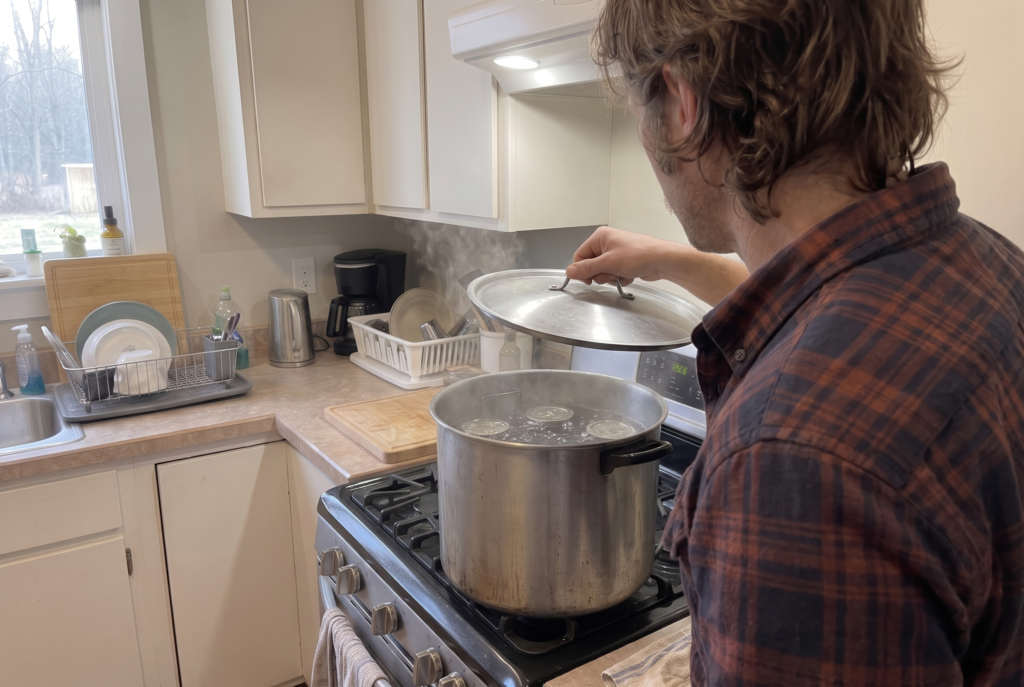
Want to see the whole process? This short video from MSU Extension walks through using a water bath canner.
As an Amazon Associate, we earn from qualifying purchases.
If your deepest pot can’t keep jars under an inch of boiling water, a dedicated stainless water bath canner solves that. A deep stockpot and a rack you already own work just as well.
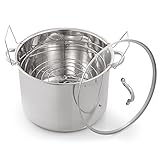
- COMPATIBILITY: The stainless-steel 21.5 quart pot combined with flat, aluminum encapsulated base is designed for use with gas...
- DURABILITY: Crafted from high-quality, heavy-duty stainless steel, this canner is built to last, resist corrosion, and handle the...
- EASY-LIFT JAR RACK: Designed to rest on the sides of the pot so the jars can be loaded easily and then lowered into the canner while...
Pressure Canning: Required for Low-Acid Foods
Pressure canning uses steam under pressure to raise the internal temperature of the canner to 240°F or higher. This level of heat is necessary to kill harmful bacteria, including the spores that cause botulism.
Use a pressure canner for any low-acid food.
STOP POINT: Never water bath can a low-acid food unless a tested recipe adds the acid for you.
Recommended foods:
- Green beans, corn, carrots, and other plain vegetables
- Potatoes, mushrooms, and cubed winter squash (never mashed or puréed)
- Dry beans (soaked, then boiled per a tested recipe)
- Meat, poultry, and fish
- Bone broth, soup stock, and chili
Winter squash and pumpkin are only safe in cubes. There’s no tested home process for mashed or puréed squash, so the National Center for Home Food Preservation gives times for cubes only.
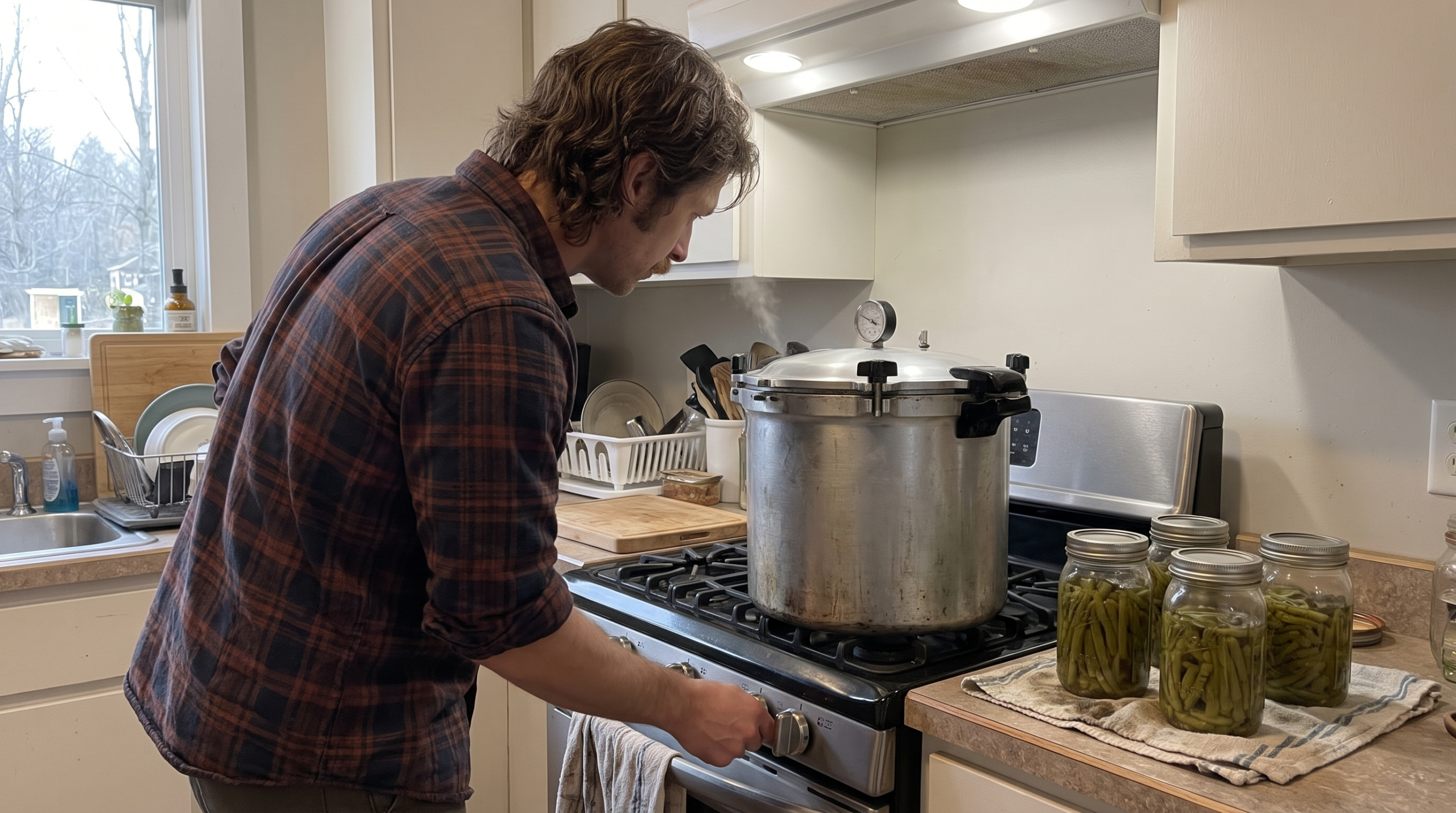
Only use a pressure canner designed for home food preservation. It should have a locking lid, pressure regulator, and either a weighted or dial gauge.
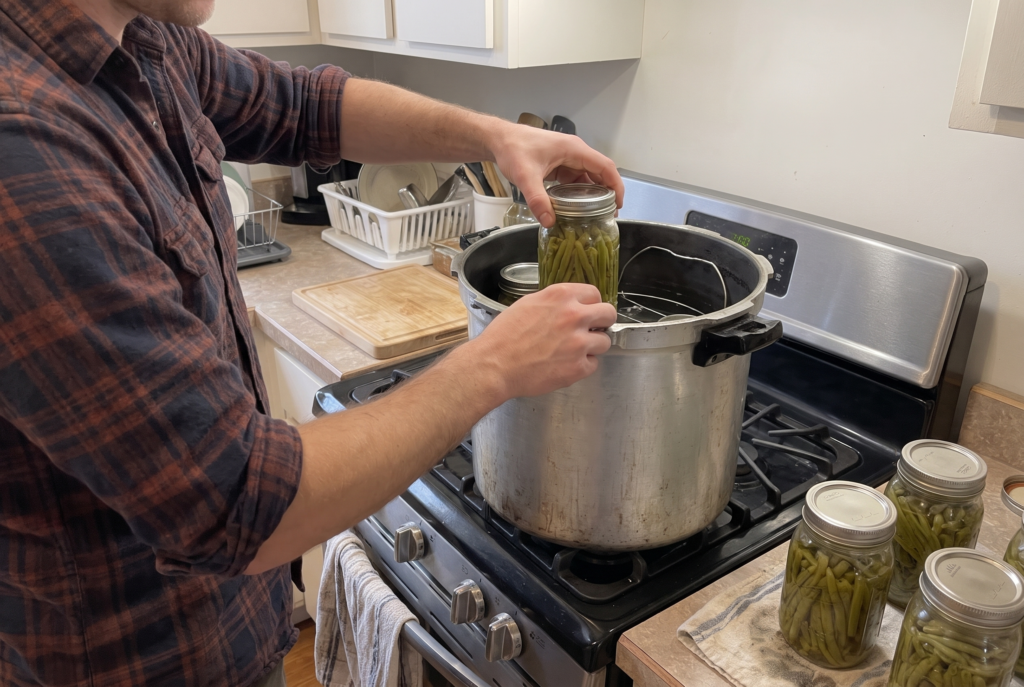
If you’d rather watch first, this video from MSU Extension shows how to use a dial gauge canner, the same style as the one below.
As an Amazon Associate, we earn from qualifying purchases.
If you’re buying your first one, a 23-quart pressure canner with a dial gauge and a locking lid handles pints and quarts of low-acid food. Have the dial gauge checked for accuracy once a year.

- The only method recommended safe by the US Department of Agriculture for canning vegetables, meats, poultry, and seafood
- Doubles as a boiling-water canner for preserving fruits, jams, jellies, pickles, and salsa; Handy as a large capacity pressure cooker
- Constructed of warp-resistant heavy-gauge aluminum for fast, even heating; Works on regular and smooth-top ranges; Extended 12-year...
Water Bath vs Pressure Canning: Key Differences
Here’s how the two methods line up side by side.
| Feature | Water Bath Canning | Pressure Canning |
|---|---|---|
| Heat Level | 212°F (boiling) | 240°F+ (pressurized steam) |
| Best For | High-acid fruits and pickled foods | Low-acid vegetables, meats, and stocks |
| Required Equipment | Deep pot with rack and lid | Pressure canner with gauge or weight |
| Storage | Store jars cool, dark and dry | Store jars cool, dark and dry |
| Processing Time | Set by each tested recipe | Set by each tested recipe |
| Spoilage Risk | Low (if acid is sufficient) | High if pressure is not used properly |
Why Acidity Changes the Method
Acid levels determine whether boiling is enough to keep food shelf-stable. High-acid foods (pH 4.6 or lower) resist bacterial growth on their own. These can be safely canned in boiling water.
Low-acid foods don’t provide that protection. Without higher temperatures, bacteria, including botulism spores, can survive and grow inside sealed jars.
Your canned produce’s smell, taste, and appearance do not confirm safety. To ensure safety, choose the right canning method based on your food’s acidity.
How to Choose the Right Canning Method
Both methods have their place, but they serve very different purposes. High-acid foods can be safely preserved with a water bath, while low-acid foods need a pressure canner to eliminate dangerous bacteria. There’s no shortcut or workaround. Food safety depends on using the correct method every time.
For anyone building a long-term pantry, pressure canning offers greater versatility and safety. Water bath canning remains an excellent entry point for beginners, and once you know its limits you’ll know exactly when to reach for the pressure canner.
FAQs
Can I use lemon juice or vinegar to water bath can low-acid vegetables?
No. Unless the recipe has been tested for safety, adding acid doesn’t guarantee protection. Use a pressure canner.
Do I need to sterilize jars before pressure canning?
No. The high heat inside the canner sterilizes jars. Just wash them with hot, soapy water first.
Can I use a pressure cooker instead of a pressure canner?
No. Most pressure cookers are not tested or rated for safe food preservation. Use a true pressure canner, one large enough to hold at least four quart jars.
Which foods need pressure canning?
Plain low-acid vegetables, meat, poultry, fish and broth need pressure canning. Mixtures of them do too, unless a tested recipe adds enough acid, like pickles or tested salsa.
How do I check if a jar is sealed correctly?
Once cool, press the lid center. It should not flex. A sealed lid stays firm and slightly concave.
Which Canner Are You Starting With This Season?
A water bath canner costs less and is simpler to learn, but it only handles high-acid food. A pressure canner takes more practice and money, and it’s the only safe way to put up beans, meat and broth.
What’s the first thing you plan to put up, and what would change your pick?