
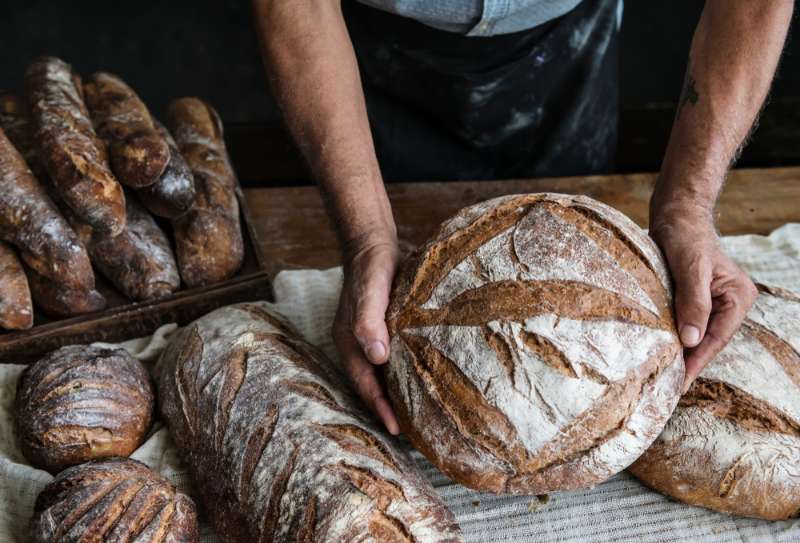

Sourdough starter recipes are perfect for anyone interested in baking their own bread on the homestead. This tutorial shows you how to get started making your own. Not all of us are lucky enough to have the best sourdough starter passed down to us from our grandmas. If you’re feeling a bit adventurous you can actually make (or grow) your own sourdough starter with this recipe!
Beginner’s Sourdough Starter Recipe
What is a Sourdough Starter?
A sourdough starter is made from two simple ingredients — flour and water. It attracts wild yeast which lives everywhere in the environment. In a way, sourdough starter is how we cultivate the wild yeast in a form which can be useful for baking. This culture of microorganisms is what will leaven your bread and make it taste so darn good!
Making your own sourdough starter may take up a little time, but you’ll surely enjoy the process. Have kids in the house? Do this little project with them and cultivate their scientific minds while cultivating your food.
Making a sourdough starter involves mixing flour and water together, then leaving it alone for a little while. However, if you want the feisty critters to make your bread rise, it can be more extensive. Growing a sourdough starter takes about 5 days on average, and it can take longer depending on the conditions of the environment. We have compiled a simple step-by-step guide to making your own starter and what to expect on a daily basis. You can find the original article here.
Make Your Own Sourdough Starter!
What you’ll need:
- 2-quart glass or plastic container (not metal)
- Measuring cups
- Mixing spoon
- Plastic wrap or container lid
- Flour
- Water
Day 1: Make the Initial Starter
Weigh 4 ounces or 3/4 cup + 2 tablespoons of flour and combine with 4 ounces of water. Stir vigorously until combined into a sticky, thick batter. Cover the container with plastic wrap, and leave it on your kitchen counter or somewhere with a consistent room temperature of 70°F to 75°F. Do not refrigerate.
Day 2: Stir the Party in Your Bottle
After the first 24 hours, you will already find a few tiny bubbles. This means that the yeast has already started a party in your jar! Stir the bottle every once in a while to attract more yeast and to ‘move’ the little critters towards their food. After all, yeasts don’t run around the jar. They’re floating and eating whatever is nearby so a little stirring here and there is just as important as feeding the sourdough starter. By the end of the day, you’ll find more bubbles in your jar.
Day 3: Feed the Starter
https://www.instagram.com/p/BhLAra0heWa/?tagged=sourdoughstarterday3
Take a good look at your starter. You may find that more bubbles have started to appear and that’s a good thing! This means that the yeast has also started making themselves at home in your starter. It’s now time to feed the starter with more flour and water! Measure another 4 ounces of flour and 4 ounces of water, stir vigorously until combined into a smooth batter.
Day 4: More Feeding and More Stirring
https://www.instagram.com/p/Bm6zU33h7iE/?tagged=sourdoughstarter
By now, your starter should look extremely bubbly and the volume should have doubled. Also, the aroma should be noticeably sour. Feed your starter with the same amount of flour and water. Stir vigorously or whisk if you prefer. Stirring will make it easier for the yeast to get oxygen, an important factor if you want your yeast culture to reproduce.
Day 5: Time for Your First Harvest
Give your starter a good, long look. Before harvesting, make sure that your starter is already ‘ripe.’ One way you can find this out is to fill a glass with water and drop a teaspoon of starter into the glass. If it floats, it’s ready to use. If it sinks, don’t despair. Give it an additional day and more feeding.
Day 6 and beyond: Maintain Your Starter
If you’ll be using your starter often, discard half of it and keep feeding it with the same amount of flour and water daily. But if it will be a while before you use the starter again, cover your container tightly and place it in the fridge. Take it out of the fridge and feed it at least once a week to keep your starter going.
Watch this video by Allrecipes for another helpful guide in making a sourdough starter:
Growing and making your own food definitely makes it easier and tastier! Now that you have your starter ready, you can now use it in your bread recipes. Watch out for our delicious sourdough recipes!
What do you think of this sourdough starter recipe? Share your thoughts with us in the comments section below!
Up Next: Sourdough Bread Recipe

Editor’s Note: This post was originally published on March 19, 2017, and has been updated for quality and relevancy.
