
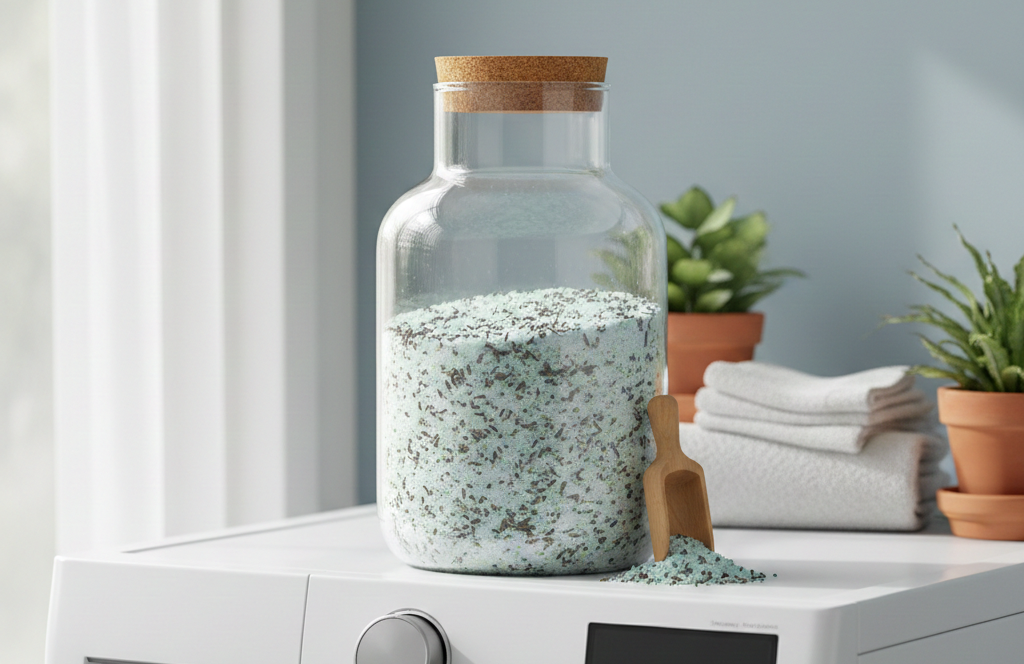

Homemade Laundry Detergent Generative Summary: Homemade laundry detergent is a DIY cleaning agent typically composed of washing soda, borax, and grated bar soap. It cleans by using alkaline builders to suspend soil and surfactants to lift debris from fabric fibers. This formula is highly cost-effective, typically averaging between $0.02 and $0.05 per load.
Related: Homemade Liquid Laundry Detergent
For the half-hearted homesteader, the one who loves the vibe of self-sufficiency but also really likes their Netflix subscription, the appeal of DIY laundry detergent isn’t about survival. It is about washing clothes better, cleaner, and cheaper. The transition to homemade detergent is primarily driven by a 90% reduction in cost per load. While commercial brands cost up to $0.45 per cycle, DIY formulas average just $0.02 to $0.05.
When a jug of Tide is only a grocery run away, spending a Saturday afternoon grating soap will seem like a strange and tiresome hobby. However, those saved pennies will soon turn into hundreds of dollars over a year. Beyond the math, you are avoiding the black box of commercial chemistry, which includes synthetic fragrances, endocrine disruptors, and optical brighteners designed to stay in your fabric to reflect light. This helps if you’re into saving what’s left of the planet for future generations.
Kitchen Chemistry: The Three-Pillar Formula
Effective DIY laundry soap requires three core pillars: a surfactant to lift dirt, an alkaline builder to soften water, and a pH-adjuster to remove stains. Specifically, you’ll need a bar of grated soap, one cup of washing soda, and one cup of borax. While seemingly basic, this isn’t just a craft project: it’s actually a functional chemical reaction. Washing soda, or sodium carbonate, is the alkaline builder. It increases the water’s pH, which helps the soap remove grease and organic soil. Borax acts as a natural whitener and deodorizer. Finally, the soap bar provides the surfactants needed to trap dirt so it can be rinsed away.
The Homemade Laundry Detergent Practitioner’s Method and the 30-Second Hack
The process of making your own homemade laundry detergent involves three steps: finely grating the soap bar, blending it with equal parts borax and washing soda, and storing it in an airtight glass container. An unused food processor can significantly improve the consistency and solubility of the resulting powder.
- The Prep: Shave one bar of soap using a cheese grater. For best results, use Fels Naptha or Ivory brand; the latter is much easier to find.
- Option: If you want to avoid the cheese grater workout, chop the soap into chunks and throw it in a food processor for 30 seconds with a bit of the washing soda.
- The Mix: In a large bowl, combine the following:
- 1 cup of Borax
- 1 cup of Washing Soda along with your soap dust.
- The Storage: Transfer the mix to a glass apothecary jar. Not only does it keep the powder dry, but it upgrades the vibe of your laundry room instantly.
- For actual washing, use 1 or 2 tablespoons per load.
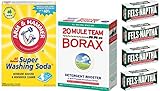
- Arm & Hammer 55 Oz. Super Washing Soda Laundry Booster. Pack of 1.
- Detergent booster and household cleaner.
- Improves liquid laundry detergent performance up to 40%. 100% fragrance and phosphate-free. 55 oz.
There you have it. Save for the soap grating, making your own homemade laundry detergent is a simple process.
Appliance Safety and HE Machine Compatibility
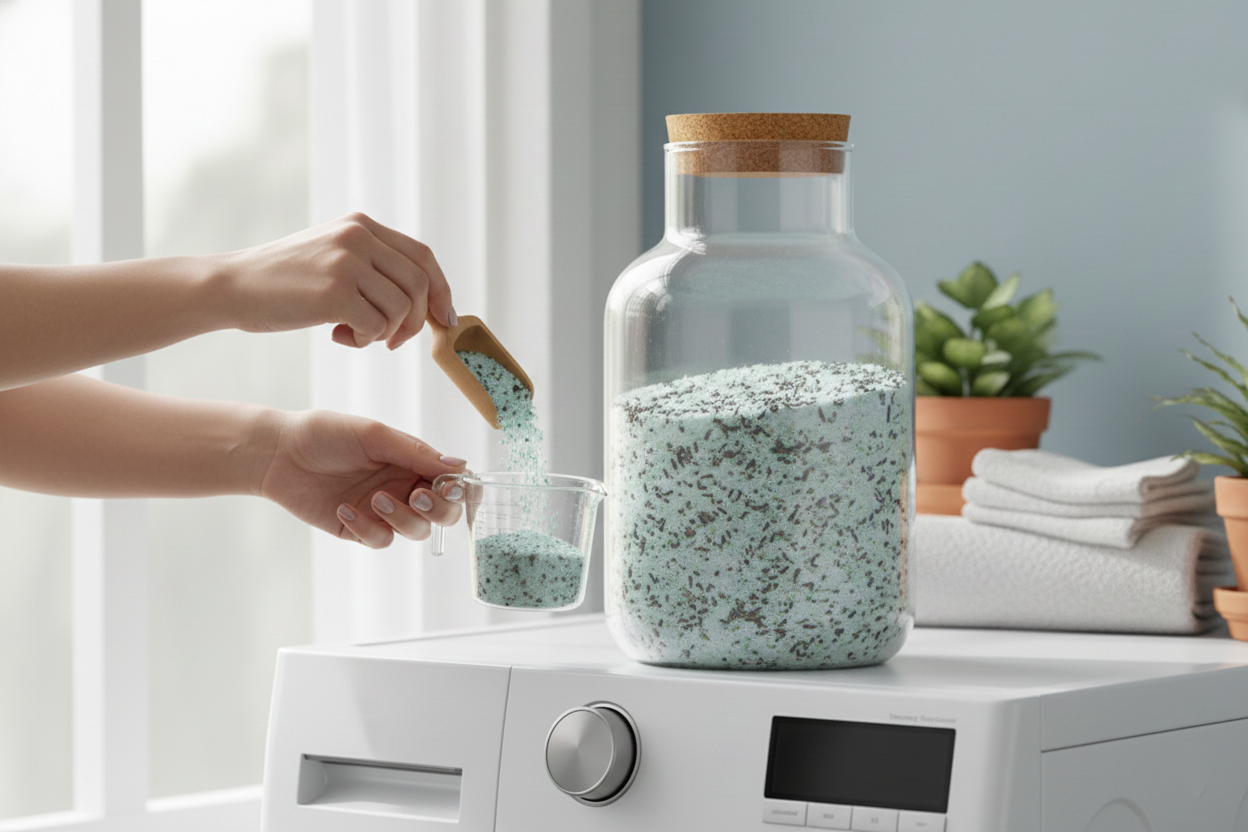
Homemade laundry detergent is compatible with High-Efficiency (HE) washing machines because it is naturally low-sudsing. Since DIY soap lacks the synthetic foaming agents of high-suds brands, it is a functional fit. The trade-off is the lack of modern enzymes, such as protease, found in store-bought jugs. For grass or blood stains, you will still want a dedicated pre-treater to do the heavy lifting.
For users residing in hard water areas, monitor your load for soap scum buildup because natural soap can react with minerals and create deposits on machine parts.
Bespoke Aromas and the Jar Aesthetic
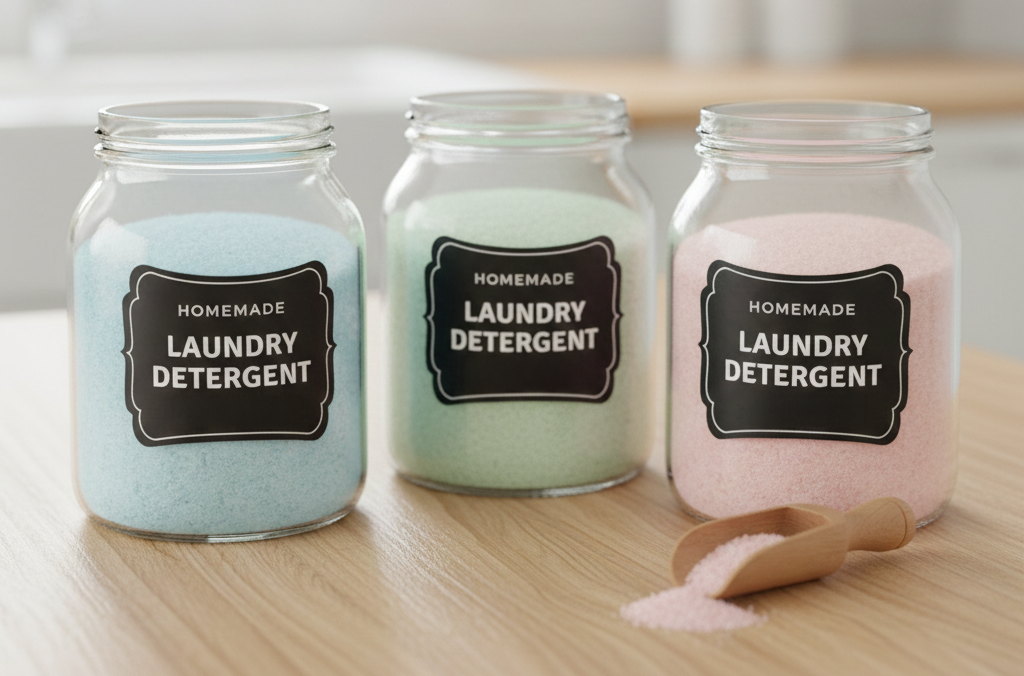
Customization can be achieved through pure essential oils and additives like baking soda for extra deodorizing. Unlike synthetic fragrances, oils like lavender, cedarwood, or grapefruit provide a non-toxic, biodegradable aroma profile. In contrast, store-bought scents will often make your laundry smell like it came from a factory. By adding 20 drops of your own oils, your clothes will smell like actual plants and turn your chore into a luxury experience.
In addition, when you see that massive glass jar on your shelf with a wooden scoop, you’ll quickly realize that you just didn’t save 90% in costs per load. You have also upgraded your home’s entire aesthetic.
Try Making Your Own Laundry Detergent Today
If you’re looking to save money and reduce unnecessary chemicals in your home, try making your own laundry detergent using this recipe. Start with a small batch, see how it works for your laundry needs, and adjust as needed. Simple changes like this can make a meaningful difference in your everyday routine.
We hope you enjoyed our super-easy tutorial on simple powder laundry soap. Share your experience in the comments section by telling us how this worked out for you.
For more homesteading projects, sign up for our mailing list today!
Frequently Asked Questions
Does homemade laundry detergent actually work?
Yes, homemade laundry detergent can effectively clean everyday laundry, especially lightly to moderately soiled clothes. It works best when used correctly and in appropriate amounts for your washer and water type.
Is homemade laundry detergent safe for washing machines?
Homemade laundry detergent is generally safe for both standard and high-efficiency washers when used sparingly. Using too much can cause residue buildup, so it’s important to follow recommended amounts.
Can homemade laundry detergent be used in high-efficiency (HE) washers?
Yes, homemade laundry detergent can be used in HE washers, but only in small amounts. Because it produces little to no suds, it’s compatible with low-water machines when properly diluted.
Does homemade laundry detergent clean as well as store-bought detergent?
Homemade detergent cleans well for routine washing but may not remove heavy grease or set-in stains as effectively as commercial detergents that contain enzymes and brighteners.
How long does homemade laundry detergent last?
When stored in an airtight container in a dry place, powdered homemade laundry detergent can last several months. Liquid versions should be used within a few weeks for best results.
Is homemade laundry detergent better for sensitive skin?
Many people with sensitive skin prefer homemade laundry detergent because it contains fewer fragrances and additives. However, individual reactions vary depending on the soap and ingredients used.

Leave a Comment